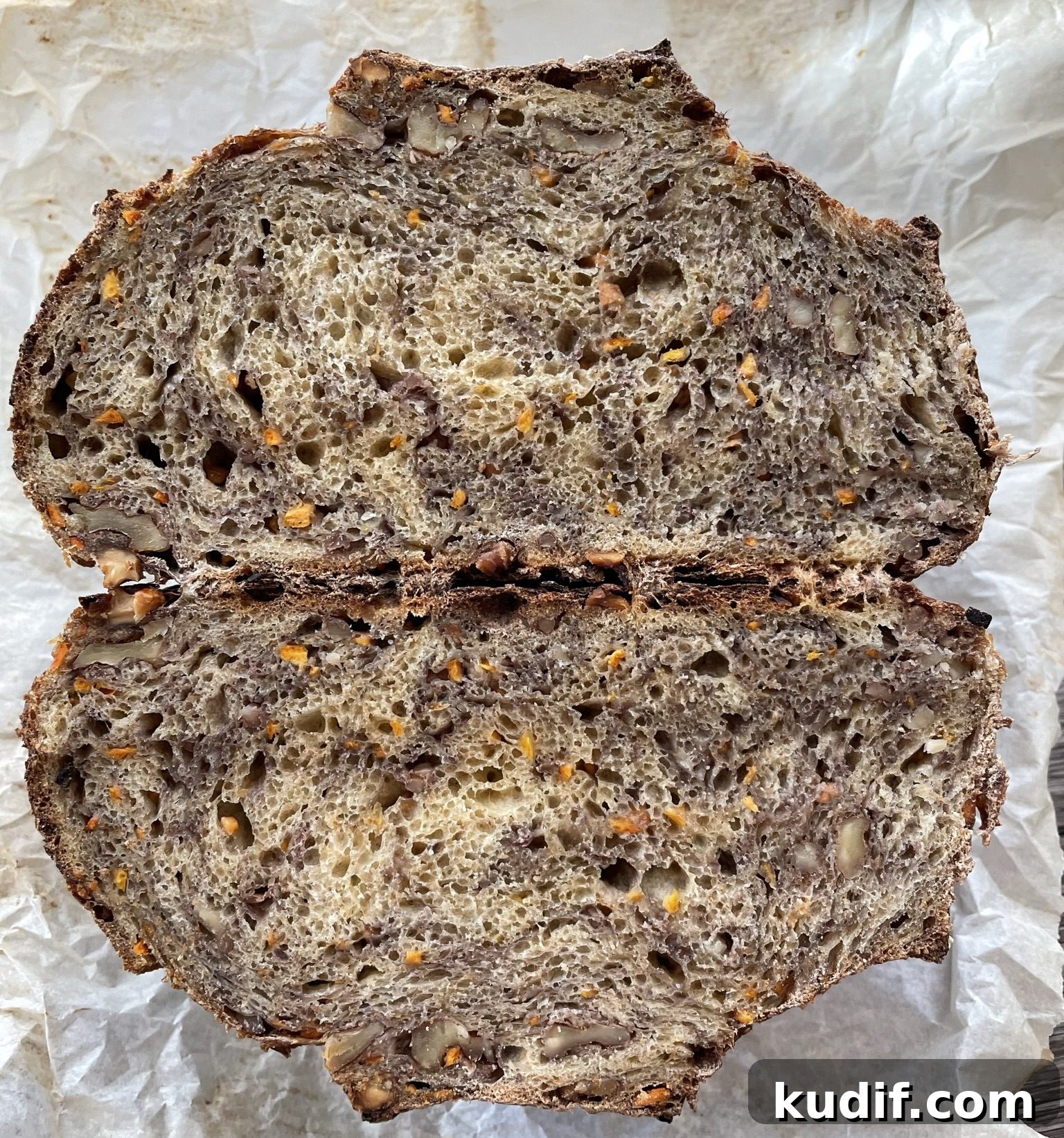
Growing up in South Africa with a British love of marmalade, I delight in using citrus peel to lift savory and sweet dishes. When our tangerine tree was bursting with fruit, I saved the peel for citrus clove and citrus cranberry marmalades and decided to fold some into this walnut-and-citrus sourdough. Friends who tried the loaf were surprised by its flavor and texture — they loved it. I tested several versions using different sizes of peel; which you prefer is a matter of personal taste.
I also adjusted the sourdough technique to allow the natural fermentation to more fully break down the wheat germ and extract nutrients. This approach can increase proofing time, but the improved nutrition and softer crumb make it worthwhile.
Tips for making walnut and citrus sourdough bread
Walnuts.
Walnuts aren’t always my favorite, but I use them more often now after learning about their nutritional benefits, particularly for brain health. The papery outer skin of the walnut contains many polyphenols, compounds linked to plant color and potentially to the marbled patterns that appear in this bread. I used chopped walnuts for texture and visual interest.
Citrus peel.
For this recipe I used tangerine peel. I experimented with finely diced pieces and with grated peel. Tiny diced pieces give a brighter, more immediate burst of citrus, and create a chunky, marmalade-like texture. Grated peel or zest gives a subtler citrus note and a smoother mouthfeel — just avoid the bitter white pith. I tried adding juice, but it made the dough noticeably tarter without improving the aroma.
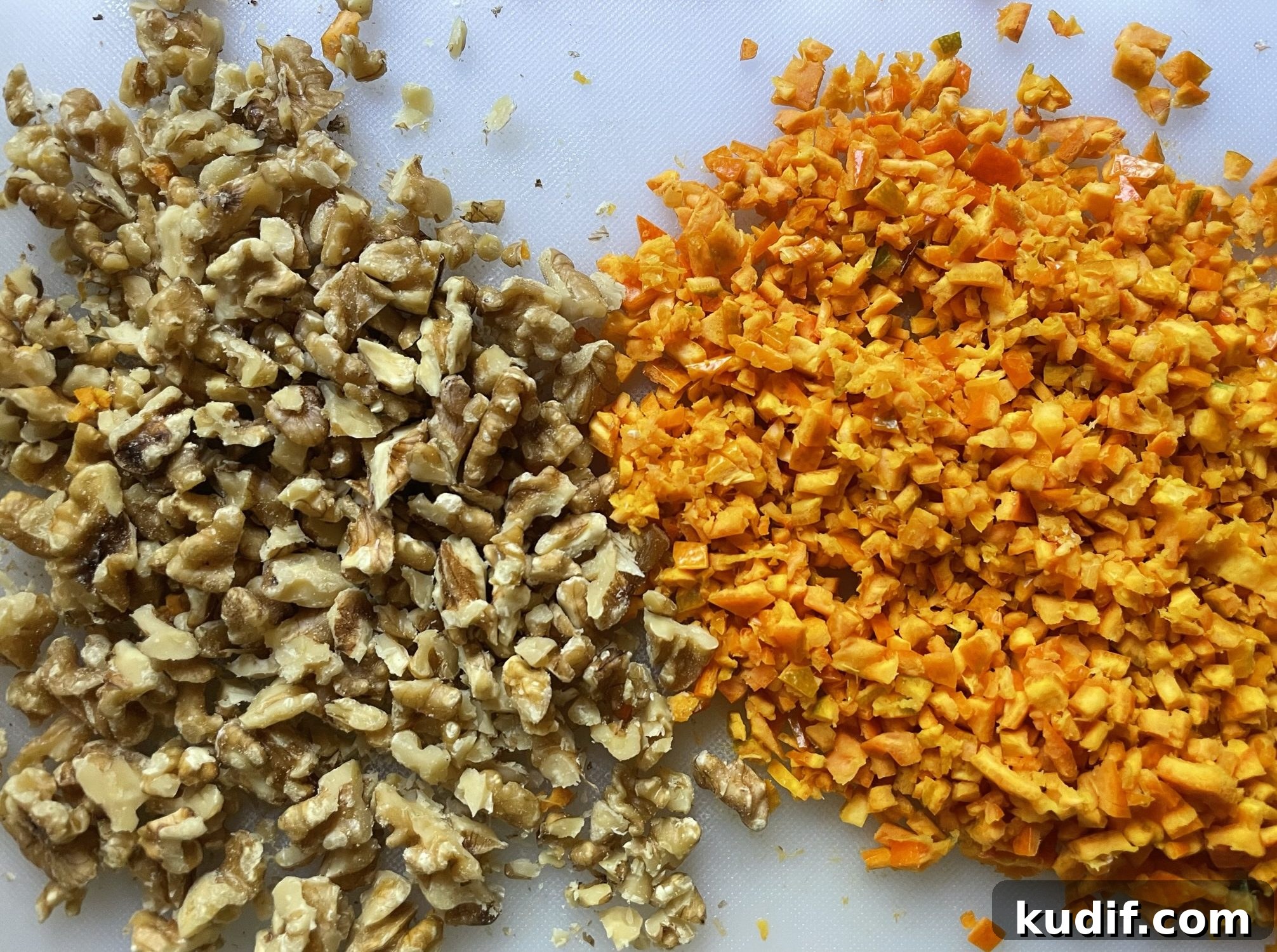
Chopped walnuts and tangerine peel

Grated tangerine peel.
Adding inclusions.
To distribute walnuts and citrus evenly, add them during the stretch-and-fold stage. This gives the inclusions time to integrate; if you add them at the end you’ll often end up with dense swirls of nuts and peel rather than an even distribution. At first they may seem uneven, but after several stretch-and-fold cycles they will spread uniformly through the dough.
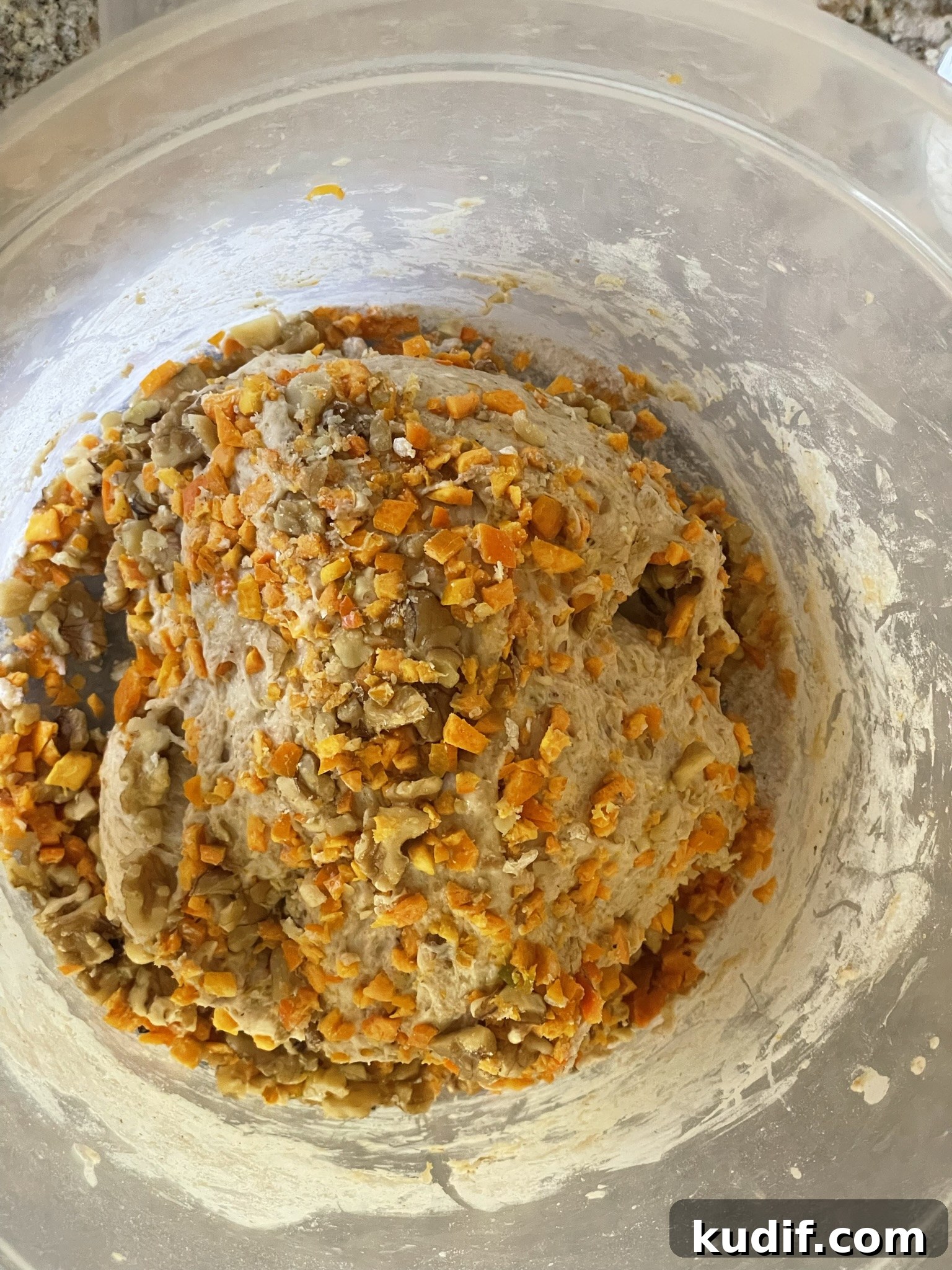
Add chopped walnuts and citrus peel
Proofing.
For flavor and structure, I recommend a slow, cold proof. After shaping in a banneton, let the dough rest at room temperature for about an hour (around 70°F / 21°C) before moving it to the refrigerator. I typically cold-proof for roughly 36 hours — this strengthens flavor and makes the dough easier to score and handle.
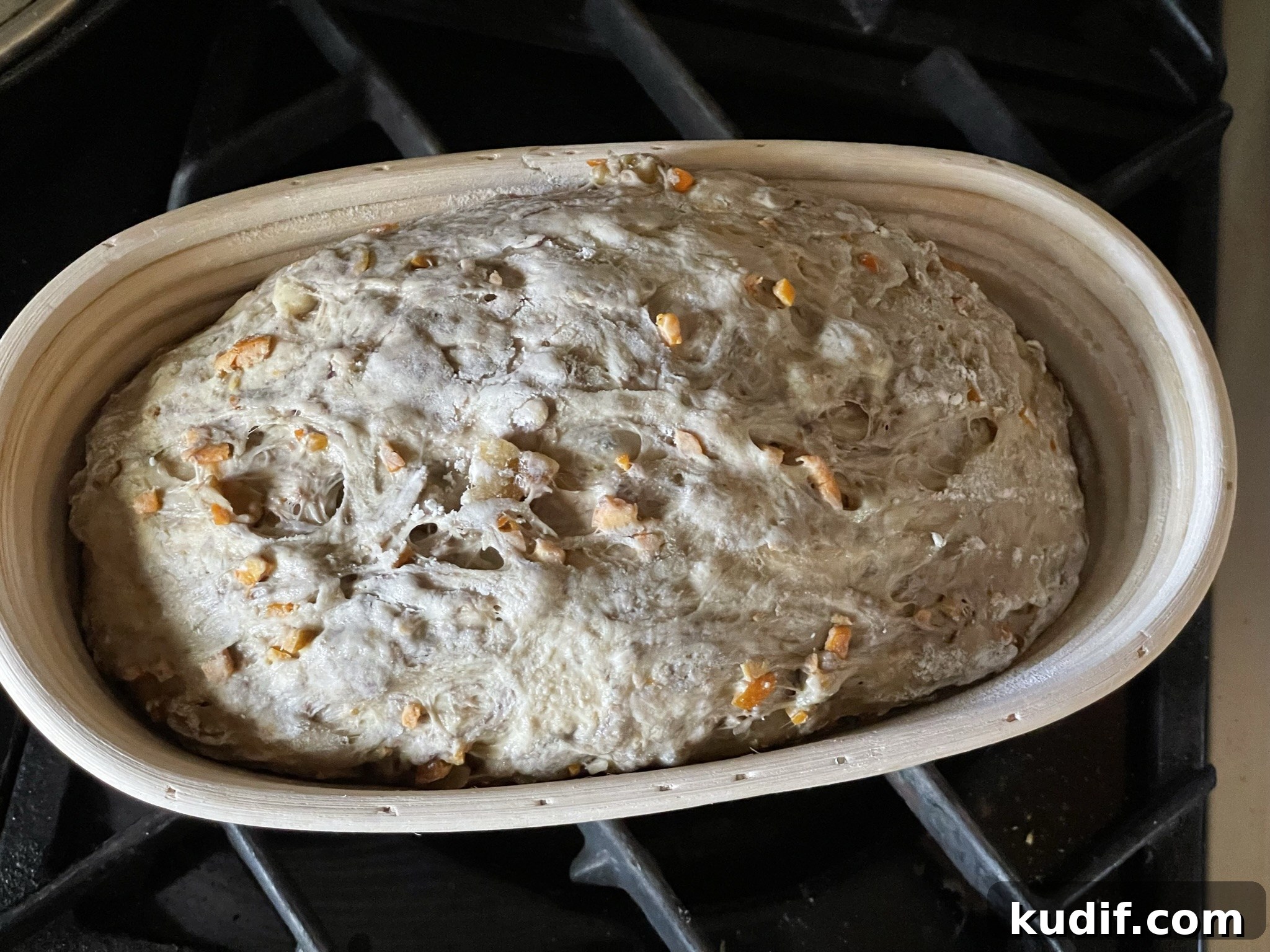
Walnut citrus sourdough bread
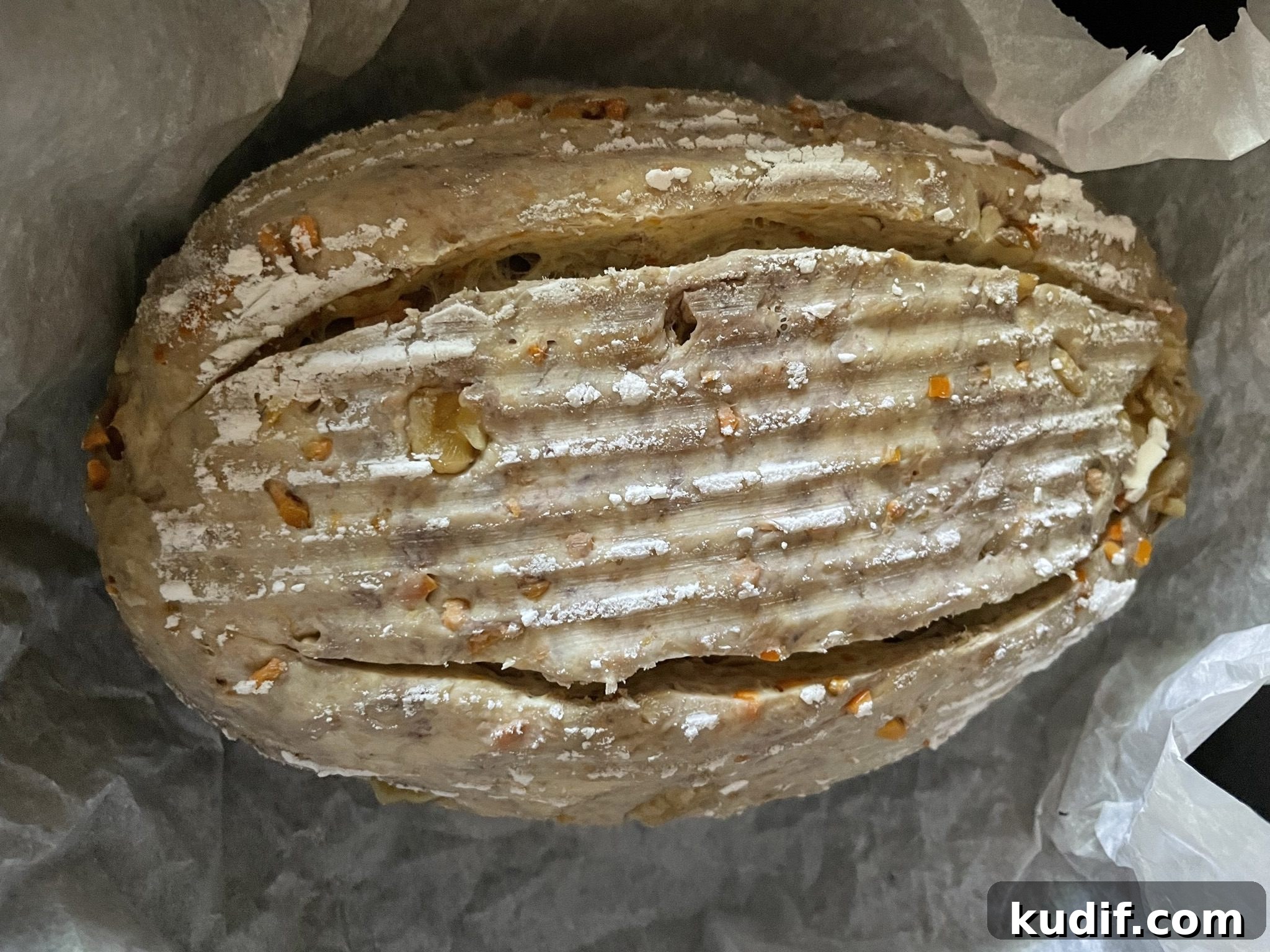
Scored walnut and citrus sourdough bread.
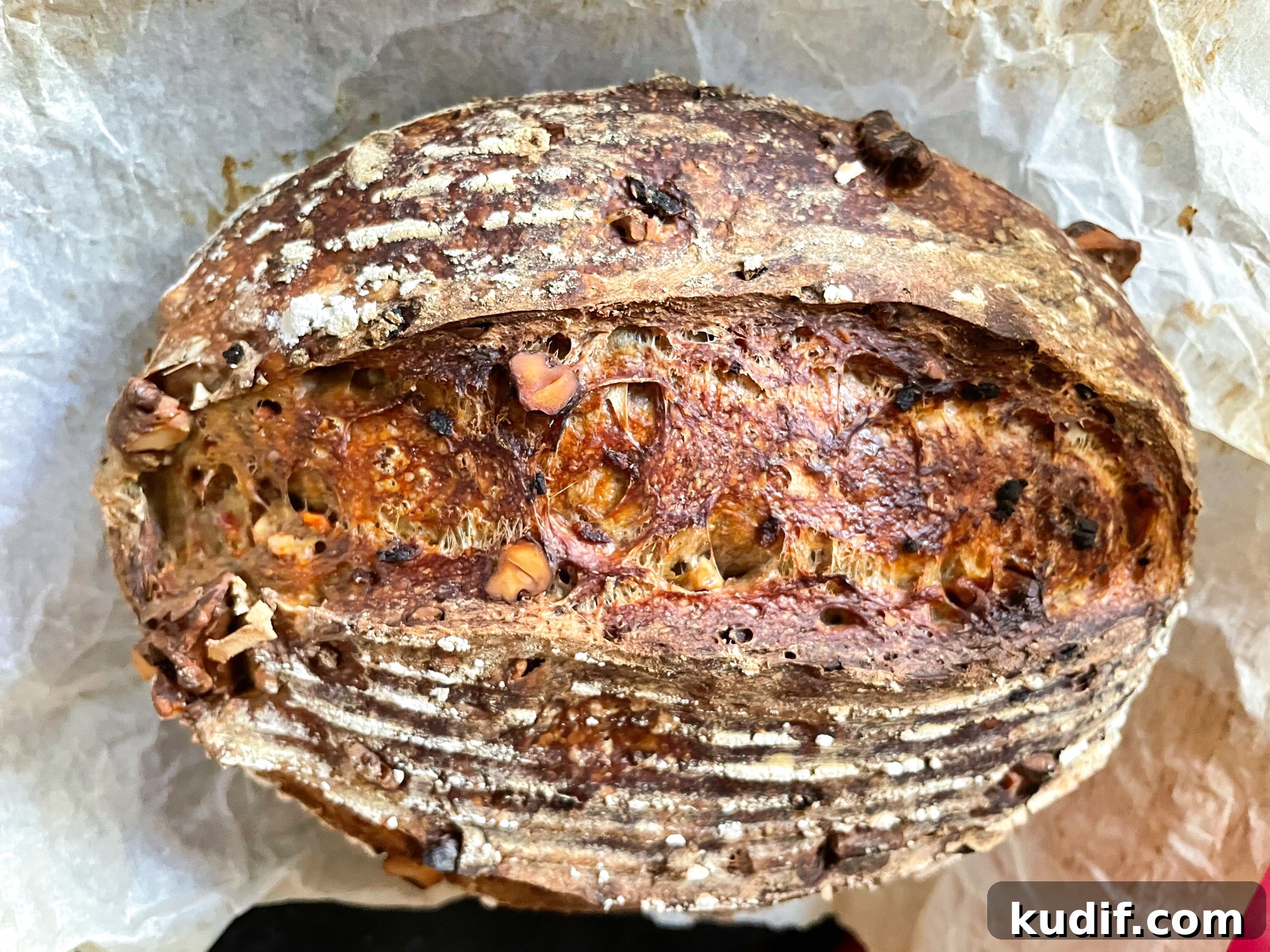
Baked walnut and citrus sourdough bread
If you make this walnut and citrus sourdough bread, share your experience in the comments — I’d love to hear how it turned out.
CITRUS WALNUT SOURDOUGH BREAD
Michelle Sam
Pin Recipe
Equipment
-
Cast iron Dutch oven
-
Banneton set for sourdough proofing
-
2 large bowls
-
Bread lame, razor, or scissors
-
Dough scraper and cutter
-
Digital scale
-
Dish towel to cover dough
Ingredients
- 350 grams water (80 degrees — lukewarm)
- 400 grams bread flour
- 100 grams whole wheat flour
- 9 grams salt
- rice / bread flour mixture Used for dusting your proofing bowl / banneton
- 100 grams levain See levain instructions
- 50-100 grams citrus peel tiny diced or grated; diced is stronger, grated is milder
- 100 grams chopped walnuts
Instructions
Preparing the inclusions
-
Chop walnuts.100 grams chopped walnuts
-
Chop or grate citrus peel.50-100 grams citrus peel
Making your bread dough
-
Sift bread and whole wheat flour into a bowl to remove lumps.400 grams bread flour, 100 grams whole wheat flour, 100 grams levain
-
In another bowl, mix levain into lukewarm water; it does not have to dissolve completely.350 grams water
-
Mix in the flour and water and let the dough autolyze for about 45 minutes so the flour fully hydrates.
Kneading the bread dough
-
After autolyse, begin bulk fermentation. At 70–80°F ambient temperature this will take around 3 hours.
-
Add salt, chopped walnuts, and citrus peel once autolyse is complete to incorporate them during the stretch-and-fold cycles.9 grams salt, 50-100 grams citrus peel, 100 grams chopped walnuts
-
Knead by hand if you prefer: use wet hands to stretch and fold the dough, rotating a quarter turn each time. Repeat several revolutions until the dough becomes soft and pliable.
-
Between kneading sessions, let the dough rest for 30 minutes to relax the gluten; repeat kneading and resting as needed during bulk fermentation until the dough feels ready.
Shaping your bread dough
-
Remove the dough from the container. For smaller bolles, divide the dough into roughly 250 g portions to bake in a 2-quart Dutch oven.
-
On a floured surface, shape the dough into a taut round by pulling and rotating. This helps control the crumb: leaving all the fermentation air will produce a very open, ciabatta-like crumb, while degassing slightly yields a more substantial loaf.
-
Let the shaped dough rest 10–20 minutes, then shape again for final proofing.
-
Prepare your banneton by dusting generously with the rice/bread flour mixture. Place the loaf seam-side up into the banneton and dust the top with flour.
Proofing your dough – Quick Proof
-
Cover the banneton with a damp cloth and proof in a warm spot for about 2 hours. I often use the oven with the light on. This yields roughly 3 hours total proof (including initial room-temperature rest).
-
When ready to bake, preheat the oven to 500°F (260°C) with the Dutch oven inside. Heating your cast-iron pot can take up to an hour.
Proofing your dough – Slow Proof
-
Allow the dough to proof at room temperature for one hour before cold-proofing.
-
Place the banneton in a plastic bag, seal, and refrigerate for about 36 hours for a slow, flavor-forward proof.
-
When ready to bake, preheat the oven to 500°F (260°C) with the Dutch oven inside.
Scoring your dough
-
After proofing, cover the banneton with crumpled parchment, flip it over, and prepare to score. The dough should be firm but manageable.
-
Dust or brush off excess flour if needed. Score with a razor, lame, or scissors to control oven spring and create a decorative pattern.
-
Carefully lower the scored loaf into the preheated Dutch oven, cover, and bake.
Baking your bread
-
Preheat oven to 500°F (260°C).
-
Place the covered loaf in the oven and reduce temperature to 450°F (232°C).
-
Bake covered for 25 minutes for a large bolle (20 minutes for smaller 2-quart bolles).
-
Remove the lid and bake an additional 25 minutes for a large loaf (20 minutes for small bolles) until deep golden and crisp.
-
Remove the loaf from the oven and from the Dutch oven, then cool on a wire rack.
-
If baking a second loaf, return the empty Dutch oven to 500°F for 10 minutes, wipe it dry, and repeat the baking steps.
-
Let the bread cool for at least one hour before slicing.
Notes
Note: Any timers built into the original source will stop if you exit the page or your device sleeps.