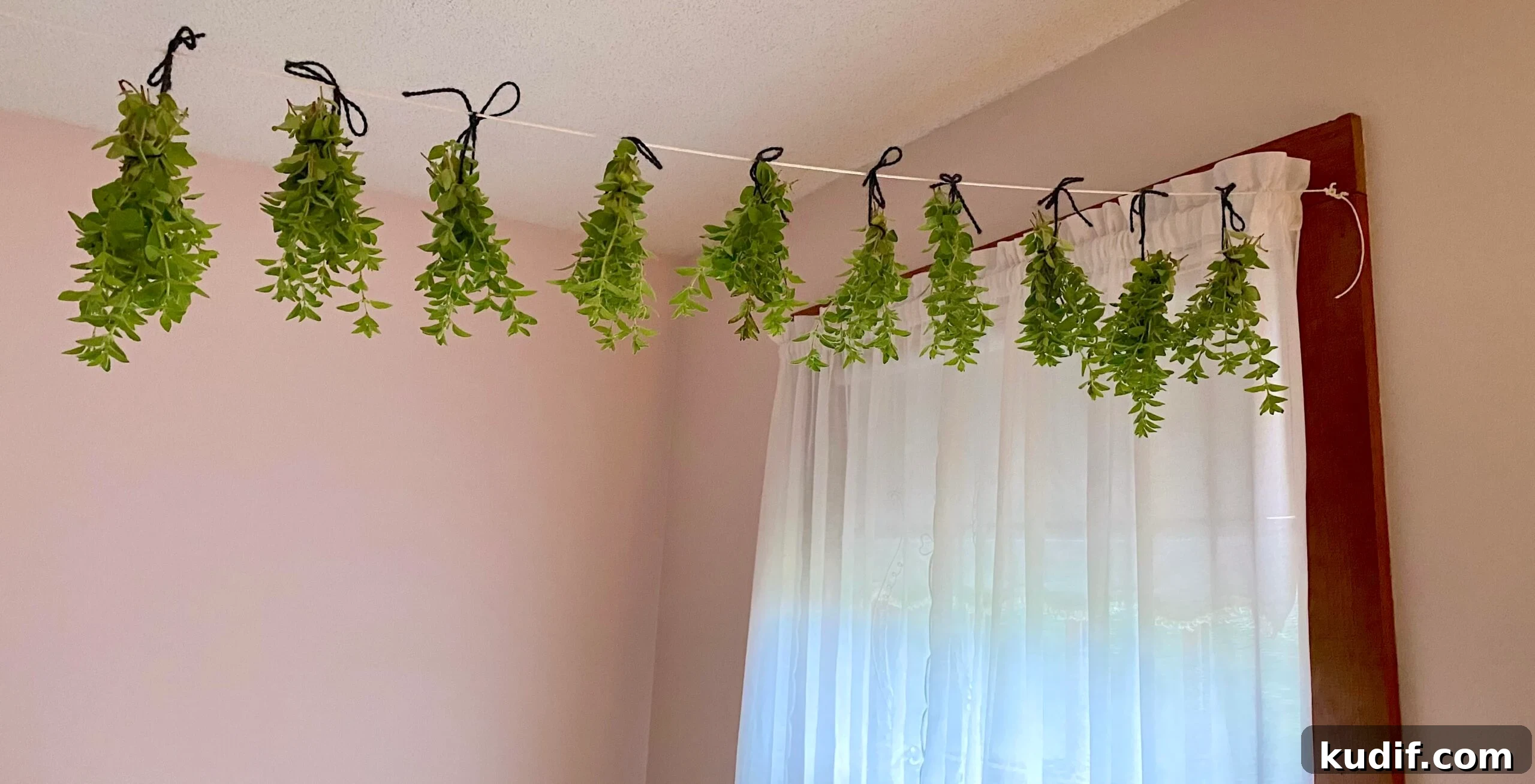
It’s the beginning of June, and time to pick and dry an early crop of overwintered oregano and thyme, along with other early perennial herbs.
Two Methods for Air Drying Herbs
LINE DRYING
LAYING ON A SCREEN
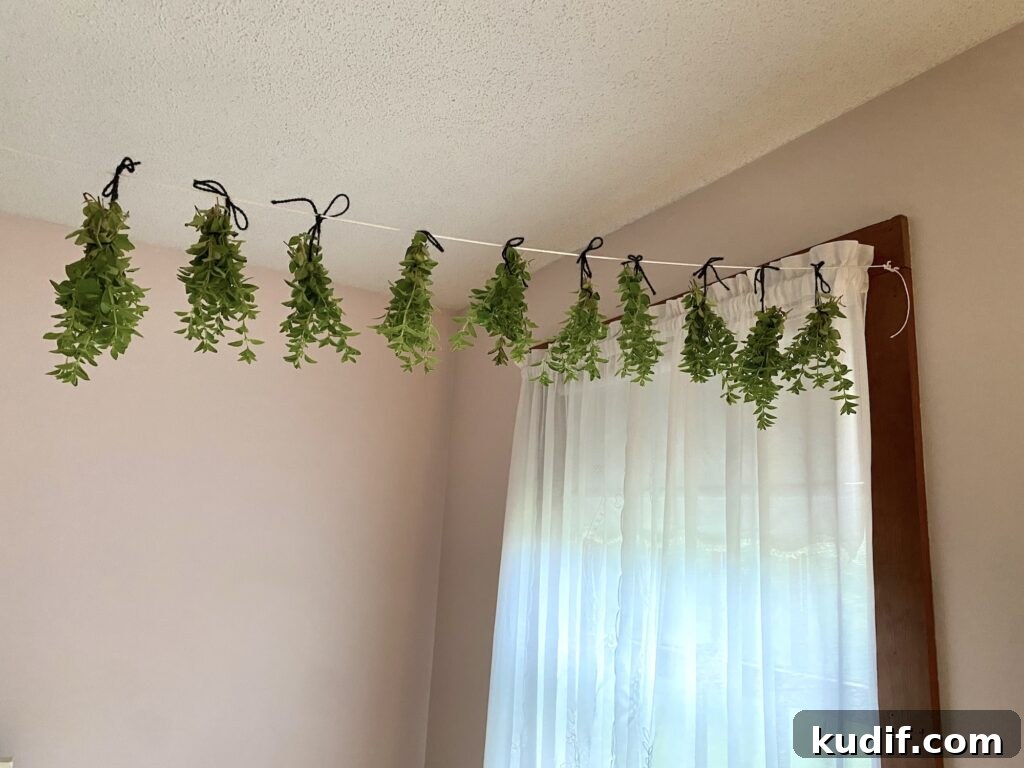
Line drying is a simple, low-effort method that works especially well for sturdier herbs like oregano. Gather small bundles—about the size of your fist—secure them with twine or a rubber band, and hang them upside down on a line in a warm, dry, and well-ventilated place out of direct sunlight. Good airflow prevents mold and preserves essential oils and flavor. Check bundles after a week; depending on humidity and temperature they may take 7–14 days to dry completely. Once stems snap easily, strip the leaves into jars or grind them gently for storage.
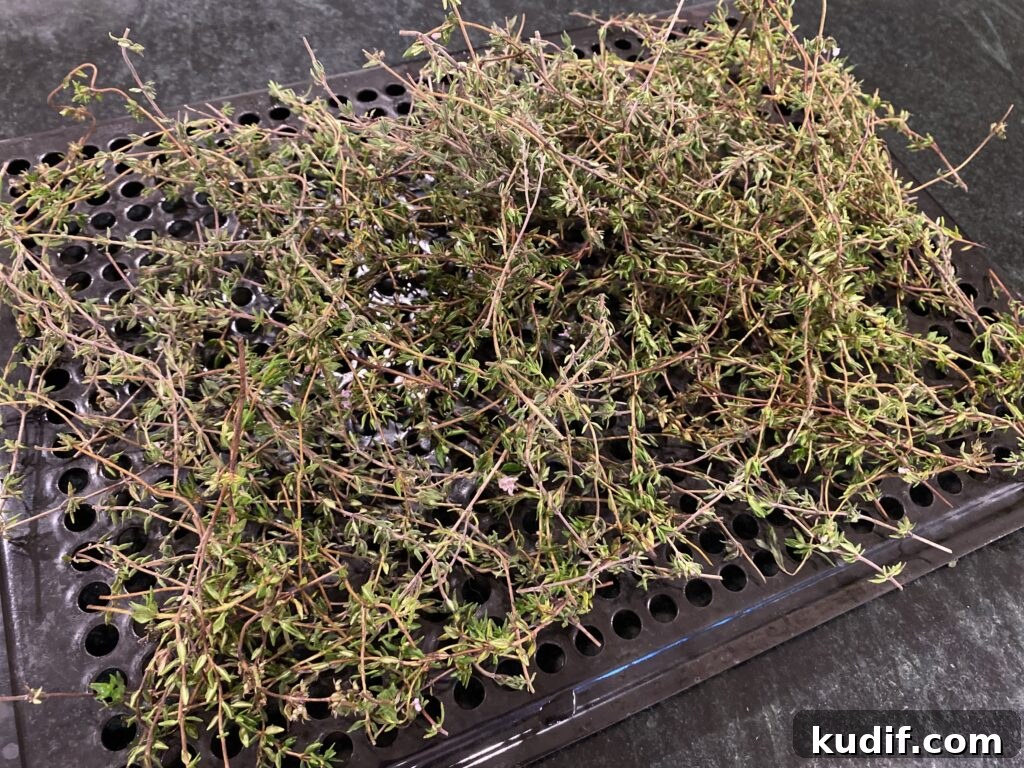
Laying herbs on a screen or perforated tray is ideal for delicate or small-leaf varieties like thyme. Spread the sprigs in a single layer so air can circulate around each stem. Place the tray in a shaded, airy spot—indoors near a fan or outside under a covered area. A mesh screen, cooling rack, or a roasting pan with holes all allow good airflow and speed drying. Turn the herbs occasionally so they dry evenly. Drying time varies but is often shorter than line drying because both sides of the leaf receive airflow. When the leaves crumble easily, they’re ready to store.
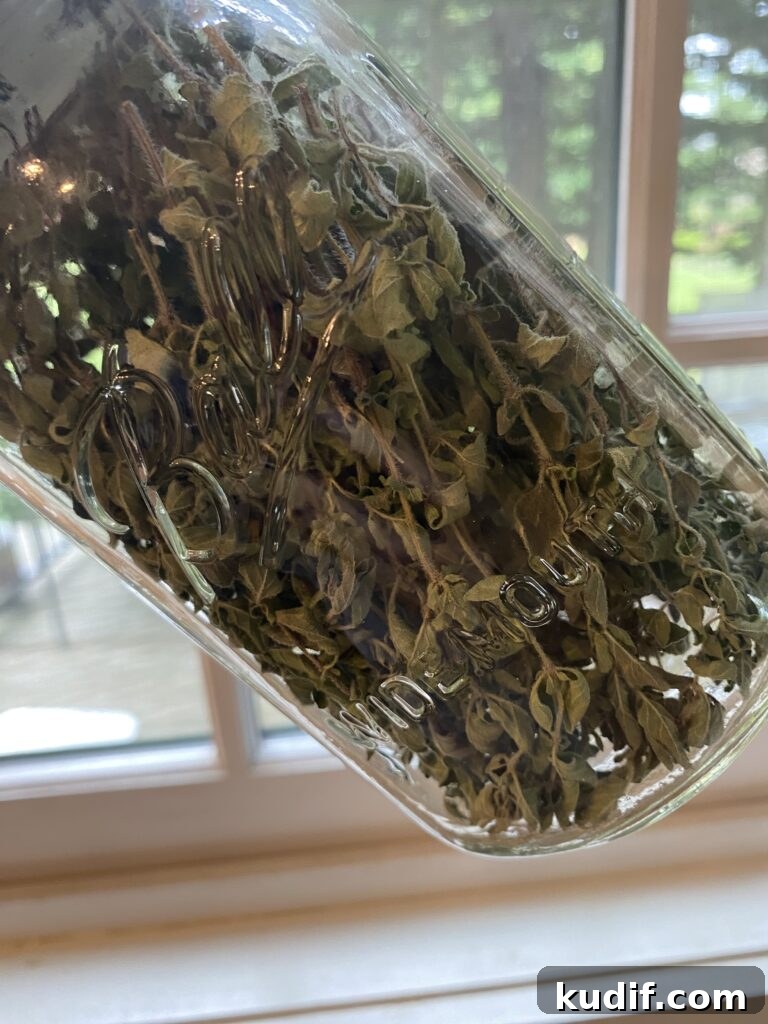
Dried Oregano
A few practical tips for both methods: harvest herbs in the morning after the dew has evaporated but before the heat of the day; avoid washing unless absolutely necessary—if you must rinse, dry thoroughly before starting; remove any damaged or yellow leaves; label containers with the herb and date; store dried herbs in airtight jars away from light and heat to preserve flavor. Properly dried and stored herbs can retain good flavor for up to a year, with peak aroma during the first several months.
If you’re drying large amounts, combine methods: use lines for bulkier herbs and screens for smaller or more fragile stems. Small batches dry faster and maintain more flavor. For culinary use, pinch dried leaves between your fingers to release their aroma before adding them to dishes. For medicinal or aromatic uses, consider storing whole sprigs or whole leaves rather than crushing, to keep volatile oils intact until needed.
Drying overwintered oregano and thyme early in June captures their fresh spring flavors and preserves them for year-round use. With either line drying or screen drying, patience and proper airflow are the keys to vibrant, long-lasting dried herbs.