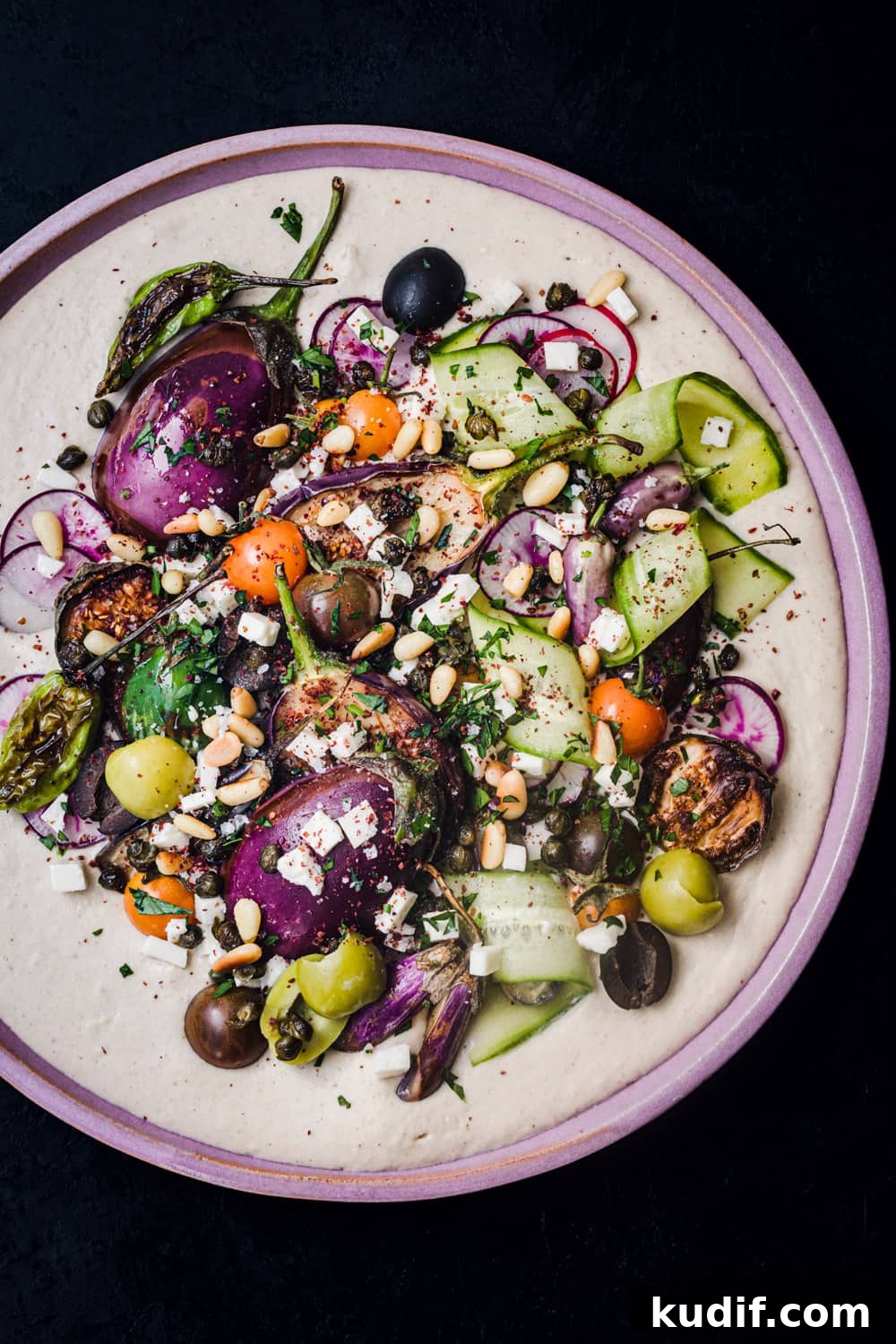
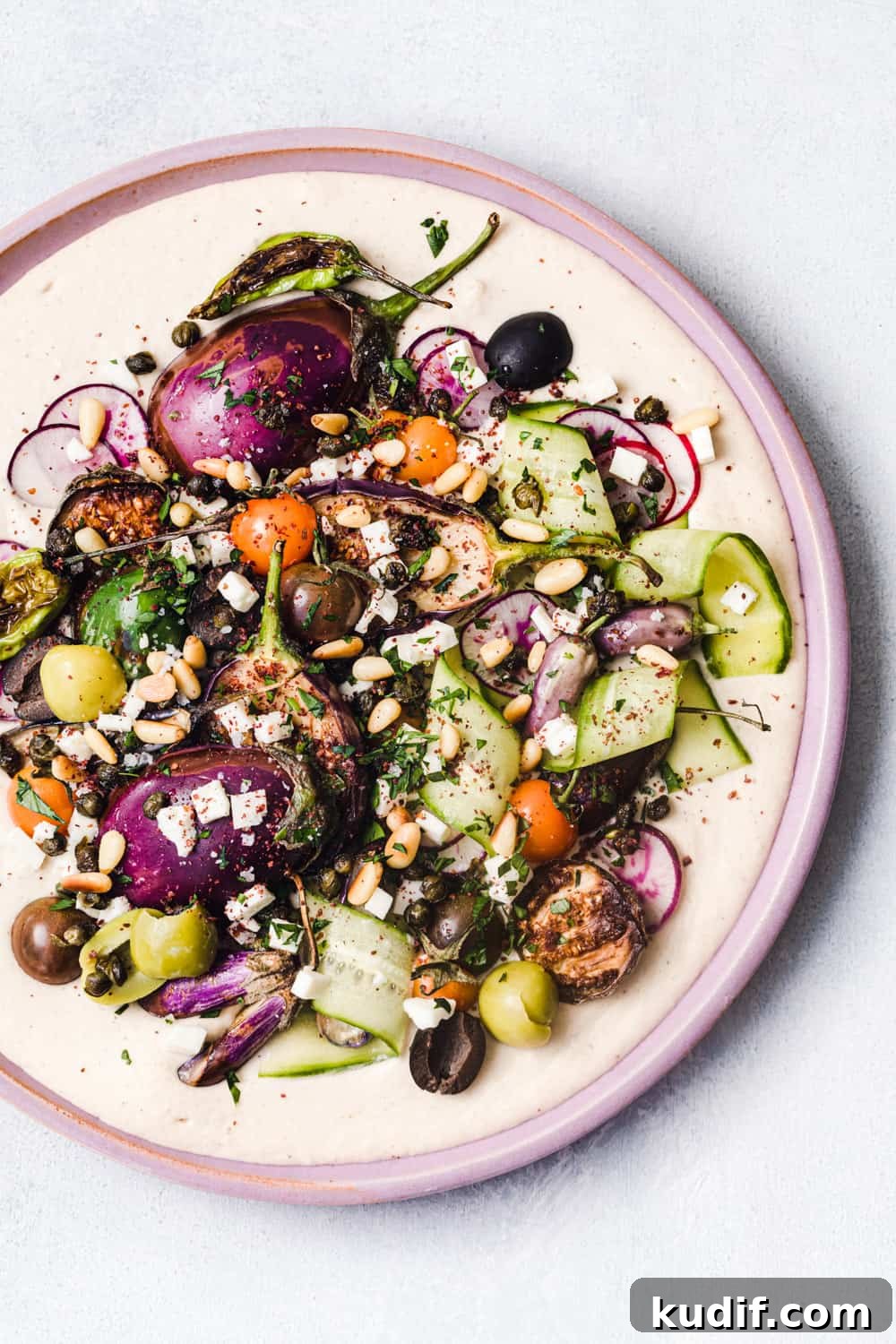
Top your favorite hummus with an array of vibrant Mediterranean toppings for a loaded dip that’s bright, bold, and irresistibly crowd-pleasing. Quick and easy to assemble, this recipe borrows the idea of a layered dip and swaps Tex‑Mex flavors for fresh Mediterranean ones.
Think of this as a flexible template: start with homemade or store‑bought hummus, spread it on a platter, and pile on whatever toppings you love. Below you’ll find classic and creative ideas so you can build your own custom loaded hummus every time.
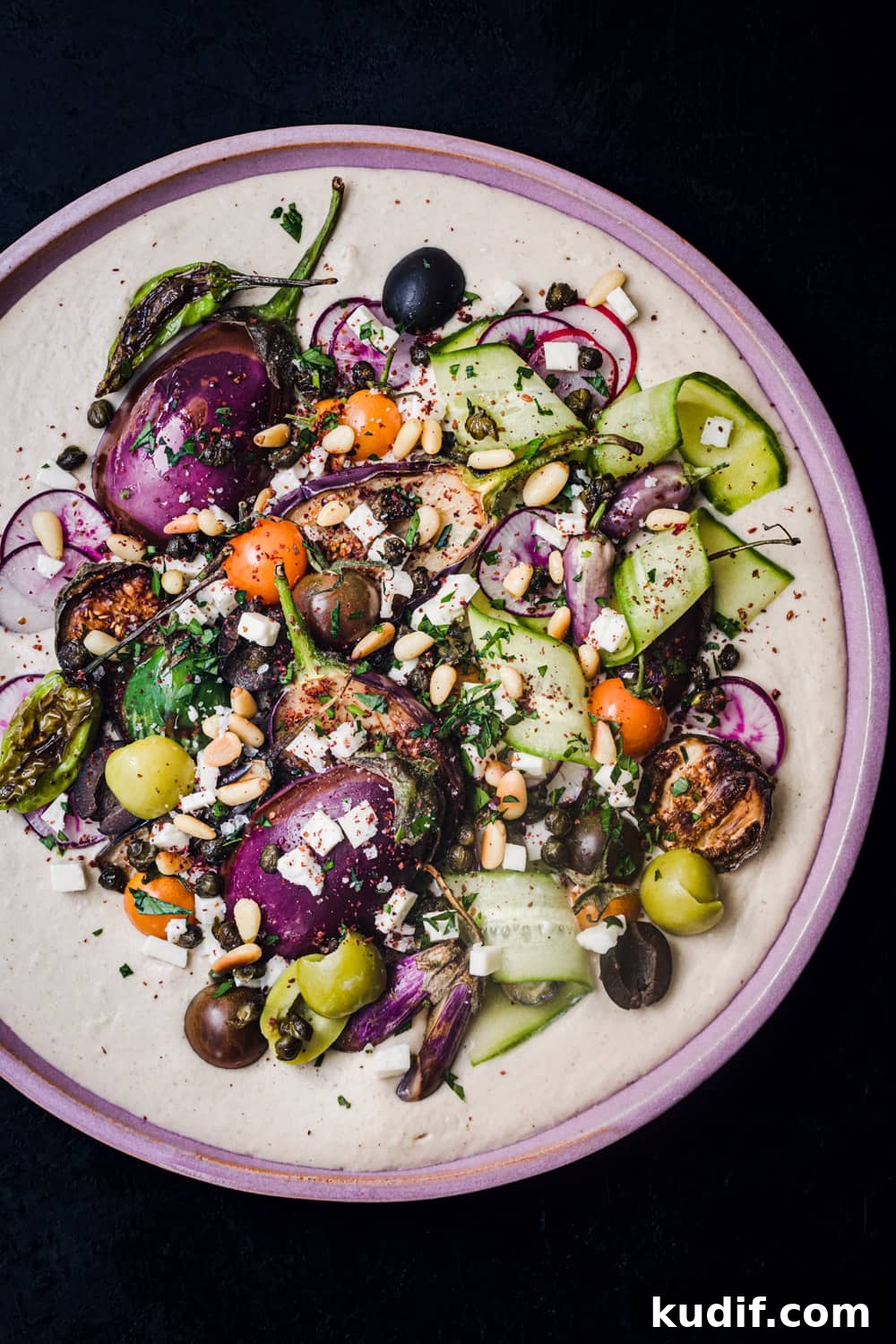
Why this Recipe Works
- Quick & Easy. With a food processor and 5–10 minutes, you can make silky homemade hummus. For an even faster option, use a good store‑bought hummus and dress it up with toppings.
- Versatile. The base is a blank canvas that pairs with countless toppings and works well in every season.
- Low maintenance, high impact. This dish looks impressive but requires minimal hands‑on time, making it ideal for entertaining or a simple weeknight meal.
There’s a colorful world of hummus toppings to explore—mix and match cooked and raw ingredients for texture, color, and contrasting flavors.
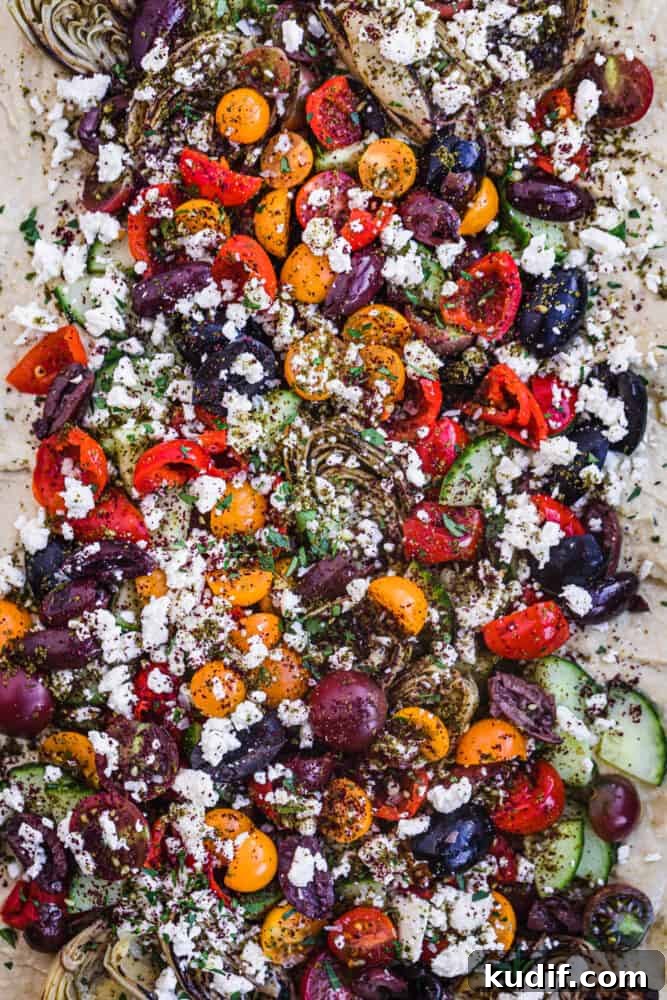
You don’t have to stop at seven layers—make a 6‑layer, an 11‑layer, or however many layers you want. Customize it to suit your taste.
How to Make This Loaded Hummus
Use this guide as a template: prepare hummus (homemade or store‑bought), spread it on a serving platter, and arrange your chosen toppings decoratively. Below are topping suggestions, notes, and a simple hummus recipe to get you started.
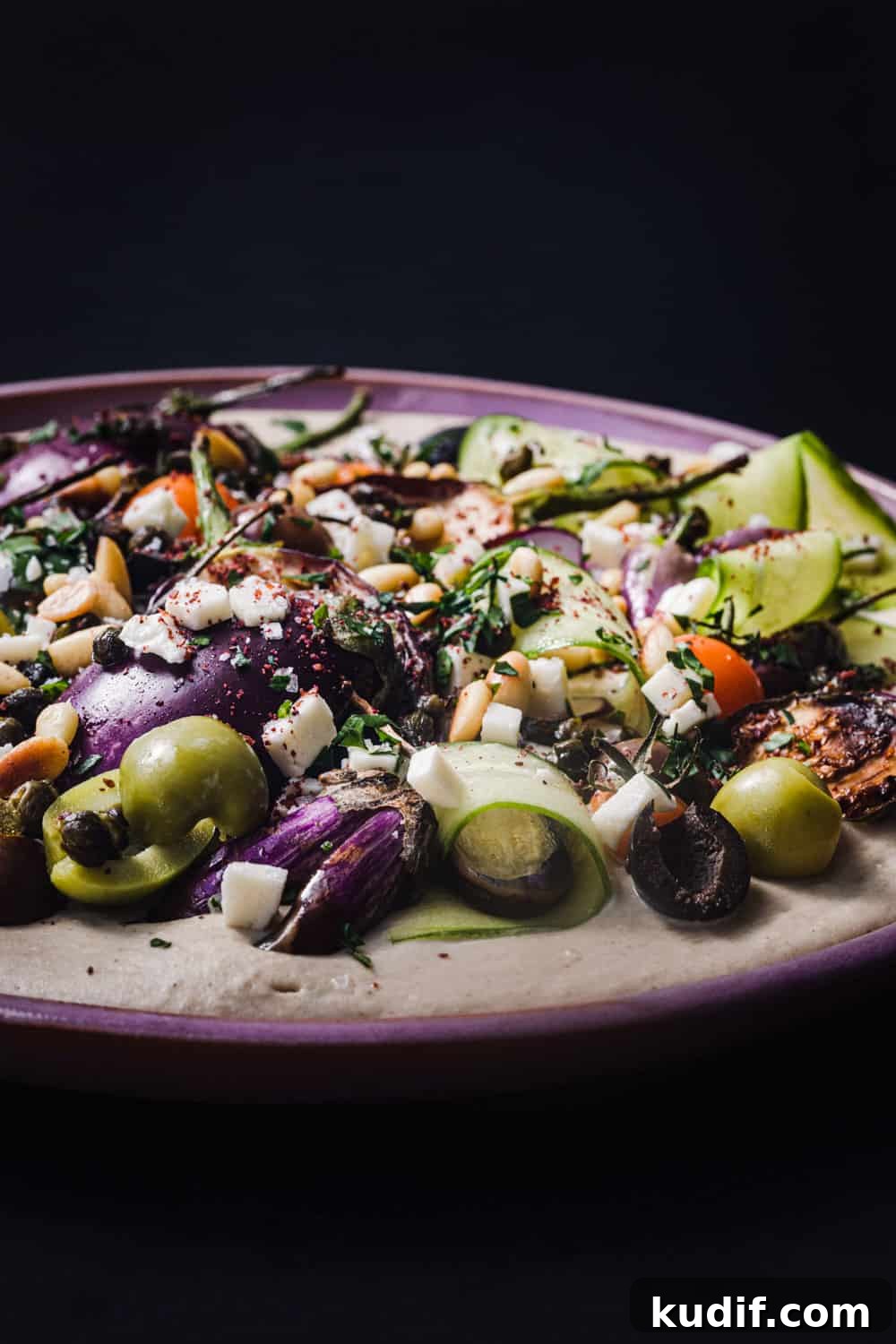
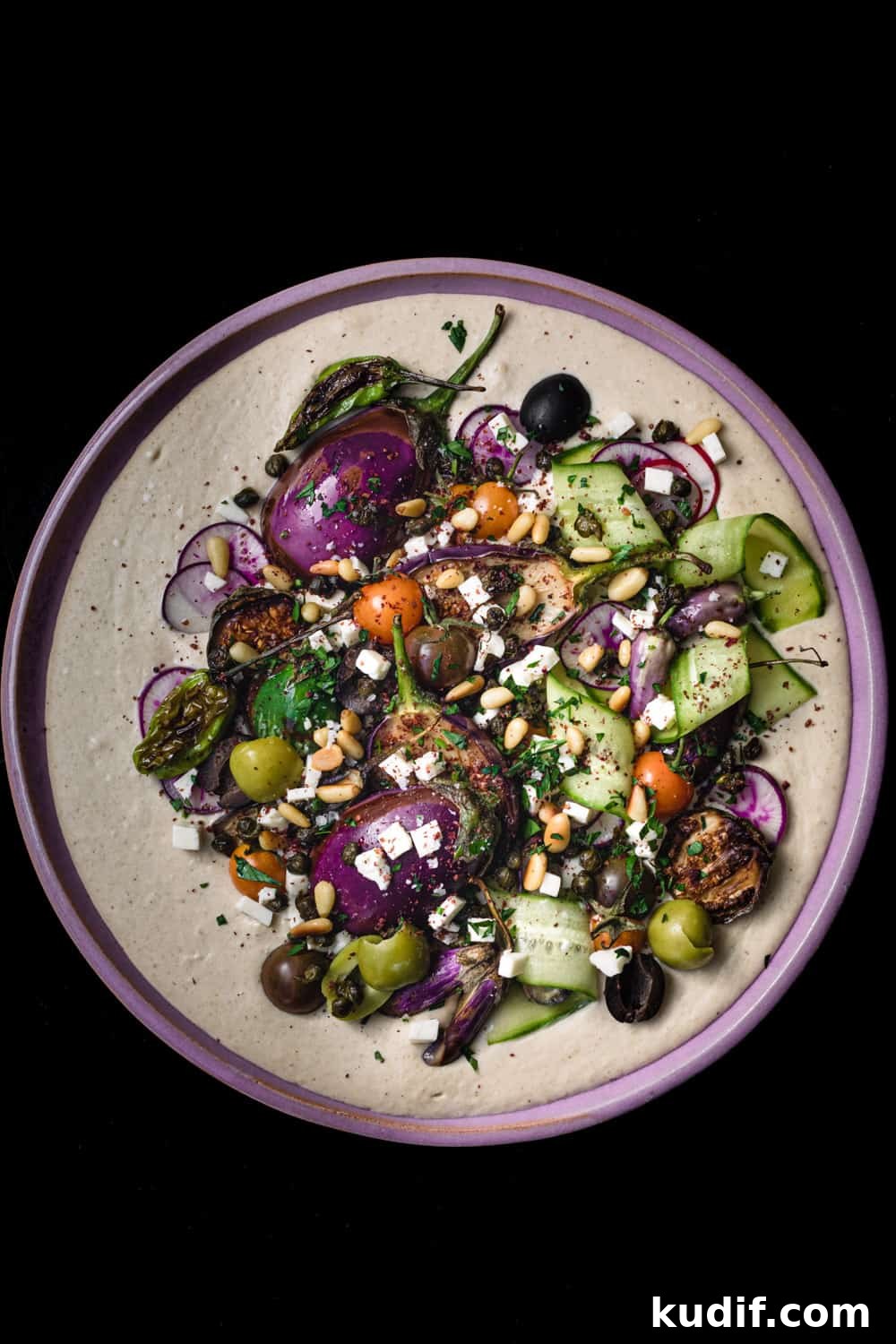
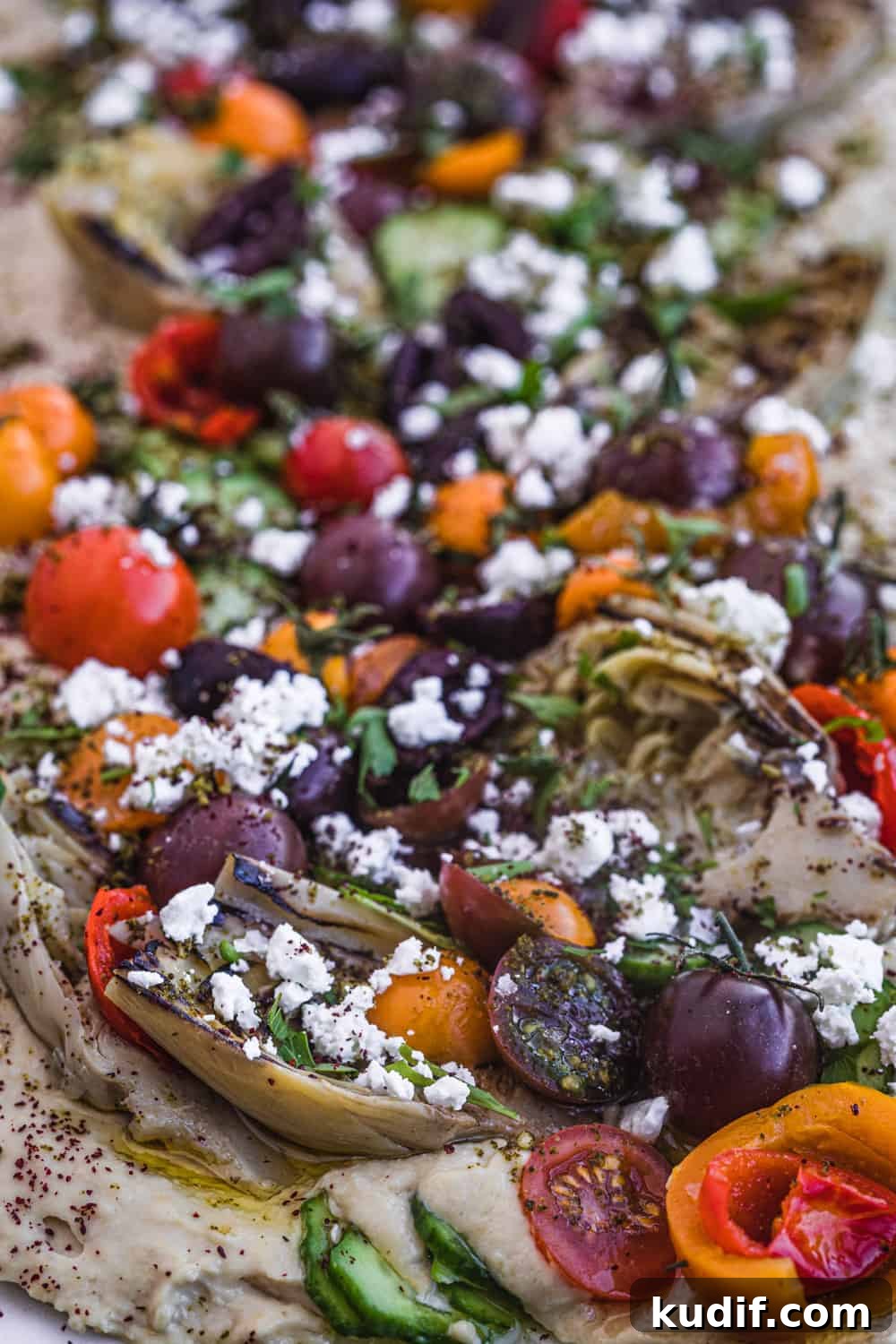
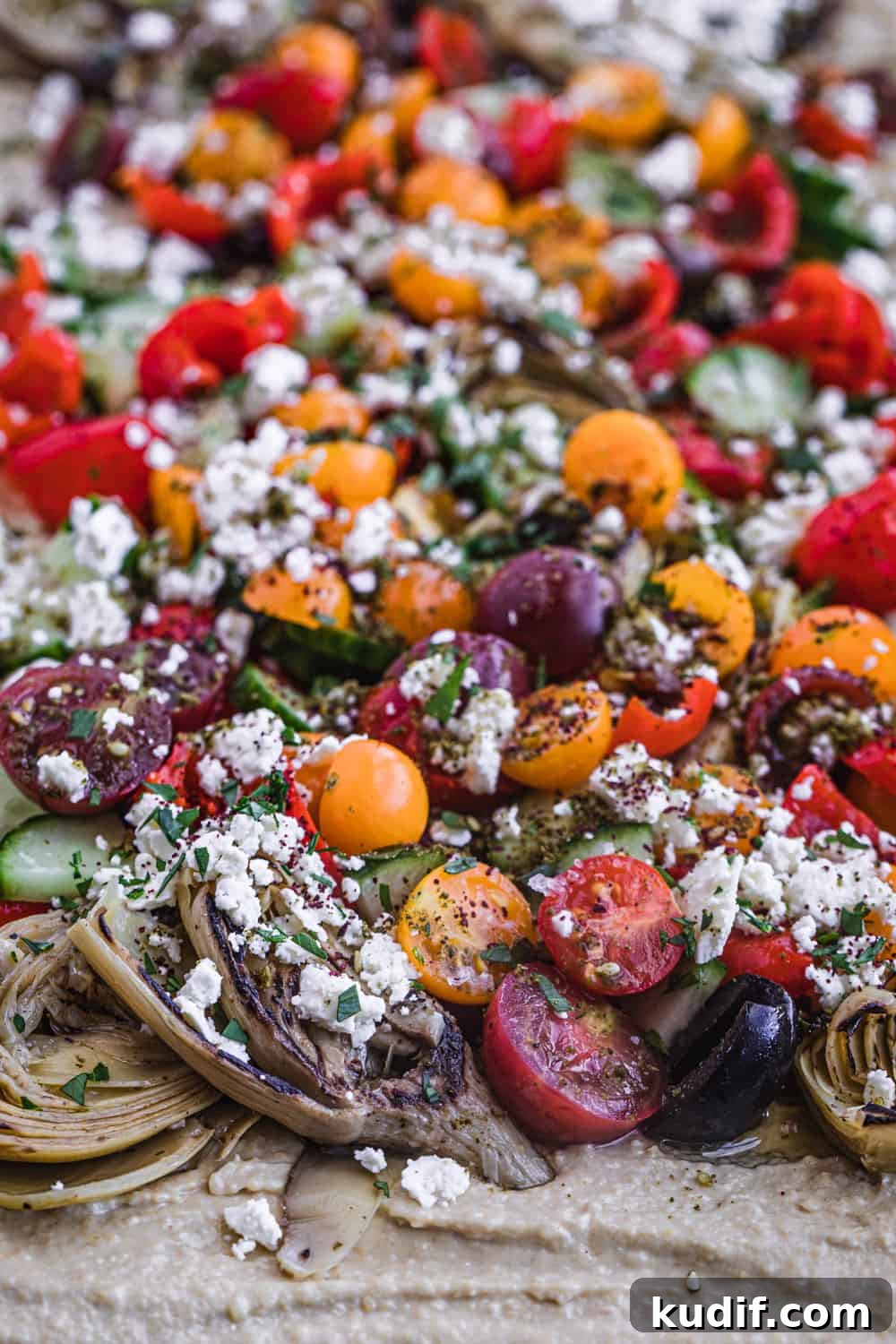
Hummus Toppings
- Fava beans (hummus ful)
- Sautéed mushrooms
- Fried cauliflower
- Cooked chickpeas (hummus masabacha)
- Ground spiced lamb (for a heartier topping)
- Chicken livers
- Poached egg
- Fresh tomatoes
- Tomato confit
- Garlic confit
- Peppers, sweet or hot
- Cucumbers
- Radishes
- Capers (fresh or fried)
- Pine nuts or other toasted nuts
- Pickles
- Feta cheese
- Roasted vegetables
- Crispy chickpeas
- Olives
- Extra virgin olive oil
- Fresh herbs (parsley, cilantro, mint)
- And more—get creative!
Having lived in Israel for several years, the author learned that many traditional hummus toppings there are cooked, while other regions emphasize raw toppings. Both approaches are delicious—choose the style you prefer or mix them both.
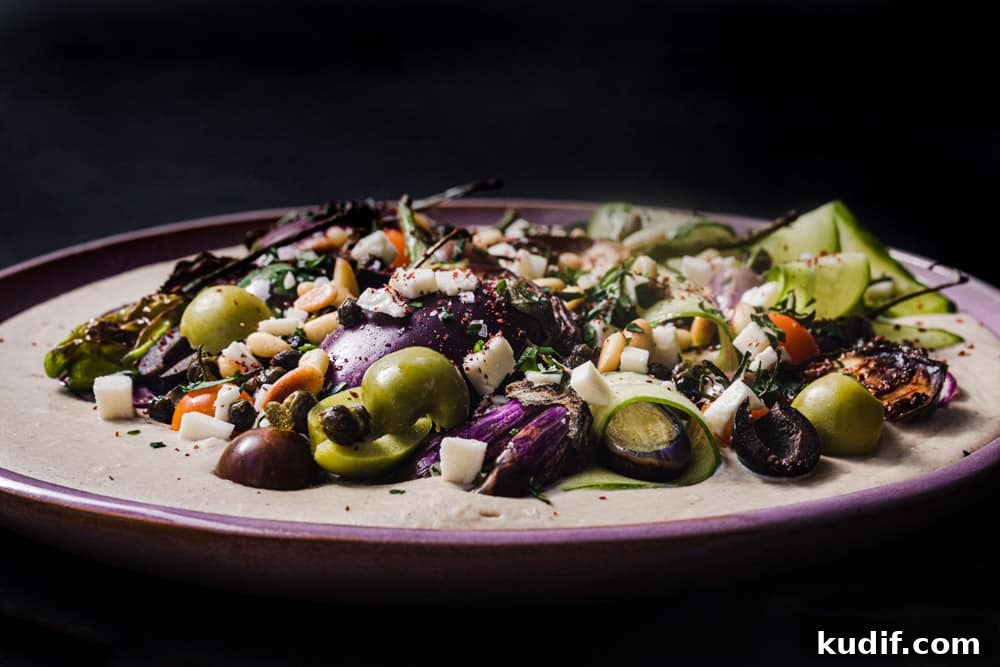
Notes and Variations
What is Hummus?
Hummus is a Middle Eastern dip or spread traditionally made from chickpeas, tahini (ground sesame paste), olive oil, lemon juice, garlic, and cumin. It’s creamy, savory, and a perfect base for many toppings.
Store‑Bought Hummus vs. Homemade Hummus
Homemade hummus has the best flavor and texture and takes about 10 minutes to make. If using store‑bought hummus, adjust the seasoning with salt, lemon juice, and cumin, and optionally stir in another tablespoon of tahini for extra richness.
Tip: Homemade hummus thickens in the fridge; thin it with 1 tablespoon of cold water at a time until you reach the desired consistency. Hummus will keep for up to 5 days refrigerated.
Ingredients
Chickpeas: Canned are convenient and quick; dried and cooked chickpeas give the best texture. You can substitute other beans like cannellini for a different flavor and texture.
Tahini: Good tahini makes a noticeable difference—it’s a central ingredient, though you can omit it if necessary. Choose a fresh, smooth brand for the best results.
Spices: Salt and cumin are classic; you can also add paprika, cayenne, or sumac for variation.
Toppings: Use seasonal produce and a mix of textures—crunchy, creamy, briny, and fresh.
Cook’s Tips
- Both homemade and store‑bought hummus work well—season store‑bought hummus before topping.
- Hummus keeps up to 5 days in the refrigerator.
- If the hummus thickens after chilling, thin it with cold water, 1 tablespoon at a time.
- Use local and sustainably sourced produce when possible.
- If transporting the dish, assemble it in a baking dish for easier mobility and secure travel.
Hummus Variations
Experiment with other hummus flavors for a twist on the base: beet or carrot hummus for vibrant color, black tahini hummus for a dramatic look, or roasted red pepper and butternut squash hummus for seasonal sweetness. You can also top hummus with spiced lamb for a hearty option.
Bright add‑ins like green tahini, whipped feta, labneh, or muhammara pair beautifully with classic hummus for more layers of flavor.
If you try this recipe, consider sharing how you built your bowl—it’s a great way to inspire others to play with seasonal produce and toppings in the kitchen.

Loaded Hummus
Ingredients
For the Hummus
- 1 can chickpeas
- 2/3 cup tahini
- 2 cloves garlic chopped
- 1-2 zest & juice lemons
- 1 teaspoon cumin
- kosher salt
- pepper
For the 7 Layers
- 1/2 cup artichoke hearts drained
- 1/4 cup olives halved
- 1/2 cup cucumbers thinly sliced
- 1/4 cup peppadew peppers halved or quartered
- 1/2 cup cherry tomatoes halved
- 1/4 cup feta crumbled
- 1 tablespoon parsley minced
- 1 tablespoon extra virgin olive oil optional
- za’atar, sumac, flaky sea salt, black pepper optional
Instructions
For the Hummus
-
Combine the chickpeas, tahini, lemon juice, garlic, cumin, and salt in the bowl of a food processor.
-
With the motor running, slowly drizzle in the olive oil and blend until smooth.
-
Taste and adjust seasoning as needed—add more olive oil, lemon, garlic, cumin, or salt to suit your preference. Store homemade hummus in the fridge for up to 5 days.
For the 7 Layers
-
Prep all your layers: drain the artichoke hearts and prepare the olives, cucumbers, peppers, cherry tomatoes, parsley, and feta.
-
Spread hummus evenly on a platter or serving dish.
-
Top the hummus with the artichoke hearts, olives, cucumbers, peppers, and cherry tomatoes.
-
Sprinkle with crumbled feta and minced parsley. Add optional spices, then drizzle with olive oil.
-
Serve with pita chips, crackers, or fresh bread and dig in.
Notes
- Both homemade and store‑bought hummus work for this dish.
- Hummus will keep for up to 5 days in the fridge.
- If chilled hummus thickens, thin it with 1 tablespoon of cold water at a time until smooth.
- Prefer local, seasonal, and sustainably sourced vegetables for the best flavor and impact.
- For travel, assemble in a baking dish for easier transport.
Did you make this recipe? Share your version and tag the author to show how you’re playing with colors and flavors in the kitchen.