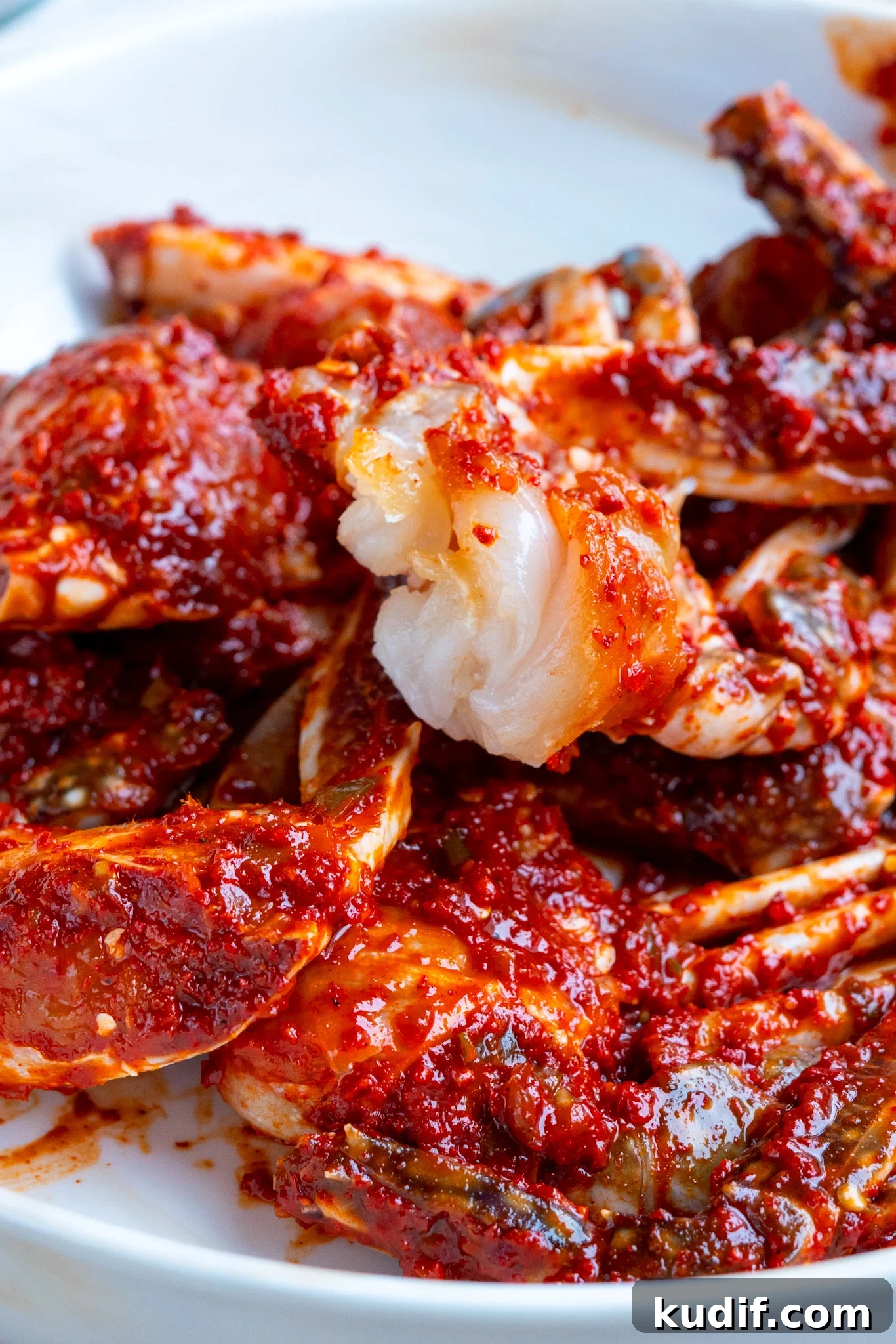
Yangnyeom gejang is my all-time favorite Korean dish, and I’m thrilled to share this perfected recipe. This version blends my aunt’s techniques with methods my mother taught me. After testing many recipes—from restaurants to home cooks—my aunt’s approach consistently makes the best yangnyeom gejang.
I now include guidance for using frozen Korean blue crab, which I prefer for flavor and convenience, plus notes for those who want to use live crab. Frozen cut Korean blue crab is commonly sold in Korean markets in boxes that note the crab was frozen immediately after processing. In my experience, Wang Korea produces the sweetest, meatiest crabs with the desirable ocean flavor.
Here’s what it looks like:
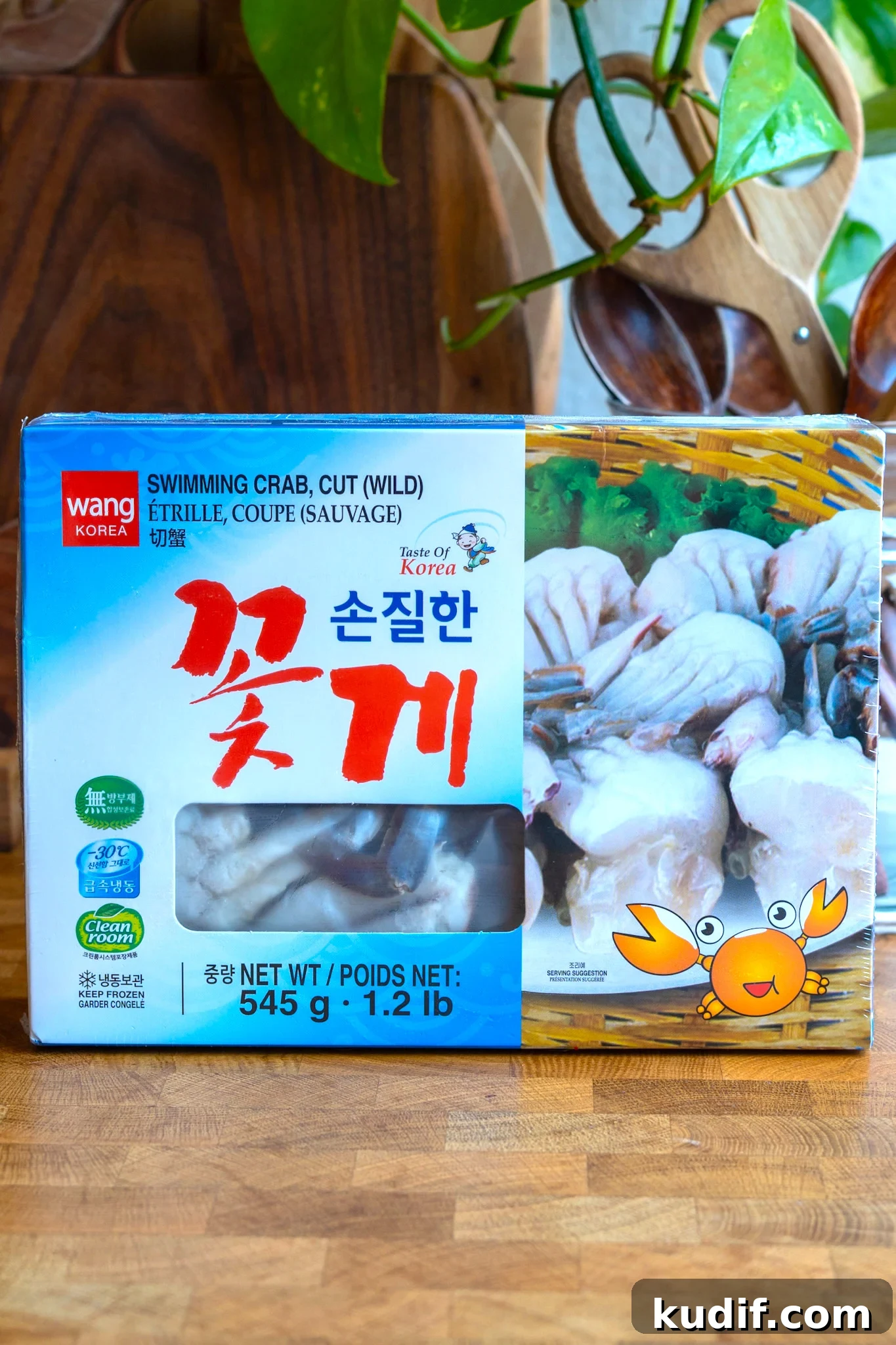
If you find a high-quality brand like the one pictured, you usually don’t need to soak the crab in soju or lemon. Other brands can have a mild fishy smell and benefit from a 20–30 minute soak in soju and lemon juice before marinating.
Live vs Frozen Crab
Important: Korean blue crab (ggot-gae, 꽃게) is different from U.S. blue crab. Korean blue crab has a softer shell and a sweeter meat. If you can source live Korean blue crab, that’s ideal, though they can be hard to find in the U.S. Frozen Korean blue crab is my preference because it’s sweeter, easier to eat (softer shell), and often more accessible. The main downside to frozen crab is you may miss some roe and tomalley found in the freshest live crabs.
Female vs Male Blue Crabs (if using live crab)
For the best yangnyeom gejang, choose female crabs: they often carry eggs that add flavor and a creamy balance to the spicy sauce. To identify a female, look at the apron on the belly side: a female apron is rounded while a male apron is long and pointed.

Do Not Use Dead Crabs
Do not use crabs that have died before preparation. Dead crabs can quickly develop harmful bacteria and enzymes that produce ammonia, which affects taste and safety. Handle live crabs carefully and follow safe seafood practices when preparing raw crab.
How to Break Down Live Blue Crab
Only follow this section if using live crabs. If you use frozen cut crab, skip to the frozen prep section.
Step 1
Place live crabs in a sealed bag or container and chill them in the freezer for about 2 hours. This humane method slows them down and makes handling easier. While they rest, prepare the seasoning sauce.

Step 2
Thoroughly wash each crab under cold running water with a stiff brush. You don’t need to spend much time on the top shell since you’ll remove it.

Step 3
Remove the apron by lifting and twisting it off. Lay the crab on a flat surface and hold it steady while you do this.

Step 4
Hold the crab firmly and pull off the top shell. Shell breakage is normal; you’ll gain practice with time. Keep the shells—some of the fat and eggs will be collected from them later.


Step 5
Remove the gills (they are edible but usually taken out for this dish). Trim away the eyes, mouth area, and any sharp spikes or pieces you won’t eat.

Step 6
Cut the body in half, remove the tips of the legs and claws where there is no meat, and make cracks in the larger legs so the sauce penetrates and the crab is easier to eat.


Step 7
Rinse the prepared pieces one more time, being careful not to wash away eggs or fat. Place the cleaned pieces in the refrigerator while you collect remaining fat and eggs from the removed shells.

Step 8
Scrape the eggs and fat out of the shells, rinsing away any black residue. Dig into crevices to collect all the flavorful fat and roe—this adds rich umami to the final dish.

Step 9
Add the collected eggs and fat back to the cleaned crab pieces. Refrigerate until ready to marinate. This completes the live crab breakdown process.

How to Prep Frozen Crab
For frozen cut Korean crab, thaw overnight in the fridge or under cold running water. Avoid leaving crab at room temperature for long.
Step 1
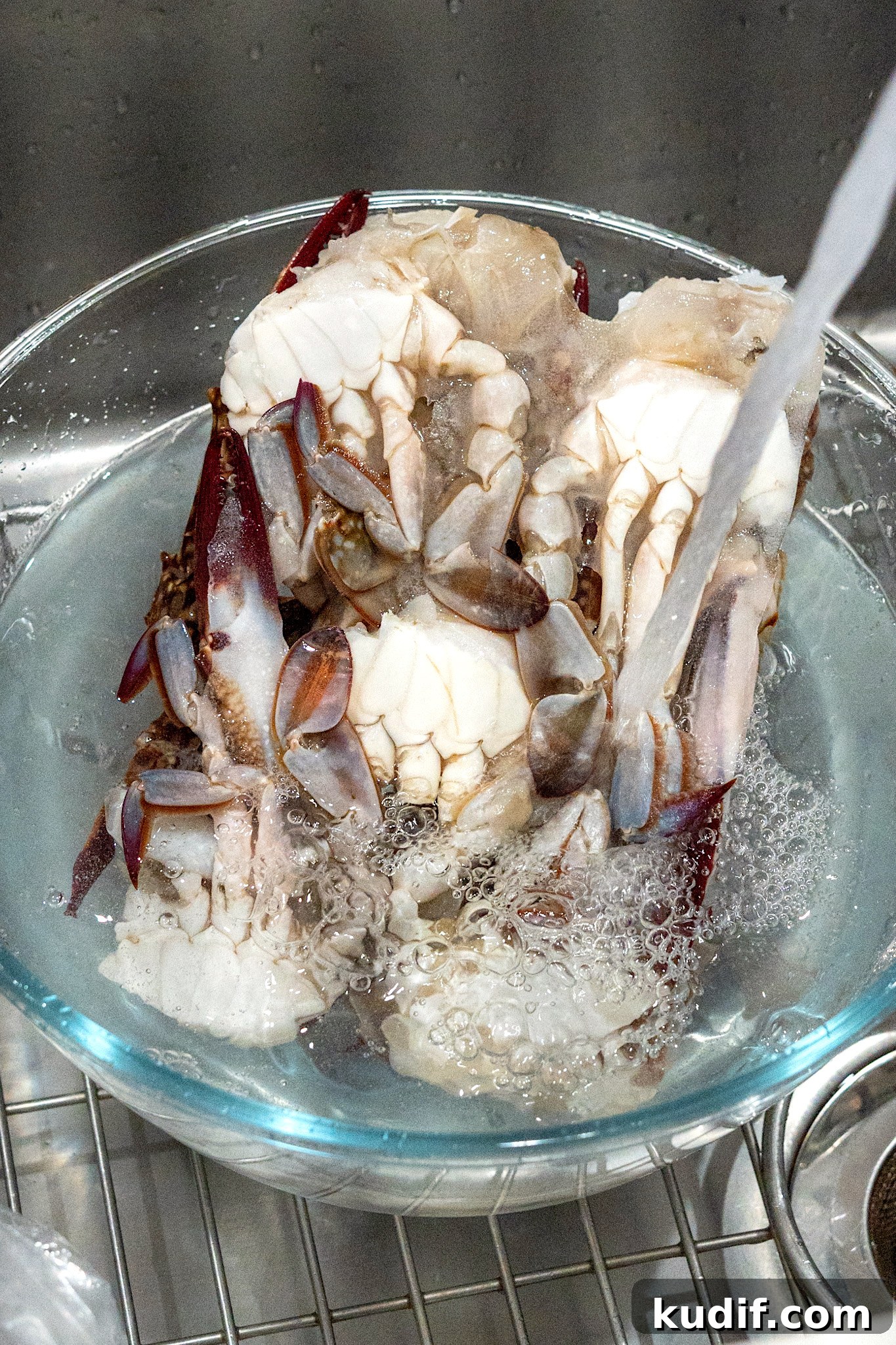
Thaw the block in the refrigerator overnight or under cold running water. The pieces can be separated while still partially frozen; keep them cold throughout handling.
Step 2
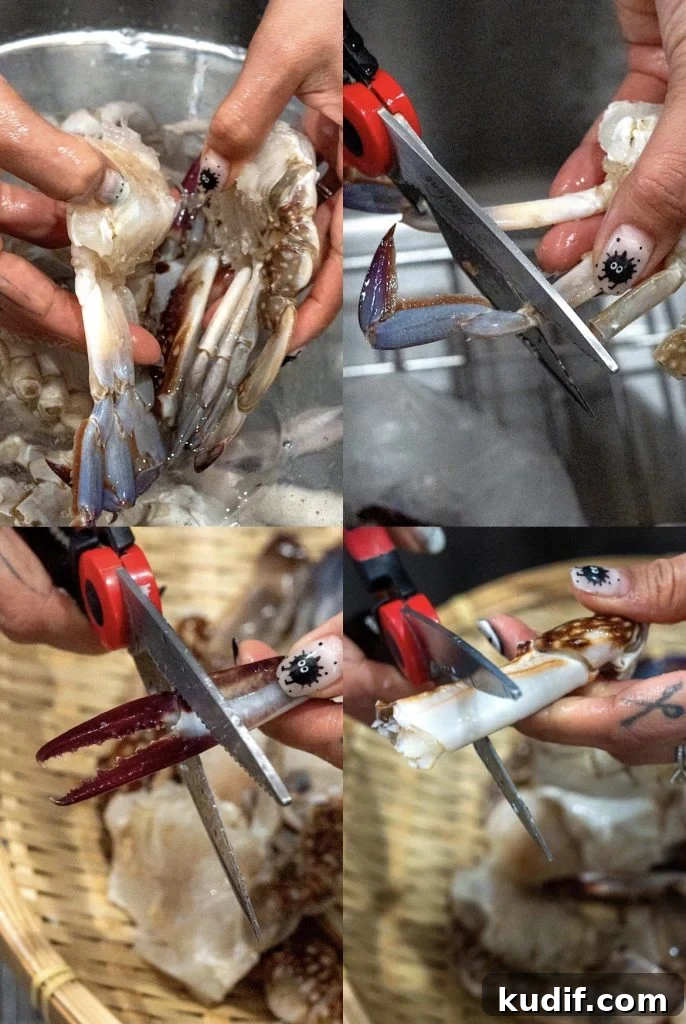
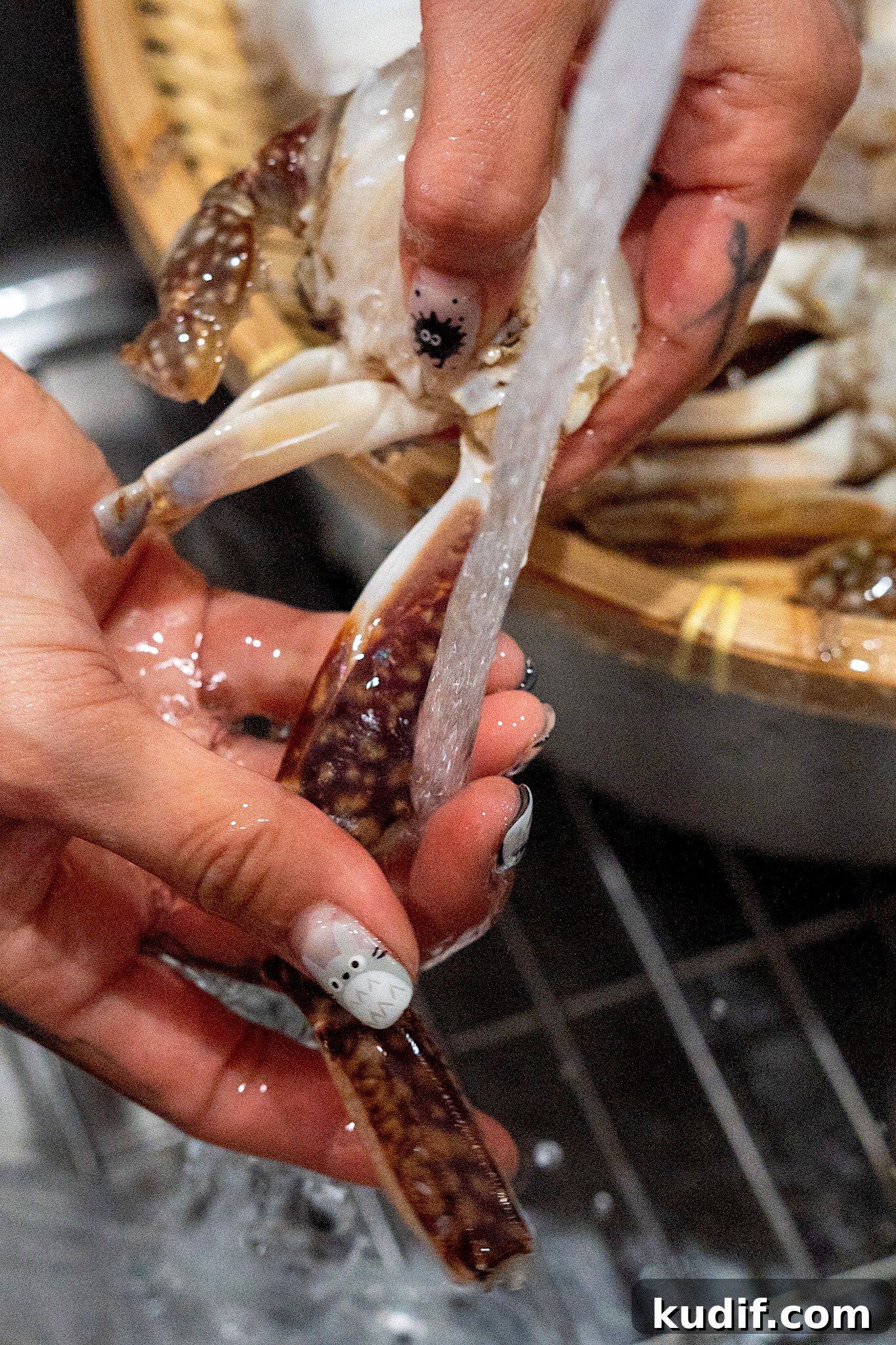
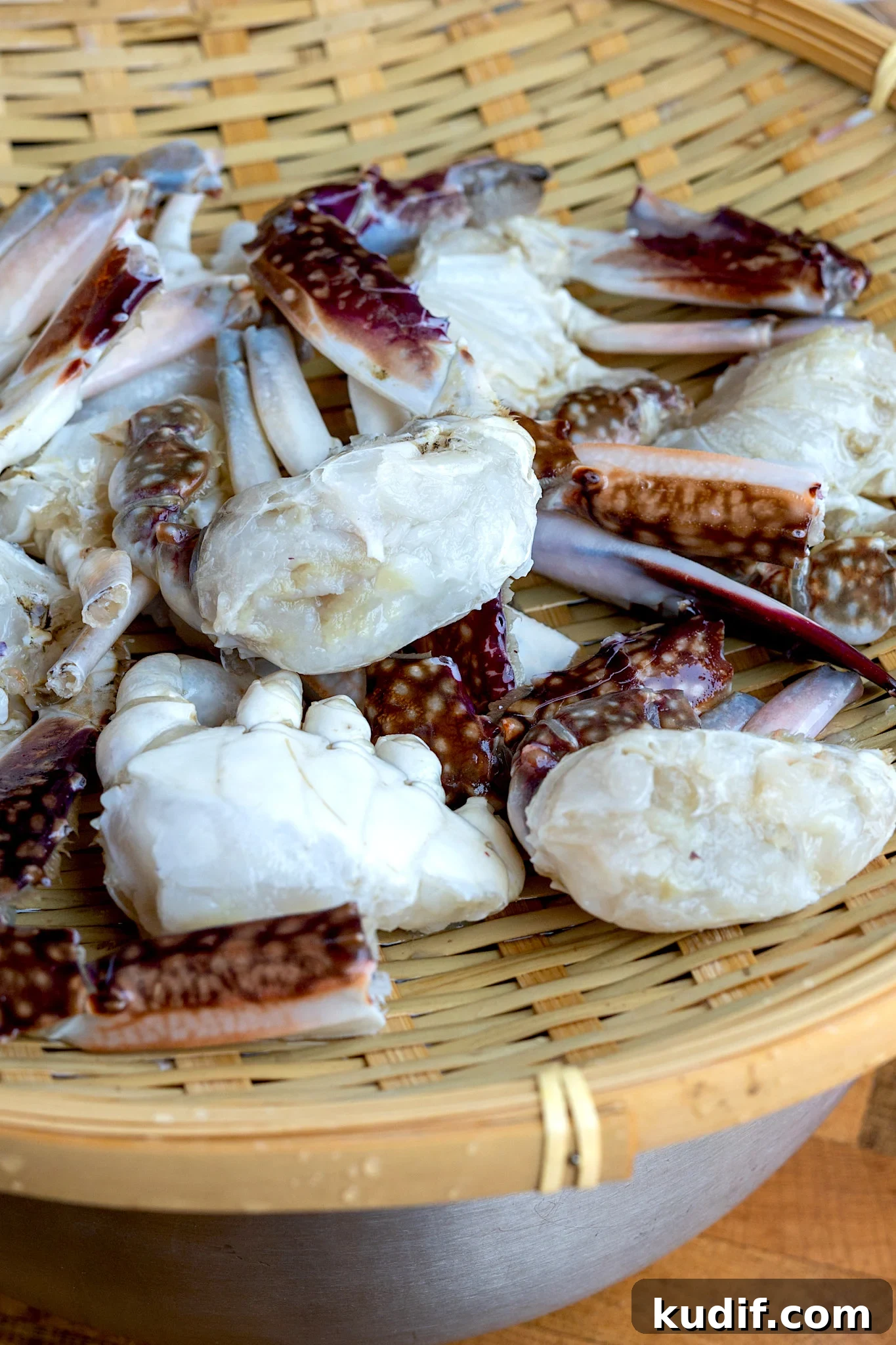
Gently pull the crabs apart, discard any fishing lines, trim off leg ends with no meat, remove claws, and make cracks in large legs with kitchen shears or the handle of the shears so the sauce can penetrate.
Step 3
Rinse the cleaned crab one last time under cold water and drain in a colander. Keep chilled in the refrigerator until marinating.
Step 4
If you couldn’t find a high-quality frozen brand, soak the cleaned crab in a mixture of lemon juice and soju for 20–30 minutes in the fridge to reduce fishiness. Drain and pat dry before marinating.
Spicy Sauce Ingredients
I prefer a less-sweet yangnyeom gejang. If you like it sweeter, add more sugar or plum syrup and you can skip the rice porridge.
- Gochugaru (Korean red pepper flakes) — essential
- Plum syrup (or another sweet syrup)
- Sugar (granulated)
- Fish sauce
- Soy sauce (optional but used in this recipe for depth)
- Sesame oil (use sparingly)
- Plum vinegar (or a mild white vinegar)
- Garlic, fresh ginger, and Thai or Korean spicy chilis — crushed
- Rice porridge (optional) — helps the sauce cling and improves texture
- MSG (optional) and black pepper
Note: If you can find spicy Korean peppers (cheongyang gochu), use them instead of Thai chilis for a more authentically Korean heat.
Is the Rice Porridge Required?
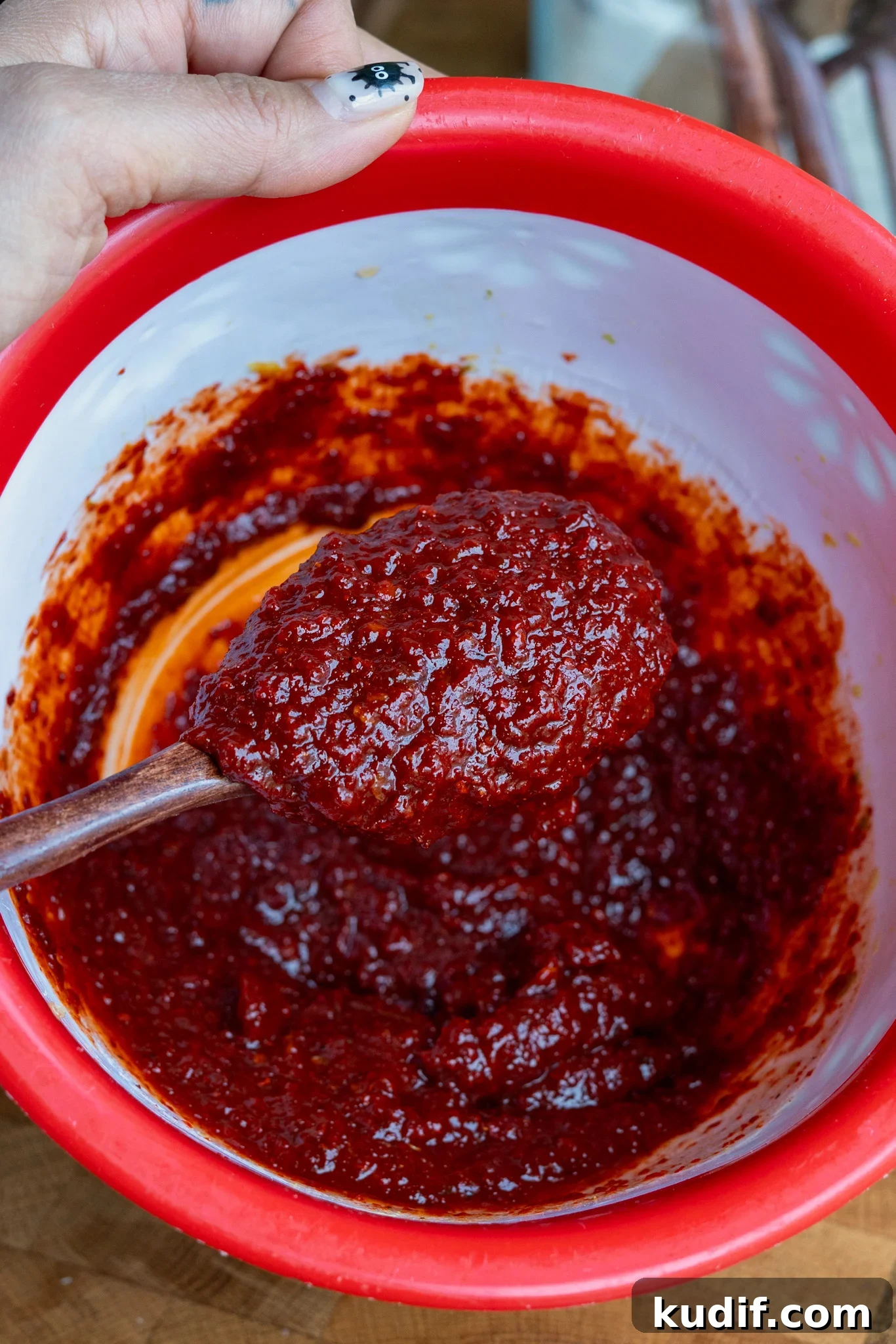
Rice porridge is traditional for kimchi-like sauces: it helps the sauce stick, adds a fermented-like mouthfeel, and contributes to texture. If you prefer a sweeter sauce with more liquid sweeteners, you can omit it. If you keep sugars low, the porridge provides viscosity and a pleasant appearance.

Marinating Time and Storage
You can eat the crabs right away, but I recommend at least 6 hours. One full day in the refrigerator is best. Consume within two days for optimal texture; they remain safe up to five days but the texture softens over time.
How to Eat Yangnyeom Gejang
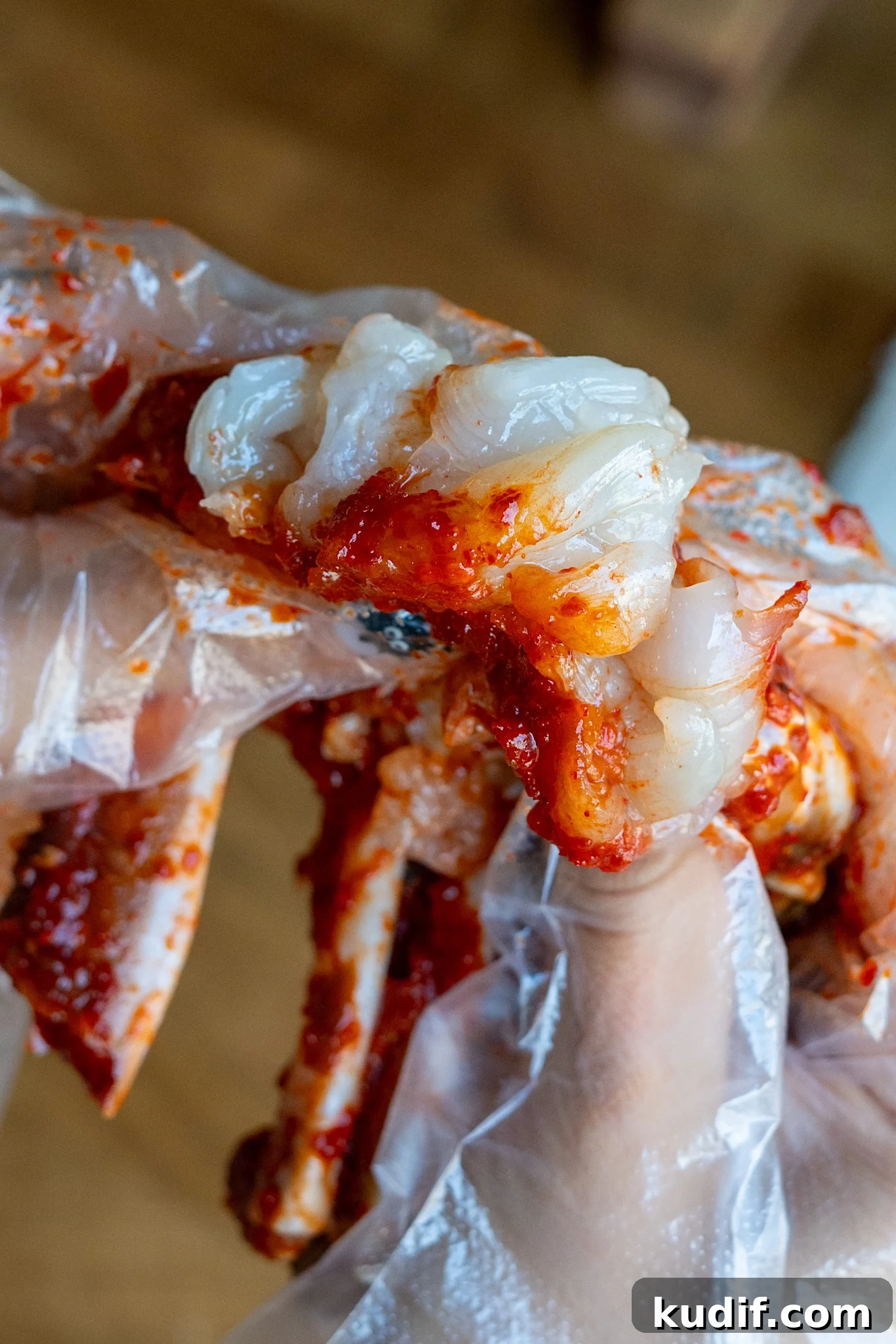
This dish is messy but delightful. Extract meat by scraping with your teeth and a lot of gentle sucking; legs and claws can be squeezed or cracked to access meat. Be cautious of shell fragments. Yangnyeom gejang is considered “bap do-duk” (rice thief) because it pairs perfectly with steamed rice—this is how it’s typically enjoyed.
More Spicy Korean Dishes
If you enjoy yangnyeom gejang, you may like other spicy Korean dishes that share ingredients and flavors, such as spicy chicken stew, tteokbokki, spicy pork bulgogi, braised fish jorim, and spicy stir-fried squid.
Recipe Ingredients (summary)
- 2 lbs live blue crab or frozen Korean blue crab
- 1 tsp sesame seeds (optional)
- Lemon wedge and 1/4 cup soju (for soaking some frozen brands)
- Seasoning sauce: 5 tbsp gochugaru, 1 tbsp soy sauce, 3 tbsp fish sauce, 2 tbsp plum syrup (or other syrup), 1 tbsp sugar, 2 garlic cloves, 1 tsp fresh ginger, 2 tbsp sesame oil, 1/2 tsp plum vinegar, 1/4 tsp MSG (optional), 1/4 tsp black pepper, 5 Thai chilis (optional), 1/3 cup rice porridge (optional)
- Rice porridge: 1/2 cup water + 1 tsp glutinous rice flour
Basic Instructions
- If using live crabs, freeze for 2 hours to sedate, then clean and break down as described above.
- If using frozen crab, thaw in the fridge or under cold water, separate the pieces, trim, crack large legs, rinse, and chill. If the brand is fishy, soak in lemon and soju for 20–30 minutes, then drain and pat dry.
- Make rice porridge: mix 1/2 cup cold water with 1 tsp glutinous rice flour, cook over low heat until thickened, cool completely.
- Crush garlic, ginger, and chilis in a mortar and pestle. Combine all seasoning ingredients, including the cooled rice porridge if using.
- Mix cleaned crab with the seasoning sauce until fully coated. Wear gloves if desired. Sprinkle sesame seeds and refrigerate for at least 6 hours, ideally 24 hours.
- Serve chilled with steamed rice.
Additional Info
Prep time: ~1 hour (active handling and prep; marinating time not included). Serves about 2 people as a main or side. Cuisine: Korean. Course: Main course or banchan (side dish).