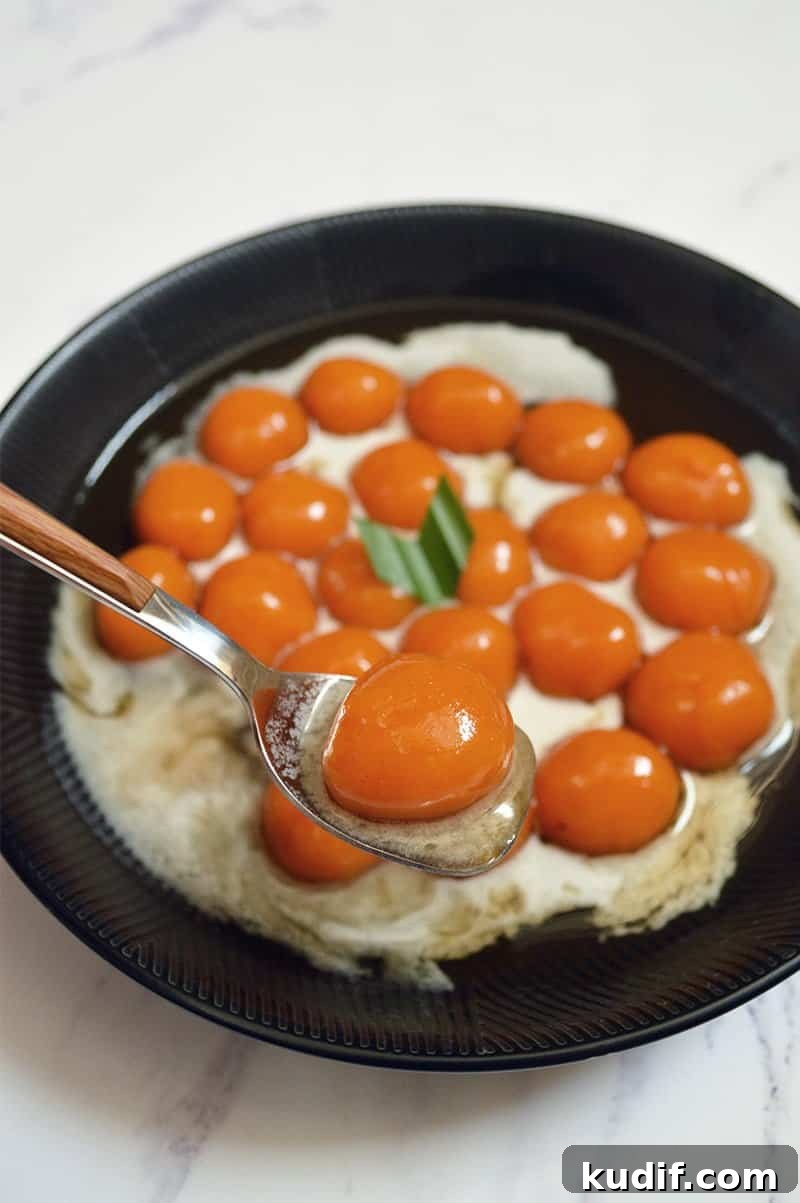
Biji Salak is a beloved Indonesian takjil dessert made of soft sweet potato and tapioca balls served in a warm palm sugar porridge and finished with coconut milk.
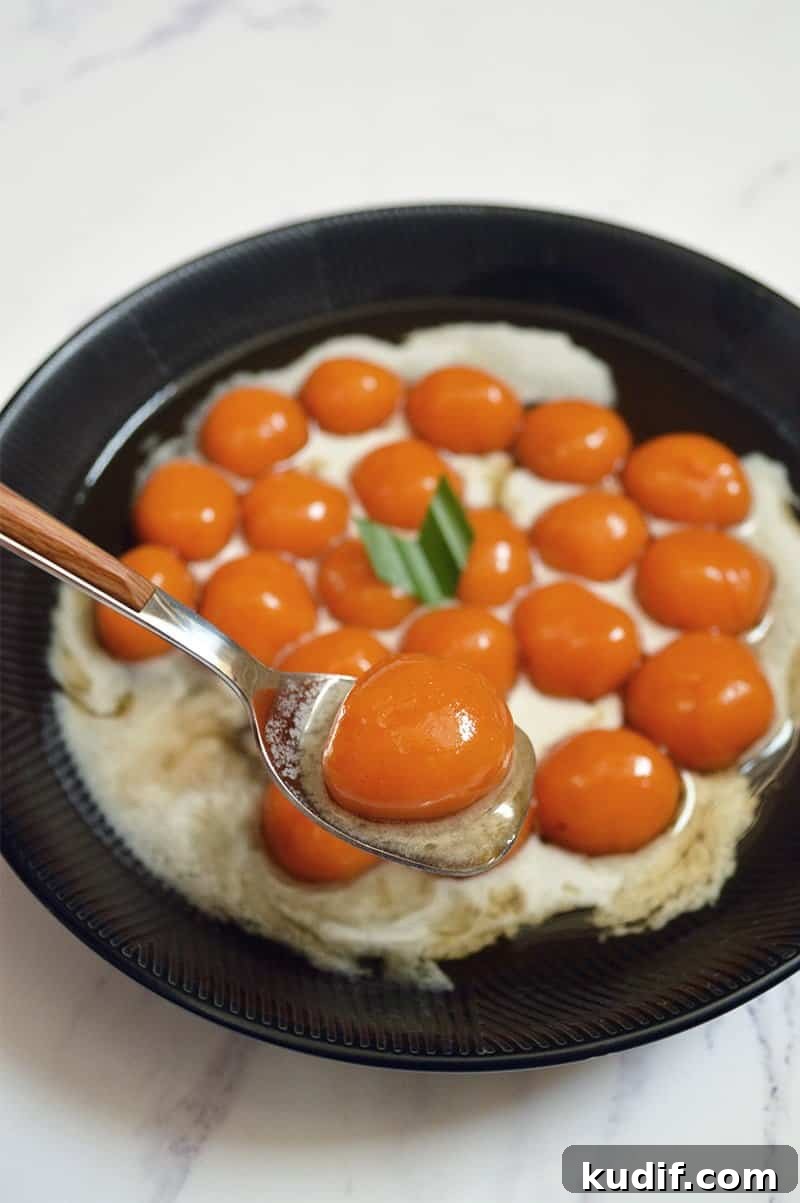
During Ramadan, Indonesians break their fast with iftar and enjoy a wide variety of traditional snacks sold at temporary stalls each afternoon. Biji Salak is one of the classic takjil desserts you’ll find everywhere in Indonesia during this month. Its comforting combination of chewy balls, caramel-like palm sugar porridge, and creamy coconut milk makes it a must-try — especially if you grew up with it.
About Biji Salak
Originating from West Sumatra, Biji Salak literally translates to “salak seed,” referencing the small, rounded appearance of the balls rather than any ingredient from the salak (snake fruit). The dessert is built from sweet potato mixed with tapioca flour to form soft, chewy balls. These are served in a fragrant palm sugar porridge infused with pandan leaves and topped with coconut milk, creating a well-balanced sweet and savory profile. Biji Salak is naturally gluten-free and suitable for vegans.
Texture-wise, the sweet potato balls resemble those used in some East Asian desserts: soft, slightly chewy, and satisfying. The porridge is essentially a thick palm sugar syrup, cooked down with water and pandan to concentrate flavor. Coconut milk is added at the end to mellow the sweetness and add richness.
Tips for Making Biji Salak
While the recipe looks straightforward, a few practical tips will help you achieve the ideal texture and flavor.
1. Palm sugar alternatives
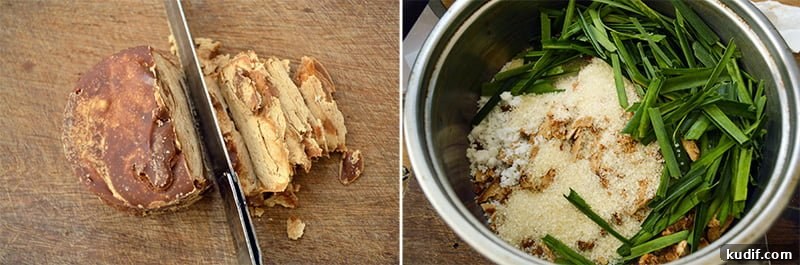
Traditional palm sugar (gula Jawa) provides a deep, caramel-like flavor and earthy aroma. If you don’t have it, suitable substitutes include gula Melaka, coconut sugar, or dark brown sugar. These alternatives carry extra molasses and can generally be used 1:1 in place of palm sugar.
2. Don’t skip pandan leaves
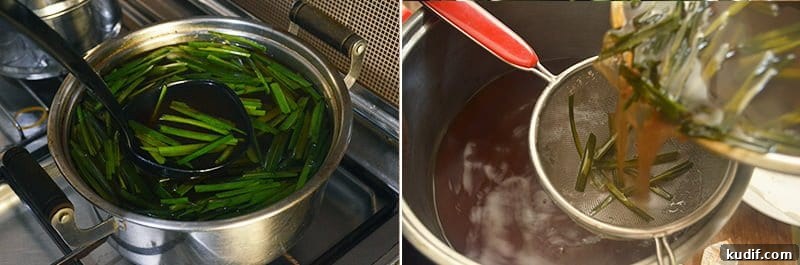
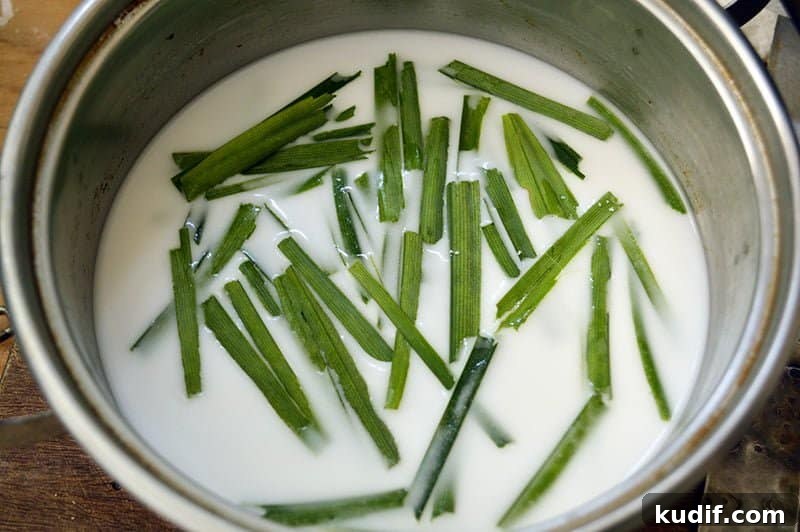
Pandan leaves add a subtle, fragrant note that complements palm sugar and coconut. Tie them into a knot and simmer with the syrup to release their aroma. If fresh pandan isn’t available, pandan extract or essence can be used, but fresh leaves give the best, most natural flavor.
3. Prevent coconut milk from curdling
Thick coconut milk gives the dish its creamy finish. To avoid separation or a grainy texture, simmer coconut milk gently over low heat rather than boiling it hard, and stir frequently. If you’re worried about stability, a small slurry of cornstarch or tapioca mixed with water added near the end will help thicken and stabilize the sauce.
4. Use different tubers for color variations
Sweet potatoes are traditional, but you can substitute potatoes, taro, yams, purple sweet potatoes, or pumpkin to change the color and flavor. If using less-sweet root vegetables like regular potatoes or yams, add a touch of sugar to the dough to enhance taste. Some recipes use glutinous rice flour, but tapioca flour produces the chewiest, lightest texture; glutinous rice flour tends to yield denser results.
5. Don’t overwork the sweet potatoes
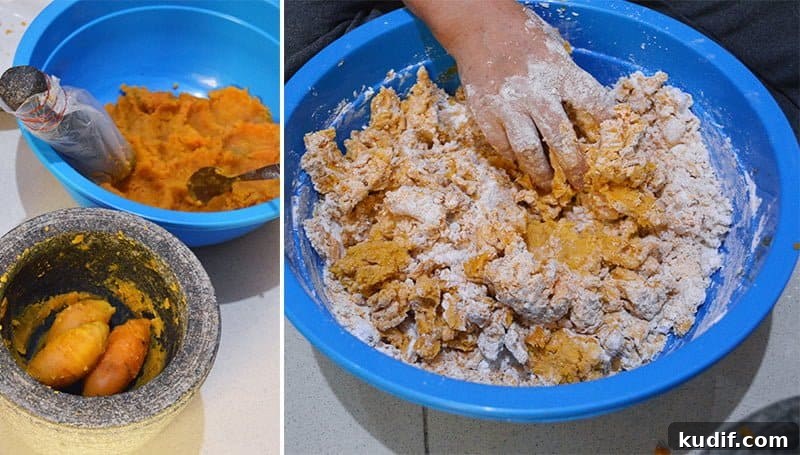
Over-mashing releases excess starch, which can make the balls gummy. Mash while the sweet potatoes are still hot and combine quickly with the tapioca flour. Avoid using a food processor for the final mixing to preserve a tender, slightly chewy texture.
6. How to shape and cook the balls
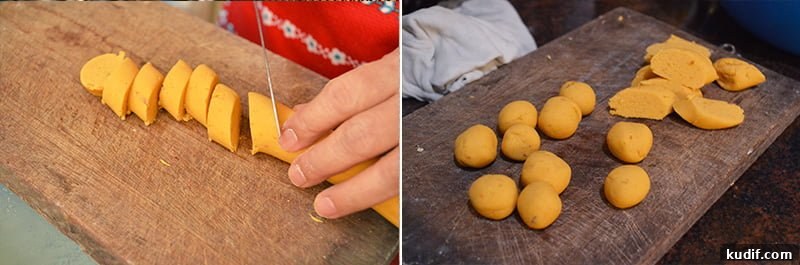
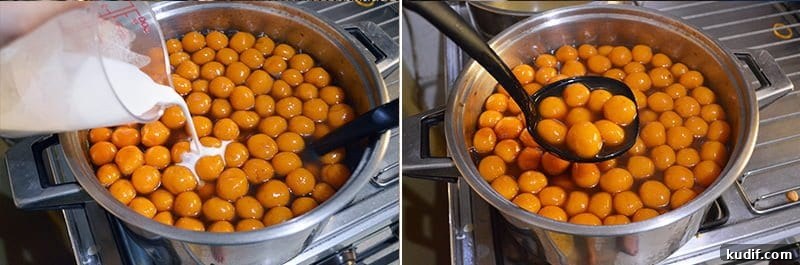
Knead mashed sweet potato with tapioca flour and a pinch of salt by hand until smooth. Roll the dough into thin logs, cut into equal segments, then shape into small balls. Bring a pot of water to a vigorous boil before adding the balls — if the water isn’t hot enough, they can break apart. When the balls float, they are cooked; immediately transfer them to the palm sugar syrup to keep them from sticking and to let them absorb flavor.
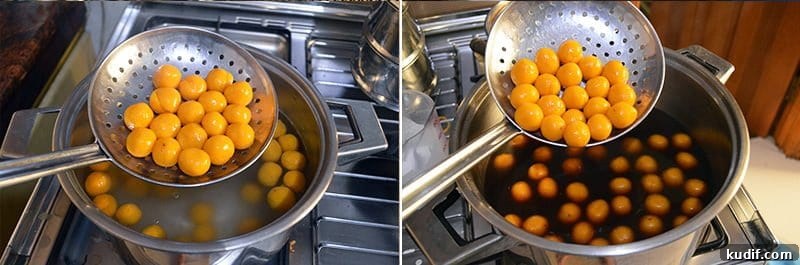
After transferring the cooked balls to the syrup, simmer briefly so they soak up the sweetness. Thicken the porridge by stirring in a small mixture of tapioca flour and water until you reach the desired consistency.
7. Adjust porridge sweetness and thickness
Taste the palm sugar porridge as it simmers and adjust sweetness to your preference. Add the tapioca slurry gradually to thicken; a little goes a long way, and you can always add more to reach the ideal porridge-like texture.
8. How to serve Biji Salak
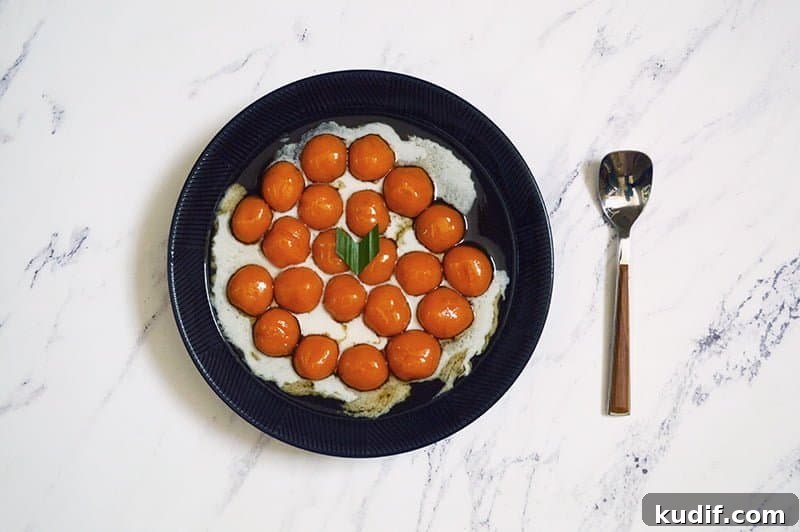
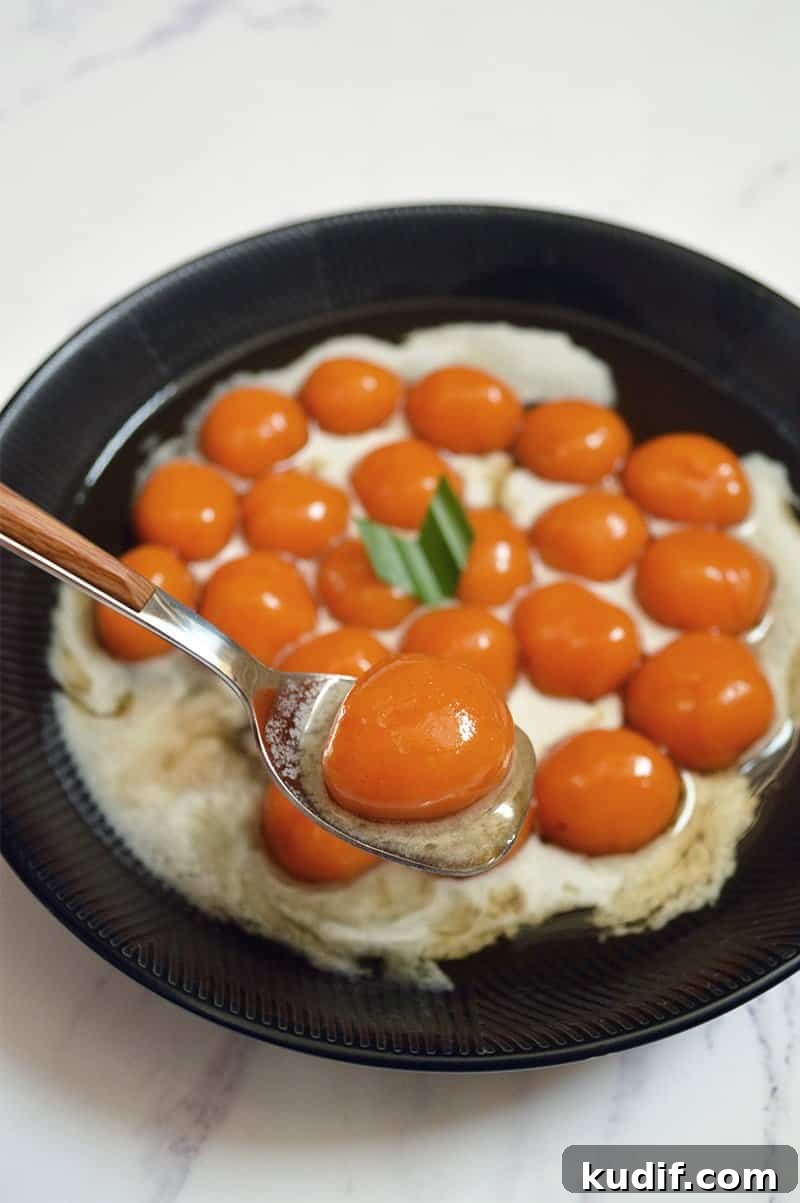
Serve a generous scoop of sweet potato balls with the thickened palm sugar porridge in a bowl and drizzle with creamy coconut milk. Biji Salak can be enjoyed warm or chilled, though it is at its best warm when the balls are still soft and elastic. As it cools, the chewiness will naturally lessen.
More Indonesian Dessert Recipes
Explore other Indonesian sweets to expand your dessert repertoire. These traditional treats highlight pandan, coconut, and palm sugar flavors commonly found across the archipelago.
- Putu Ayu (Steamed Pandan Coconut Cake)
- Klepon (Pandan Glutinous Rice Balls with Palm Sugar Filling)
- Kue Lumpang Ijo (Pandan Sticky Rice Cakes)
- Pandan Coconut Ice Cream
Biji Salak (Sweet Potato Balls with Palm Sugar Porridge and Coconut Milk)
Pin
Rate
Ingredients
Sweet Potato Balls
- 1.1 lbs (500 gr) sweet potato, peeled, cut into chunks
- 1 cup (125 gr) tapioca flour
- 1/2 tsp salt
Palm Sugar Porridge
- 4 cups (1 liter) water
- 1 cup (200 gr) gula Jawa / palm sugar block, shaved and minced
- 1/4 cup (50 gr) granulated sugar
- 1/2 tsp salt
- 3 pandan leaves, chopped or knotted
- 2 tbsp tapioca flour
- 3 tbsp water
Coconut Milk
- 1 1/4 cups (300 ml) thick coconut milk
- 2 pandan leaves, chopped or knotted
- 1/2 tsp salt
Instructions
-
Cut peeled sweet potatoes into large chunks. Steam for 15–20 minutes until tender.
-
Meanwhile, combine water, palm sugar, granulated sugar, pandan leaves, and salt in a pot. Bring to a boil, then turn off heat and strain to remove solids. Set aside.
-
In a small saucepan, simmer coconut milk with pandan leaves and a pinch of salt over low heat, stirring constantly. Remove from heat and keep warm.
-
Mash the hot sweet potatoes until smooth. Add tapioca flour and salt, knead briefly by hand until combined. Roll into logs, cut into segments, and shape into 1–1.5 inch balls.
-
Boil a pot of water, add the balls, and cook until they float. Use a strainer to transfer cooked balls into the palm sugar syrup.
-
Bring the palm sugar mixture to a boil. Mix 2 tbsp tapioca flour with 3 tbsp water, then slowly add this slurry to the syrup while stirring until it thickens and bubbles. Remove from heat.
-
To serve, spoon the sweet potato balls and palm sugar porridge into bowls and drizzle generously with coconut milk.