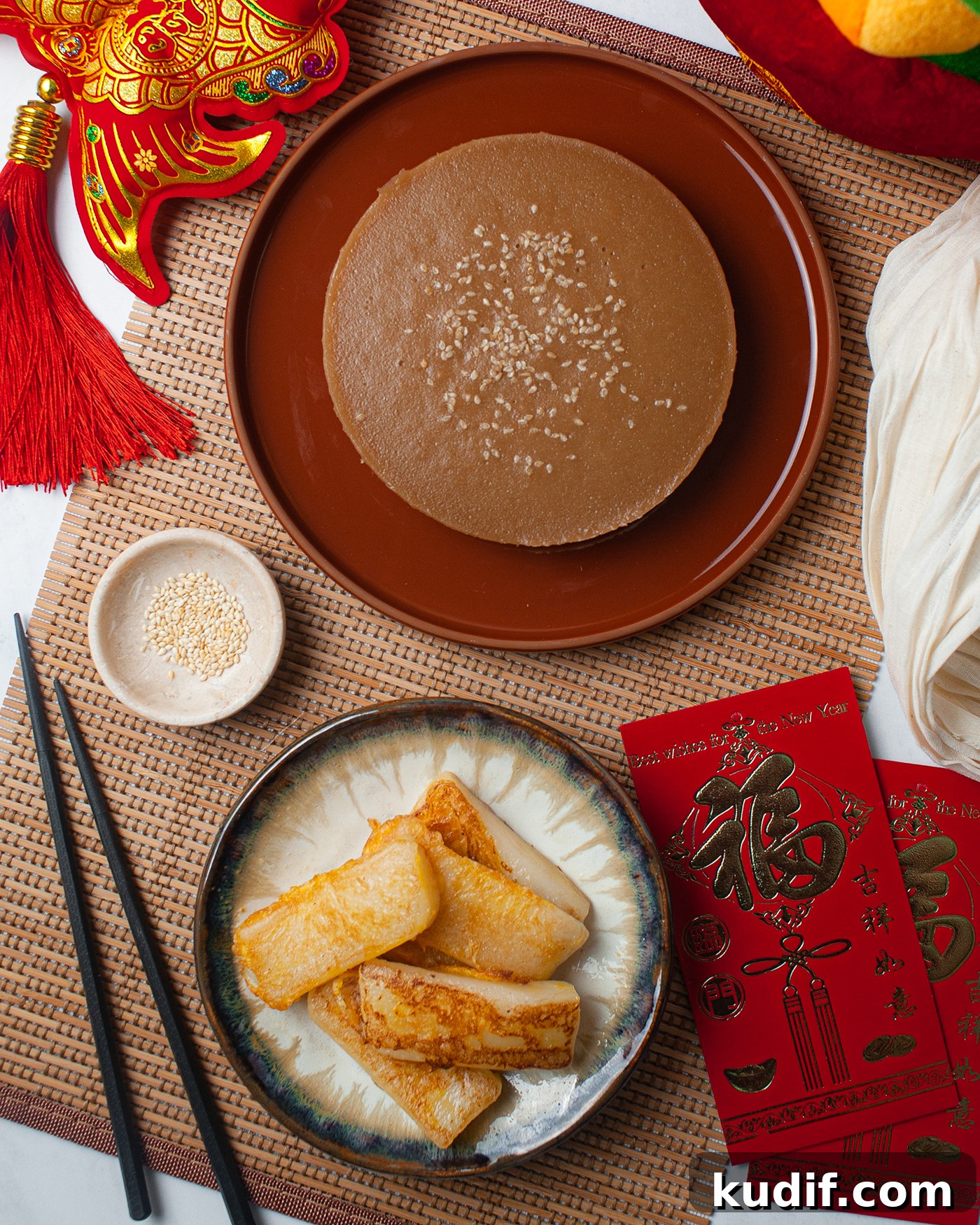
Lunar New Year is almost here — a time for family, friends, and festive food. One beloved treat enjoyed during this season is tikoy.
Tikoy is a Chinese-Filipino sweet sticky rice cake (nian gao) made from glutinous rice flour and sugar. It’s traditionally enjoyed during Lunar New Year celebrations.
This article covers the origins and cultural significance of tikoy, plus a simple recipe so you can make it at home. Read on to learn how to steam or pan-fry this chewy, sweet classic.
Table of Contents
- Origins of Tikoy
- Why is Tikoy eaten during Lunar New Year?
- Ways to Prepare and Serve Tikoy
- Tips for making the perfect Tikoy
- How to store Tikoy
- Ingredients
- Recipe
- Final Thoughts
Origins of Tikoy
Chinese influence in the Philippines stretches back centuries, long before Spanish colonization. Trade and migration brought families and culinary traditions from coastal provinces of China to the archipelago.
Many Chinese migrants settled in trading hubs, and one enduring legacy is cuisine. Tikoy — the Filipino name for the sweet sticky rice cake — traces its roots to the Hokkien-speaking migrants from Fujian province. The Hokkien term “ti keuh” means “sweet cake,” and in Mandarin the same dessert is called nian gao.
Manila’s Binondo district, established in 1594, is the world’s oldest Chinatown and remains home to generations of Chinese-Filipino families who preserved and adapted dishes like tikoy into local culture.
Why is Tikoy eaten during Lunar New Year?
Tikoy is a Lunar New Year staple because it symbolizes prosperity and good fortune. Its sticky texture also represents togetherness and unity — sharing tikoy implies that good luck will “stick” to you and your family throughout the year.
Ways to Prepare and Serve Tikoy
Tikoy can be prepared and served in several ways. The two most common methods are:
- Steamed and sliced, served as is;
- Steamed, refrigerated to firm up, then dipped in egg and pan-fried until golden for a crisp exterior and chewy interior.
You can make tikoy with white or brown sugar — brown sugar yields a deeper color and richer flavor. Common garnishes include sesame seeds, crushed peanuts, Chinese dates, or macapuno. Bakeries and home cooks also get creative: thin slices can be rolled with fillings like peanut butter or sweet bean paste, or tikoy can be molded into decorative shapes.
Tips for making the perfect Tikoy
- Use glutinous (sweet) rice flour, not regular rice flour. Mochiko is one commonly labeled glutinous rice flour.
- When steaming, cover the pan with a banana leaf or a clean towel to prevent condensation from dripping onto the cake — especially important if you plan to serve it steamed.
- Use the toothpick test to check doneness.
- If you plan to pan-fry, refrigerate the steamed tikoy overnight; it firms up and is much easier to slice.
- Greasing the knife with a little oil helps produce cleaner slices.
How to store Tikoy
Store tikoy wrapped tightly in plastic wrap or aluminum foil. It will keep on the countertop for about two days or in the refrigerator for up to one week. For longer storage, wrap well and freeze for up to one month; thawed tikoy retains its texture and flavor.
Ingredients
Tikoy
- 1 cup glutinous rice flour, sifted
- ½ cup sugar (brown or white)
- 1 cup hot water
- Sesame seeds for topping
For pan frying (optional):
- 1 egg, beaten
- Butter or oil for the pan
Note: Yield depends on the pan size and slice thickness. A 6″ round pan is a convenient size for a small gathering.
Recipe
Make Tikoy:
- Dissolve the sugar in hot water and let the mixture cool until warm.
- Sift the glutinous rice flour into a bowl. Gradually whisk in the sugar water until you have a smooth, even batter.
- Grease a 6″ round cake pan (or any pan that fits your steamer). Pour in the batter, rotate the pan gently and tap it to level the surface.
- Sprinkle sesame seeds on top.
- Steam over boiling water for about 15 minutes, or until the center passes the toothpick test.
- Remove from the steamer and allow the tikoy to cool completely before slicing.
To serve immediately:
- Run a knife around the pan to release the tikoy, slice into pieces, and serve warm or at room temperature.
To pan fry (optional):
- Cover and refrigerate the cooled tikoy overnight to firm it up.
- Use a greased knife to slice the tikoy into thin rectangular pieces.
- Dip each slice into beaten egg, then fry in a lightly oiled or buttered pan for 1–2 minutes per side, until golden.
- Serve hot.
Final Thoughts
Tikoy is a simple, meaningful dessert that brings sweetness and symbolism to Lunar New Year and other celebrations. With just a few ingredients and basic equipment, you can make a chewy, satisfying rice cake at home and enjoy it steamed or pan-fried.
Thank you for reading! If you try this recipe, enjoy sharing it with friends and family.
Tikoy
Equipment
- steamer basket
- flour sifter
- 6 inch round cake pan (or similar)
Ingredients
Tikoy
- 1 cup glutinous rice flour, sifted
- ½ cup sugar (brown or white)
- 1 cup hot water
- Sesame seeds for topping
For pan frying (optional):
- 1 egg, beaten
- Butter or oil for the pan
Instructions
Make Tikoy:
- Dissolve sugar in hot water and let cool to warm.
- Sift the glutinous rice flour and gradually mix in the sugar water until smooth.
- Pour batter into a greased pan, level the top, and sprinkle sesame seeds.
- Steam for about 15 minutes or until set, then cool completely.
To serve immediately:
- Run a knife around the pan, slice, and serve.
To pan fry (optional):
- Refrigerate overnight to firm up.
- Slice with a greased knife into thin pieces, dip in beaten egg, and pan-fry 1–2 minutes per side.
- Serve hot.
Notes
Note 2. Use a pan that fits your steamer; if you increase the pan size, multiply the recipe and adjust steaming time. Keep batter thickness between 1–2″ for even steaming.
Sharing this recipe is encouraged with proper attribution.
More Recipes You’ll Love
References & Further Reading
Sources on the history and cultural significance of tikoy include articles and regional food histories documenting Chinese influence in the Philippines and the origins of nian gao/tikoy.