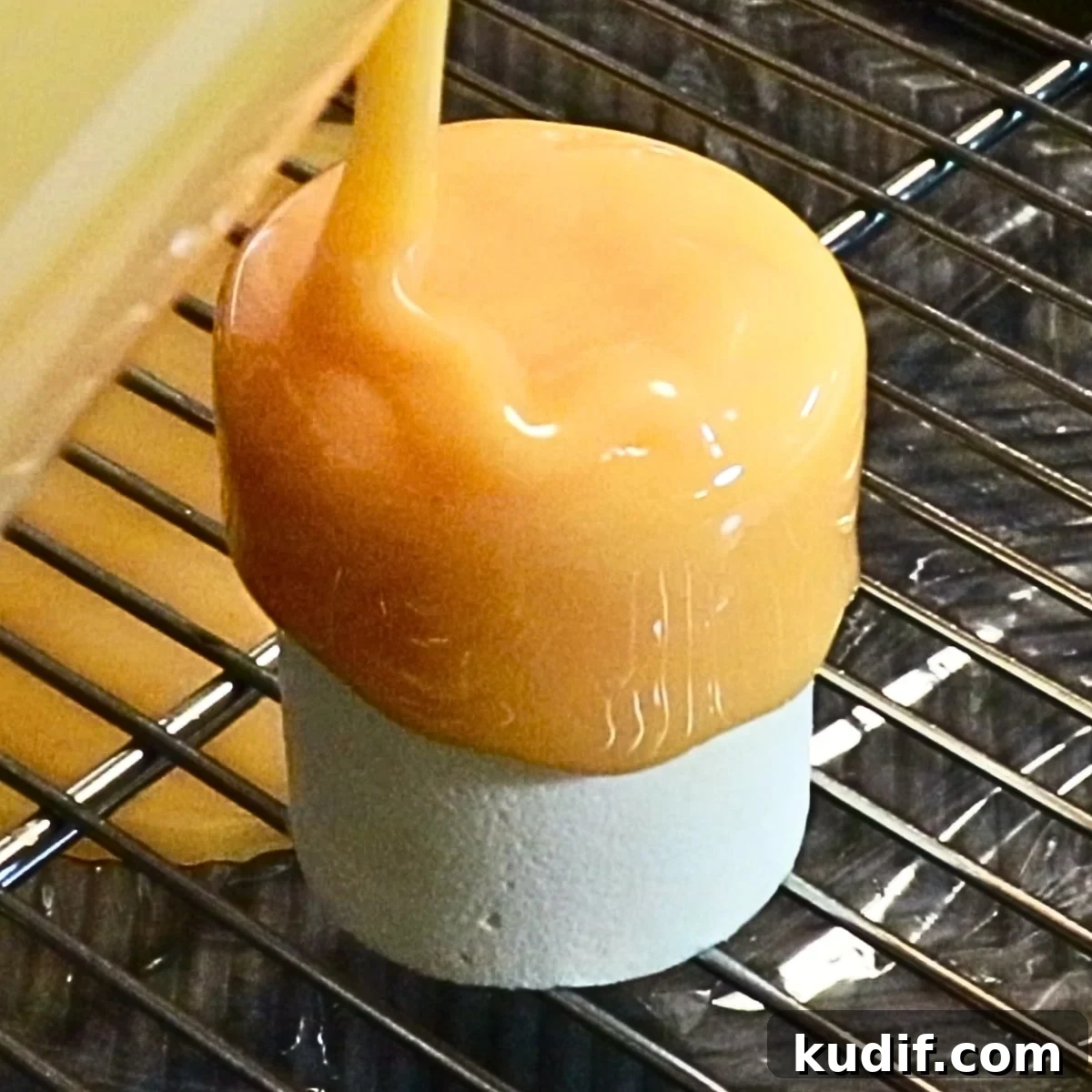
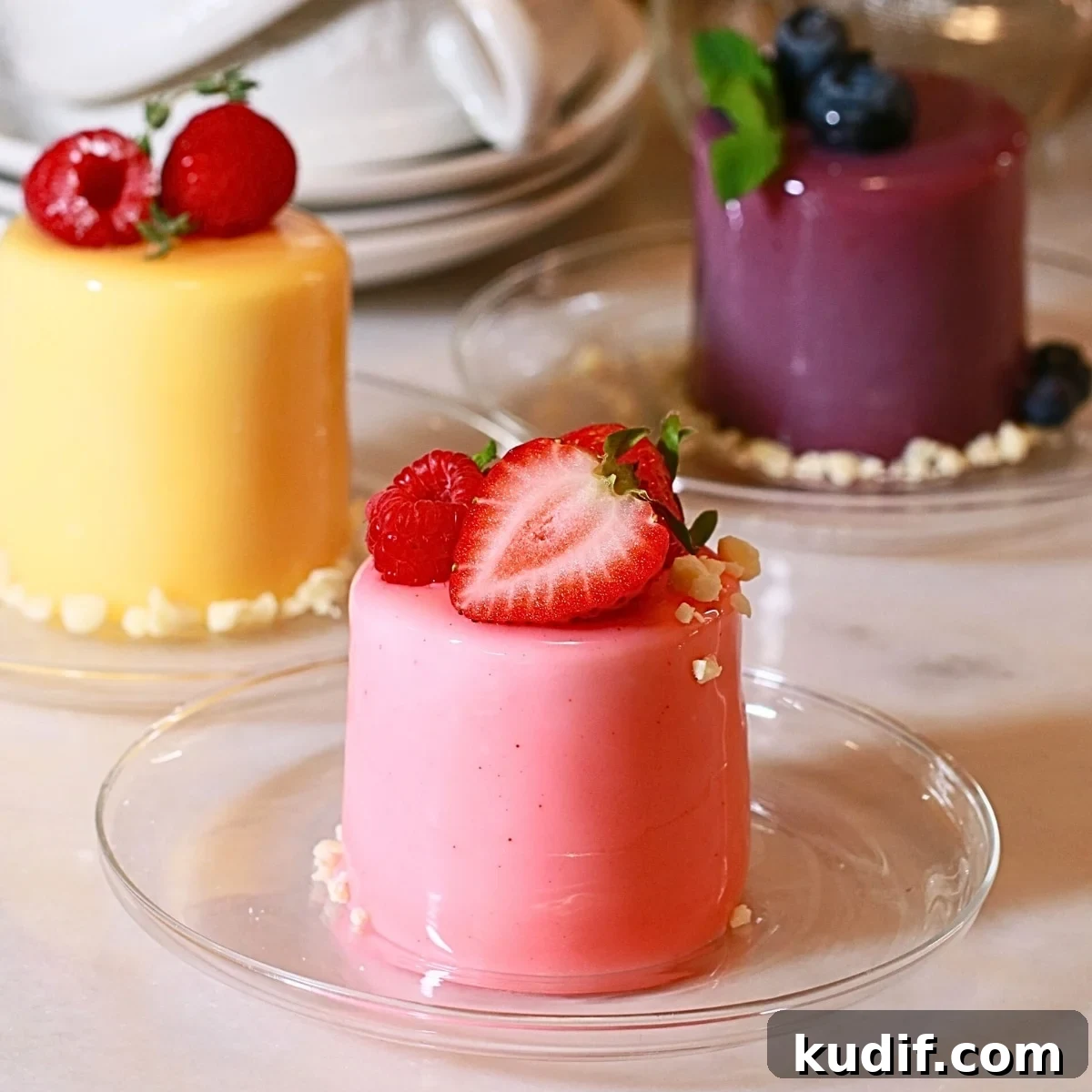
Learn how to make the easy white mirror glaze to finish a stunning mirror cake. This glaze is soft (not rubbery), reliably shiny, and works with many desserts—from mousse cakes and no-bake cheesecakes to matcha and fruit mousses. With this method you’ll be able to create a range of colorful, professional-looking glazed desserts.
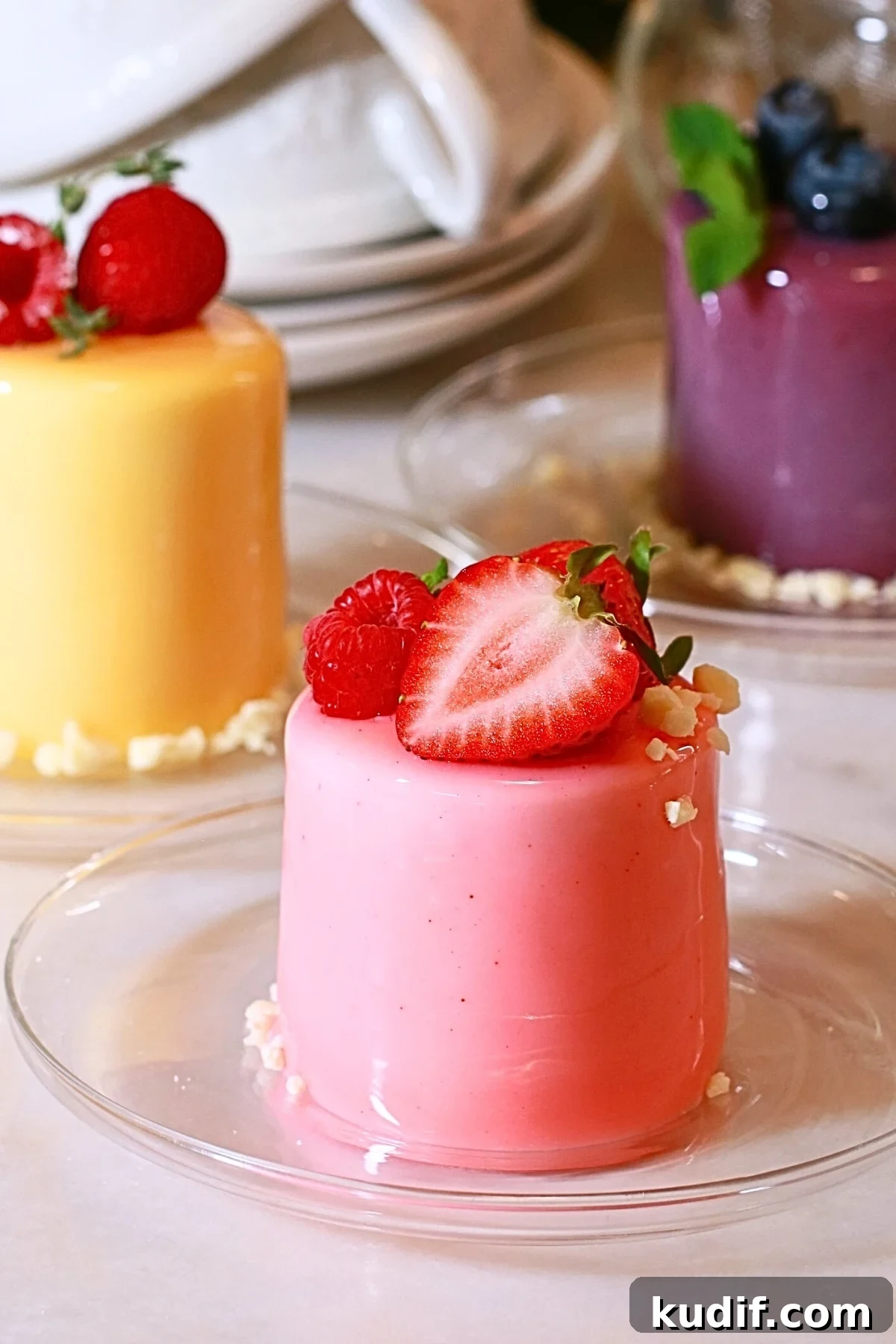
Previously I shared a dark chocolate mirror glaze; this post covers the white chocolate version. Its neutral flavor pairs beautifully with many fillings—dark chocolate mousse, strawberry mousse, simple no-bake cheesecake, matcha desserts, and more. The combinations are virtually endless.
Learning this glaze technique opens up new design possibilities: mousse cakes, drip cakes, plated desserts, roll cakes and shaped desserts made from silicone molds. Once you understand pouring temperature and movement, the rest is straightforward.
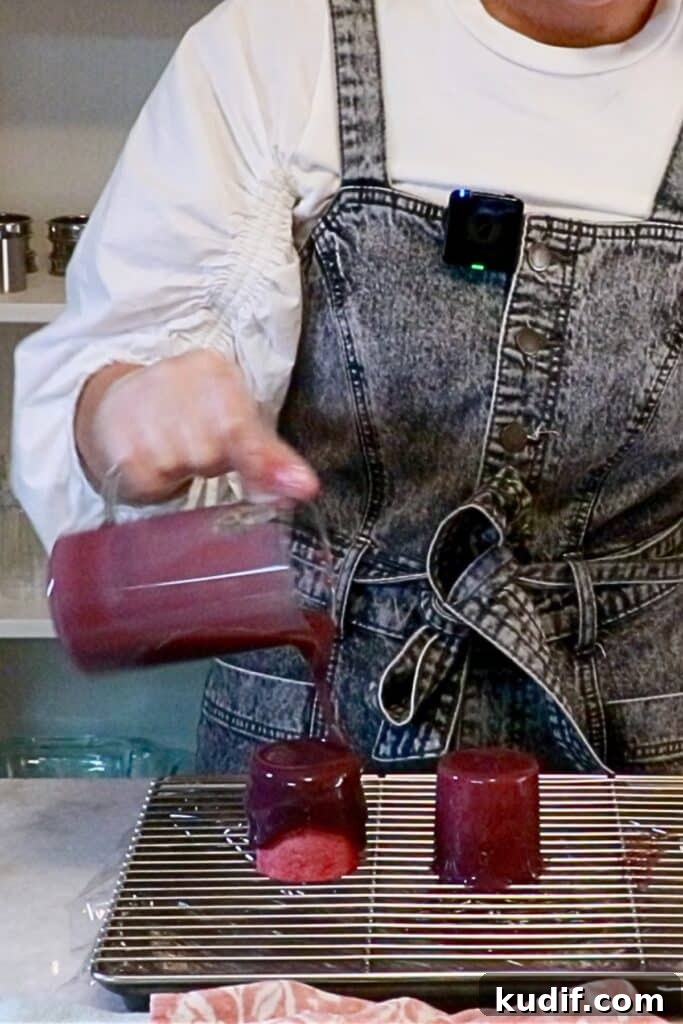
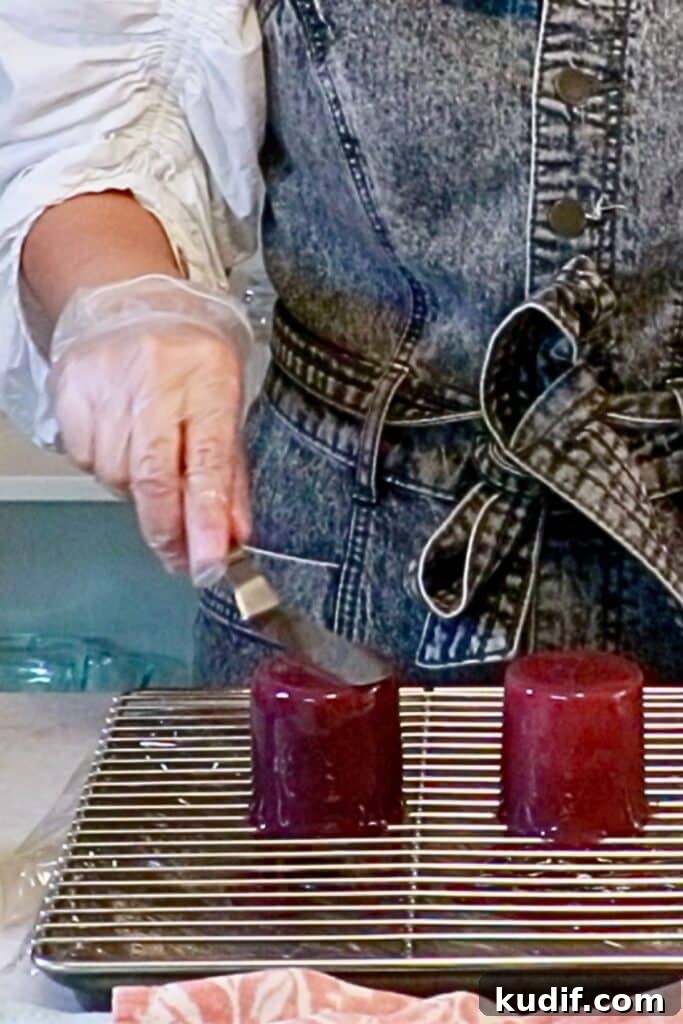
That mirror finish may look difficult, but it’s surprisingly accessible. This tutorial walks you through each step and shares practical pouring tips—temperatures, tools, and timing—that make glazing much easier.
Mastering this glaze will expand your baking repertoire and boost your confidence when creating professional-looking desserts.
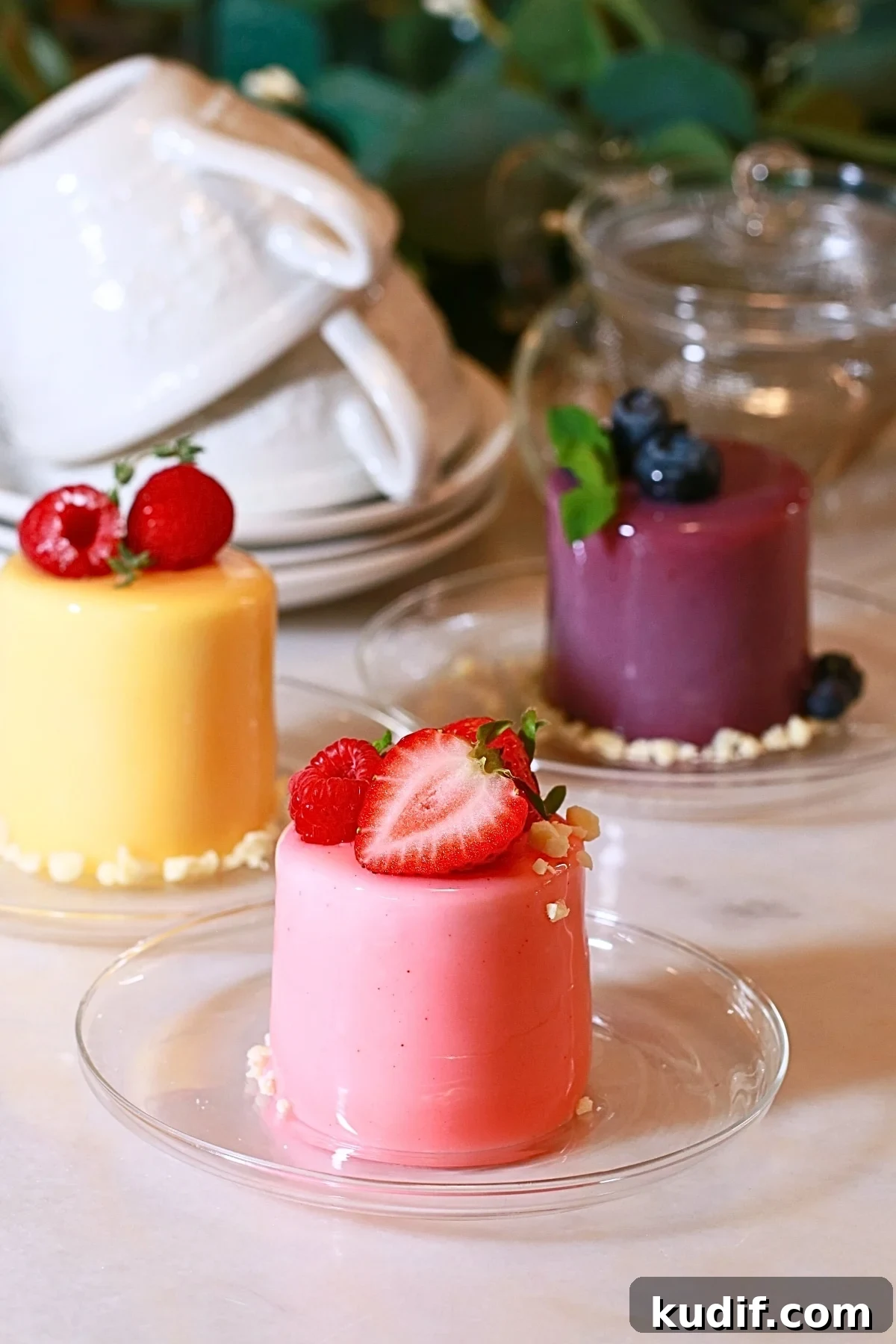
Why You’ll Love This Recipe
- Simple ingredients: Six basic components (including water) and five clear steps.
- Soft texture: This version avoids the rubbery mouthfeel of some mirror glazes and remains soft even when chilled.
- Long-lasting shine: The glaze keeps its mirror-like gloss for days when stored in the refrigerator.
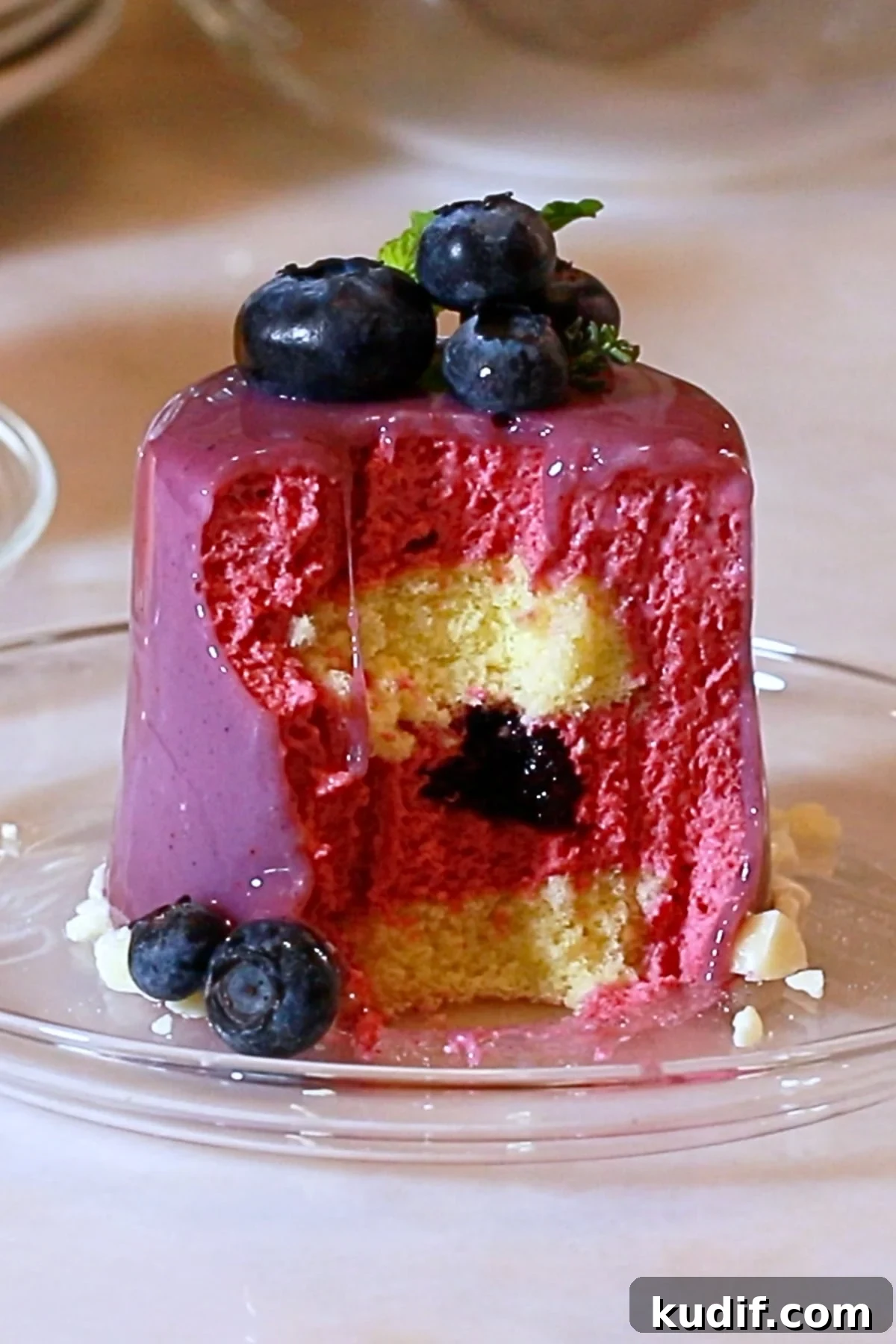
9 Tips For A Perfect Mirror Glaze Cake
1. Use the right gelatin
Gelatin is the only setting agent in this glaze, so its strength (bloom) matters. A higher bloom gives a firmer glaze; a lower bloom yields a softer finish. For this recipe choose gelatin with bloom 225–230. If you use a different bloom, adjust the amount to reach the same consistency.
2. Bloom gelatin beforehand
Hydrate the gelatin fully in icy-cold water before use. Under-hydrated gelatin can cause a loose glaze.
3. Add gelatin while the liquid is hot
Stir the bloomed gelatin into the hot liquid so it melts completely. Check carefully for any undissolved pieces.
4. Use good white chocolate
Quality white chocolate or couverture improves flavor and texture. If possible, choose a reputable brand for the best result.
5. Use an immersion blender
Finish the glaze with an immersion blender to fully emulsify the chocolate and remove small unmelted bits. Hold the blender at a slight angle and don’t lift it too high to reduce bubbles.
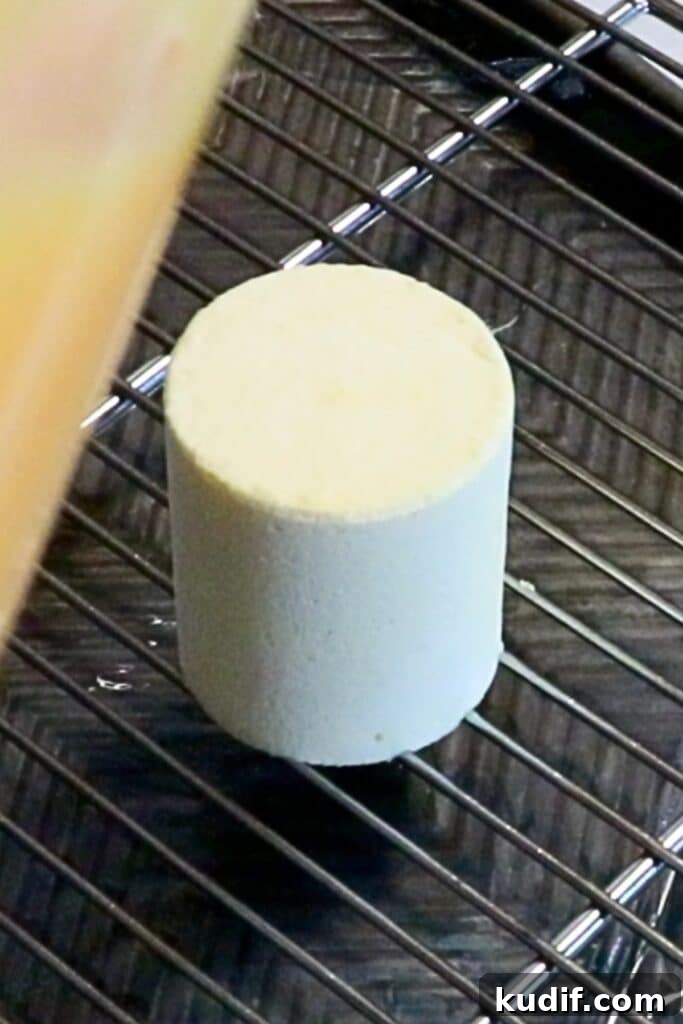
6. Freeze the cake completely
A fully frozen cake yields a smoother, more even glaze than one chilled in the fridge. Keep molds on until the cake is completely frozen to avoid surface imperfections.
7. Glaze temperature is crucial
Glaze thickness and finish depend on temperature. Too warm yields a thin coat; too cool makes a thick, uneven layer. Aim for about 86–95°F (30–35°C). With my setup, 91°F (33°C) works well. A digital thermometer helps.
Frozen cake + lukewarm glaze
is the ideal combination for a glossy, even coating. If possible, test on a small cake to confirm timing and temperature.
8. Mix the glaze gently
While cooling to the target temperature, stir gently with a rubber spatula to avoid trapping air. Vigorous mixing creates bubbles that mar the mirror surface.
9. Pour quickly when ready
Prepare the cake and all tools while the glaze cools so you can pour immediately when it hits the right temperature. If you miss the window, gently reheat and cool again.
VIDEO: Watch How To Make the Mirror Glaze
Follow the step-by-step video to see each technique in action and build confidence for your first glaze pour.
Don’t forget to subscribe to the video channel for more baking tutorials.
Ingredients Overview
White mirror glaze requires six main ingredients: water, granulated sugar, glucose (or light corn syrup), sweetened condensed milk, unflavored gelatin, and white chocolate. Gel food coloring is optional for vivid hues.
- Water: thins the glaze to the right consistency.
- Granulated sugar: softens texture and acts as a preservative.
- Glucose syrup: or light corn syrup as an alternative.
- Sweetened condensed milk: adds creaminess and shine.
- Unflavored gelatin: powder or sheets (bloom 225–230 recommended).
- Icy-cold water: to bloom the gelatin.
- White chocolate: finely diced; use good-quality chocolate for best flavor.
- Food coloring (optional): gel colors give bright, concentrated tones.
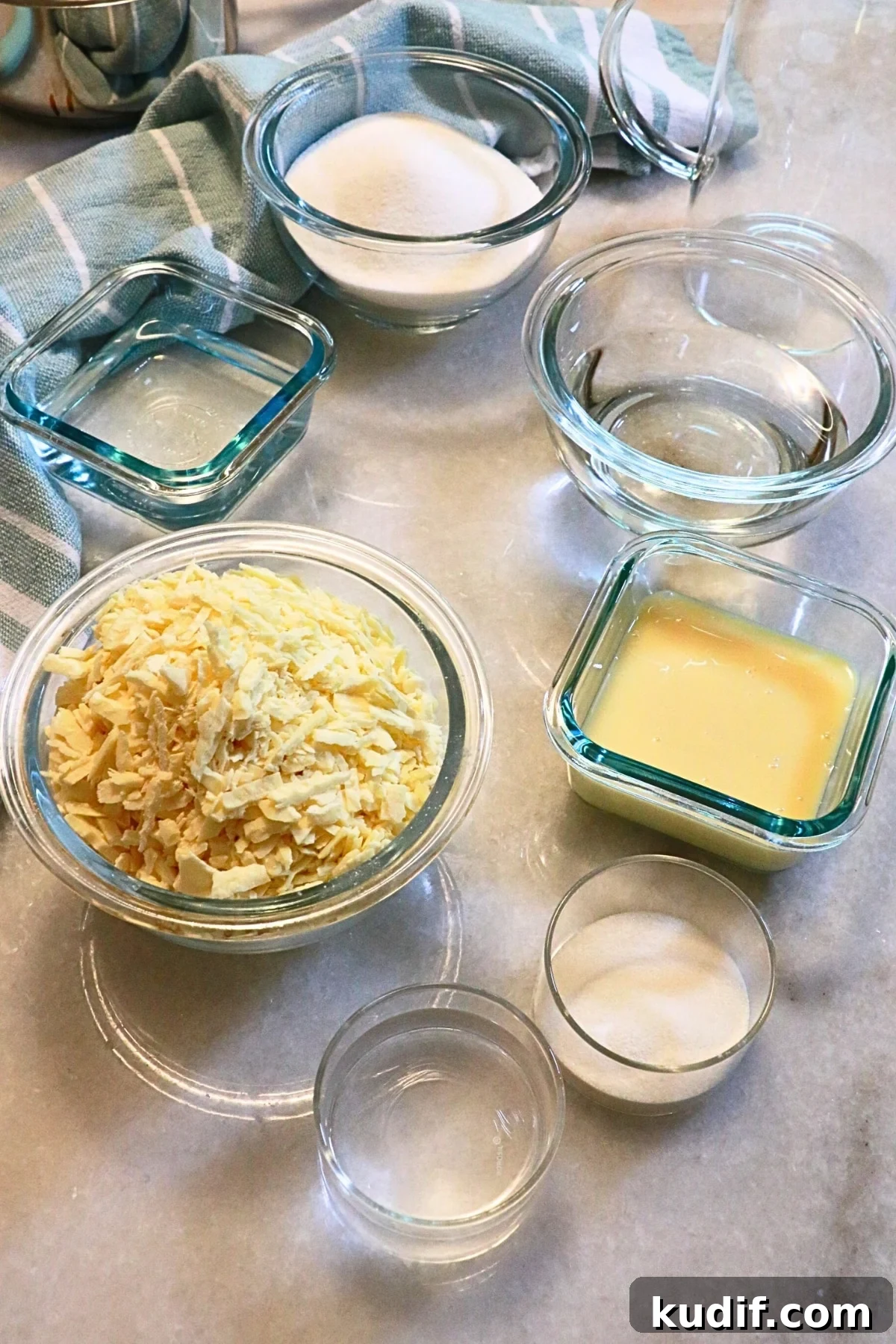
5 Steps To Make Mirror Glaze
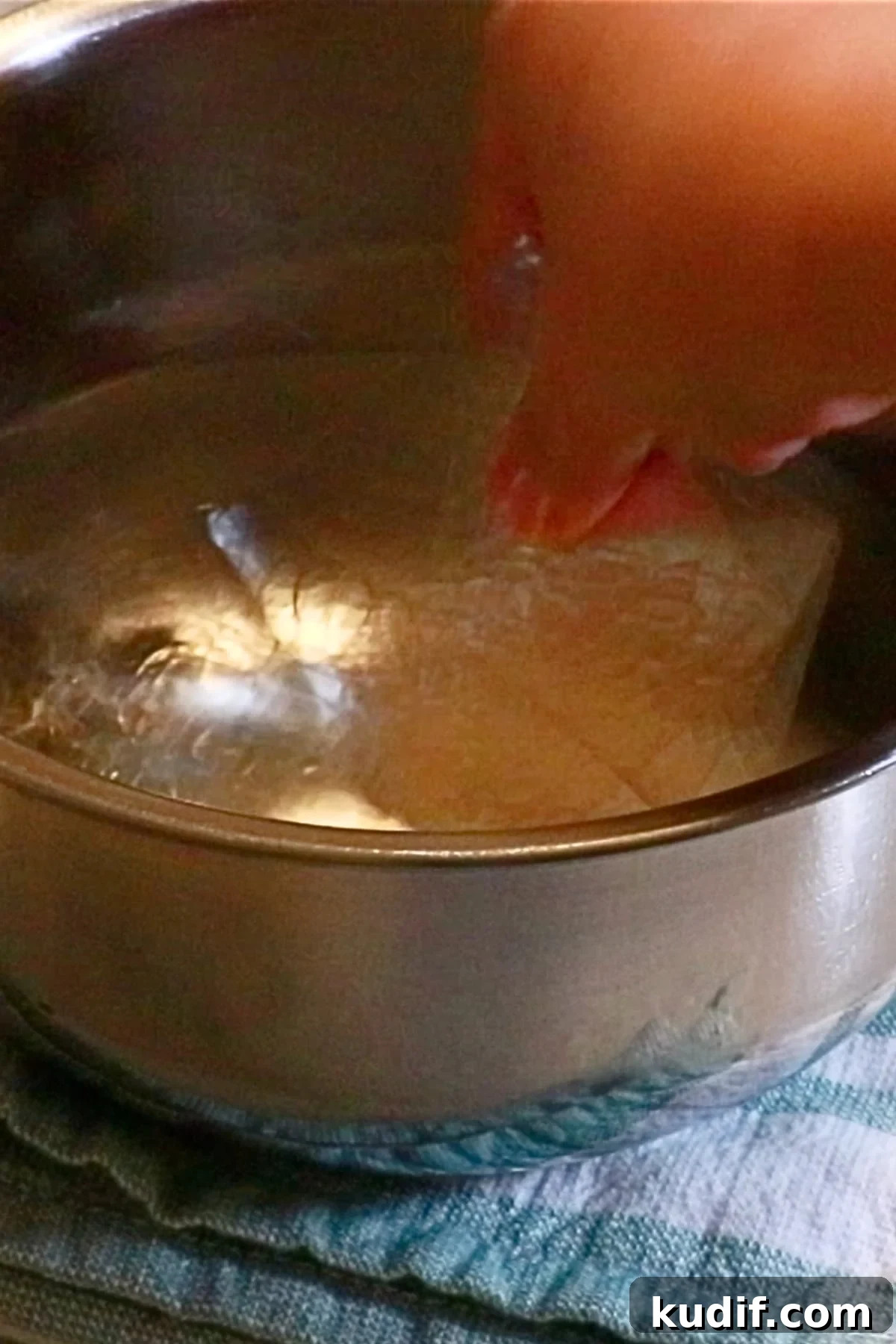
1. Bloom gelatin
Gelatin powder
Sprinkle the gelatin over icy-cold water in a small bowl, stir, and let sit about 10 minutes until fully hydrated.
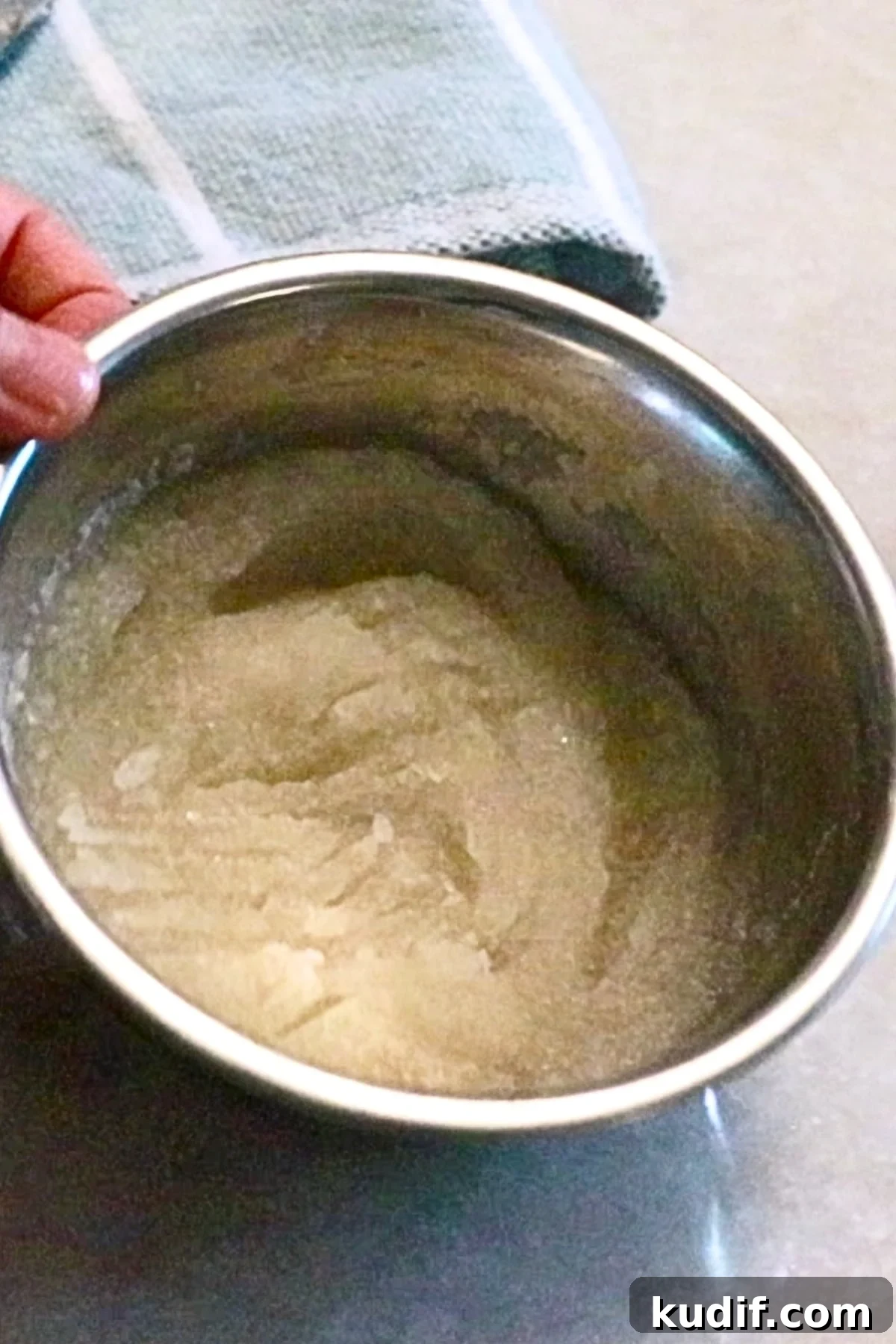
Gelatin sheets
Soak sheets in icy-cold water for about 10 minutes until soft, then drain and add to the hot liquid to melt.
2. Heat water, sugar, and glucose
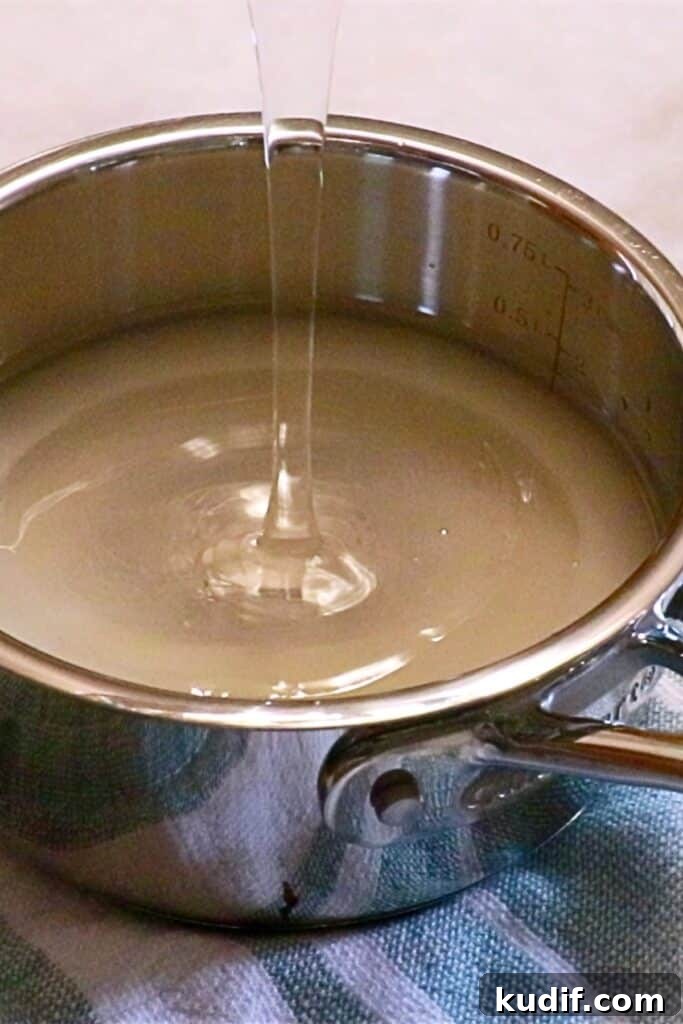
Combine water, granulated sugar, and glucose (or light corn syrup) in a medium saucepan and heat over medium. Stir toward the end to prevent boil-over.
Remove from heat when the mixture reaches about 217°F (103°C) or once it boils vigorously.
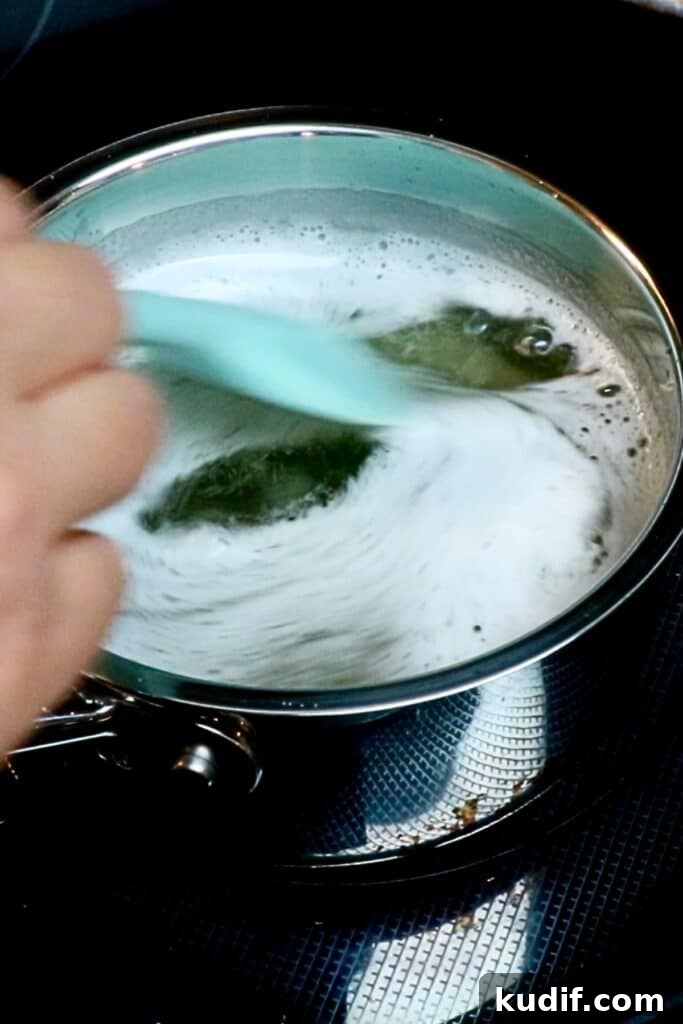
Note: Use a saucepan with some headroom to avoid overflow as the mixture can bubble up.
3. Add condensed milk
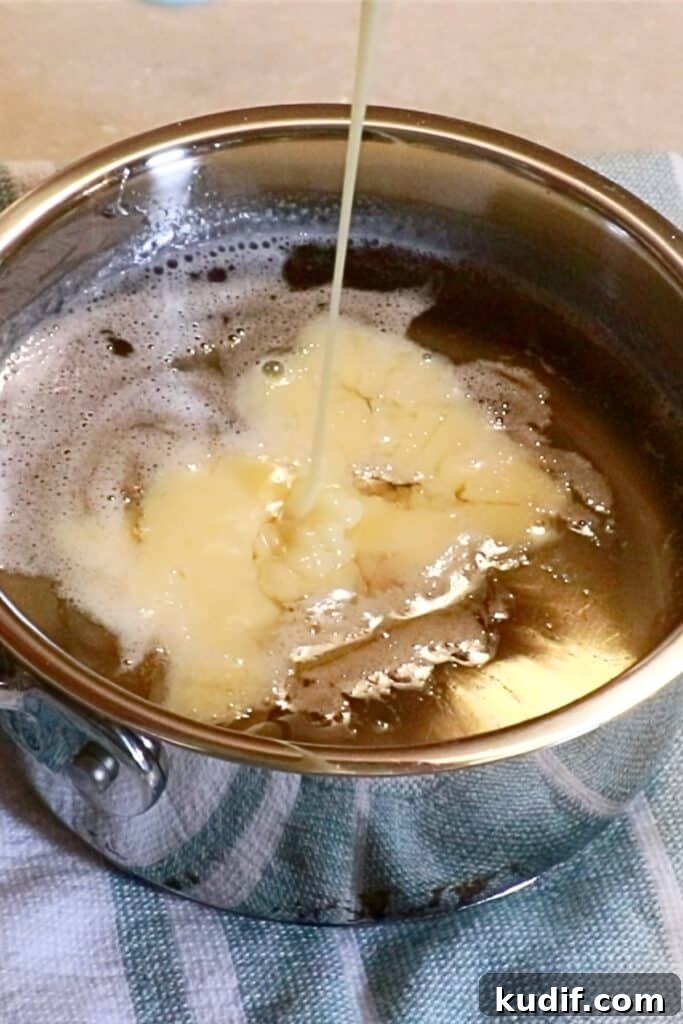
Stir sweetened condensed milk into the hot syrup until combined. Adding it after the boil cools the liquid slightly before the gelatin step.
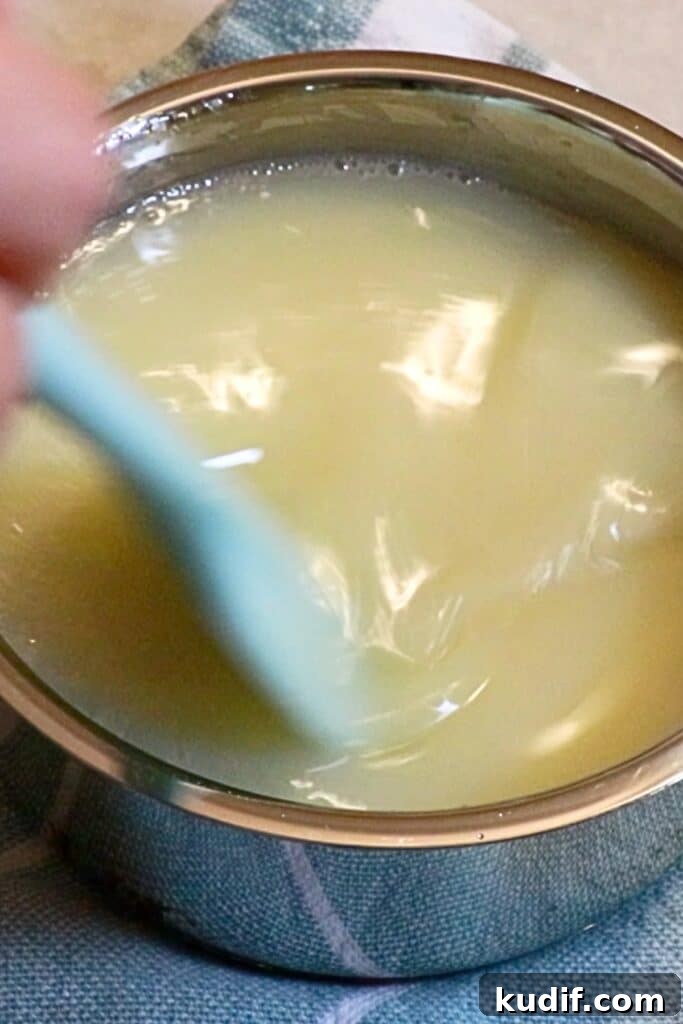
4. Add bloomed gelatin
Stir the bloomed gelatin into the hot liquid and mix until it dissolves completely.
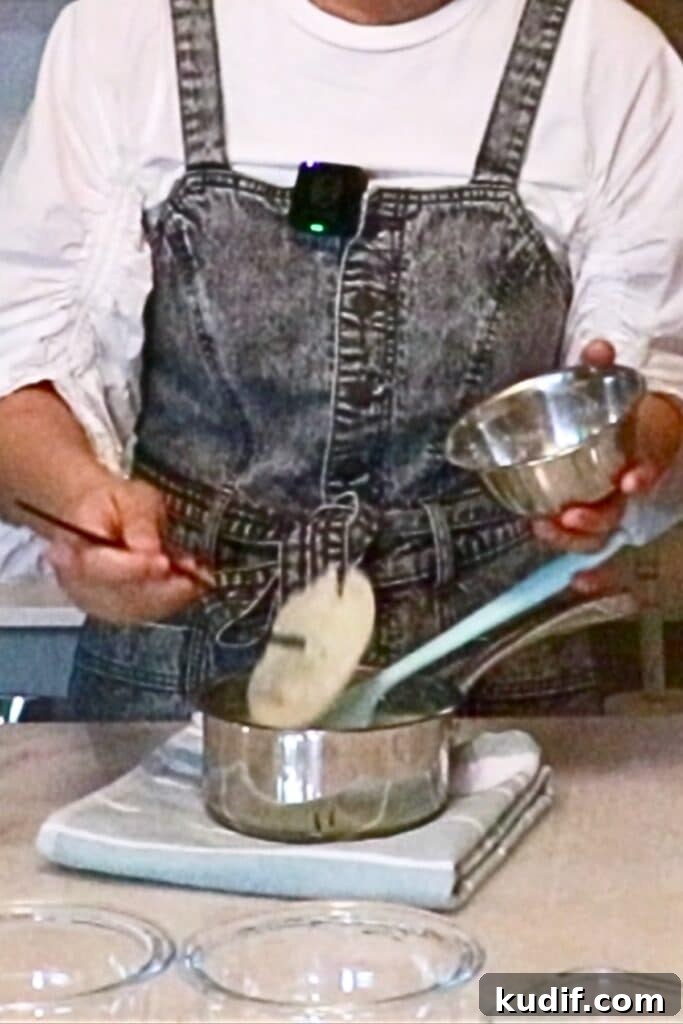
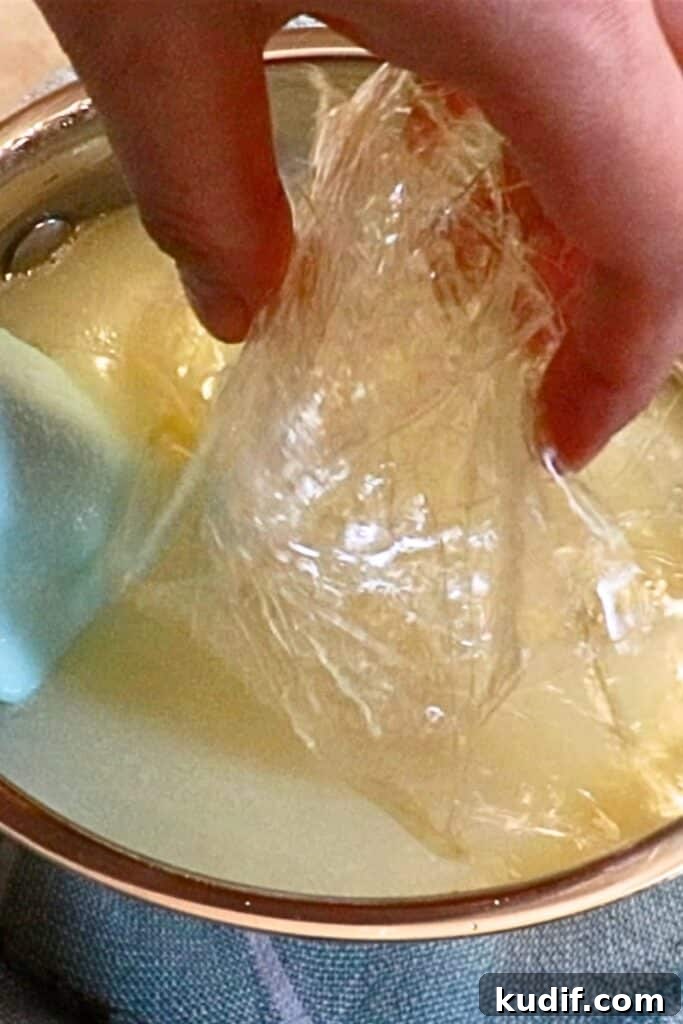
5. Combine with white chocolate
Pour the hot mixture over diced white chocolate in a large bowl. Let sit briefly, then stir to combine. Finish with an immersion blender to fully emulsify the chocolate and remove small lumps.
Keep the blender low and angled slightly to minimize air incorporation. If desired, add gel food coloring and blend gently until uniform.
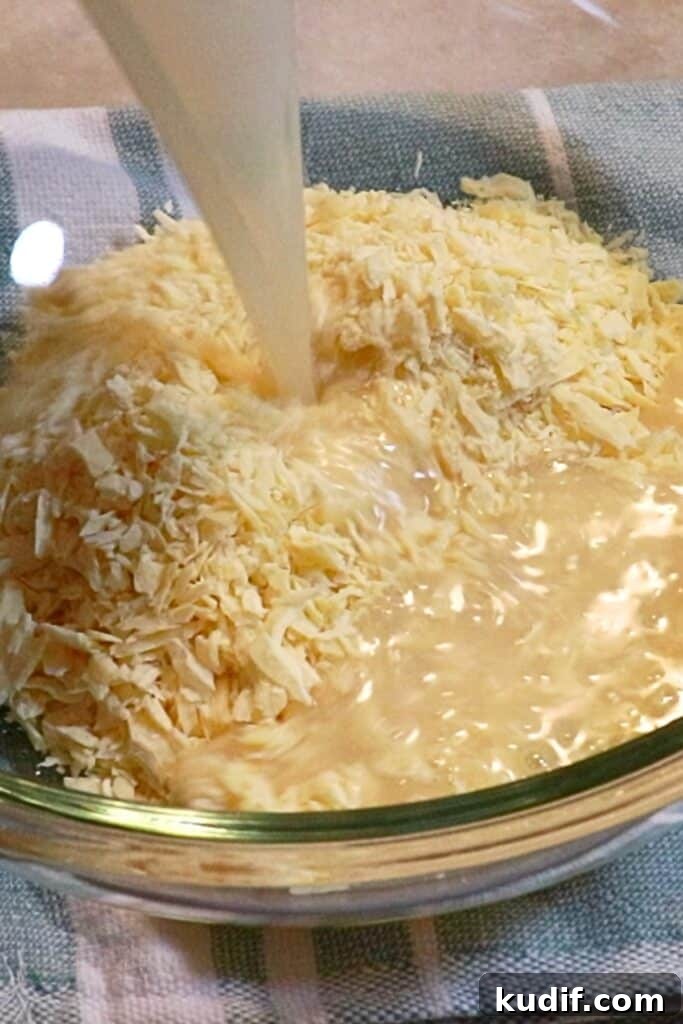
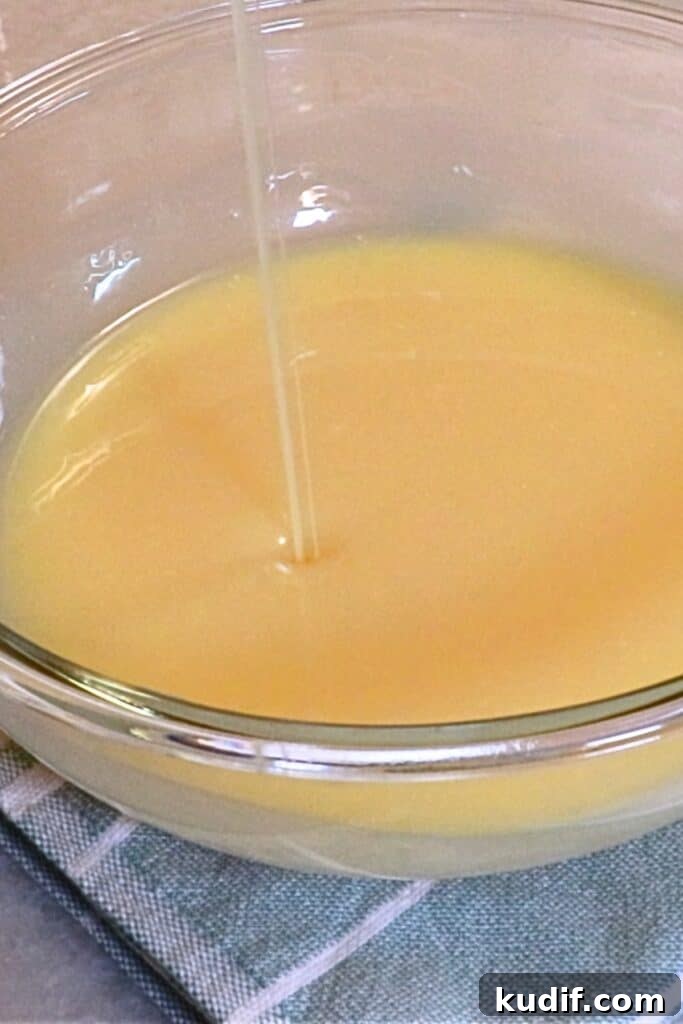
Once smoothed and de-aerated, the glaze is ready to cool to pouring temperature.
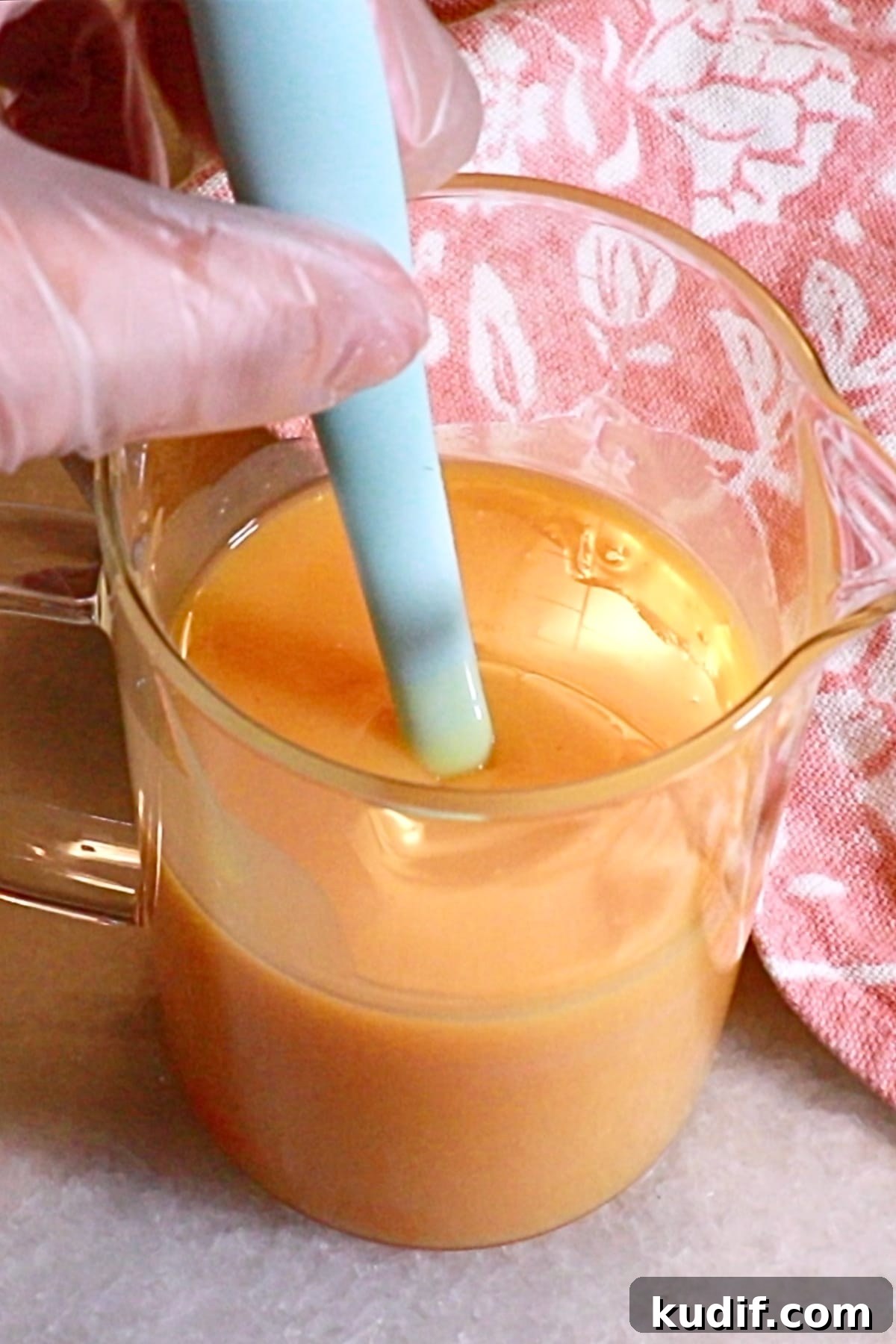
Next: how to glaze the cake.
How To Glaze A Mirror Cake
1. Prepare tools and the cake
While the glaze cools, set up everything so you can pour immediately at the correct temperature. This reduces stress and improves results.
- Wire rack set over a baking sheet lined with plastic wrap
- Second baking sheet (lined)
- Offset spatula
- Frozen cake removed from mold or ring just before glazing
- Plate or cake board for final transfer
- Any decorations
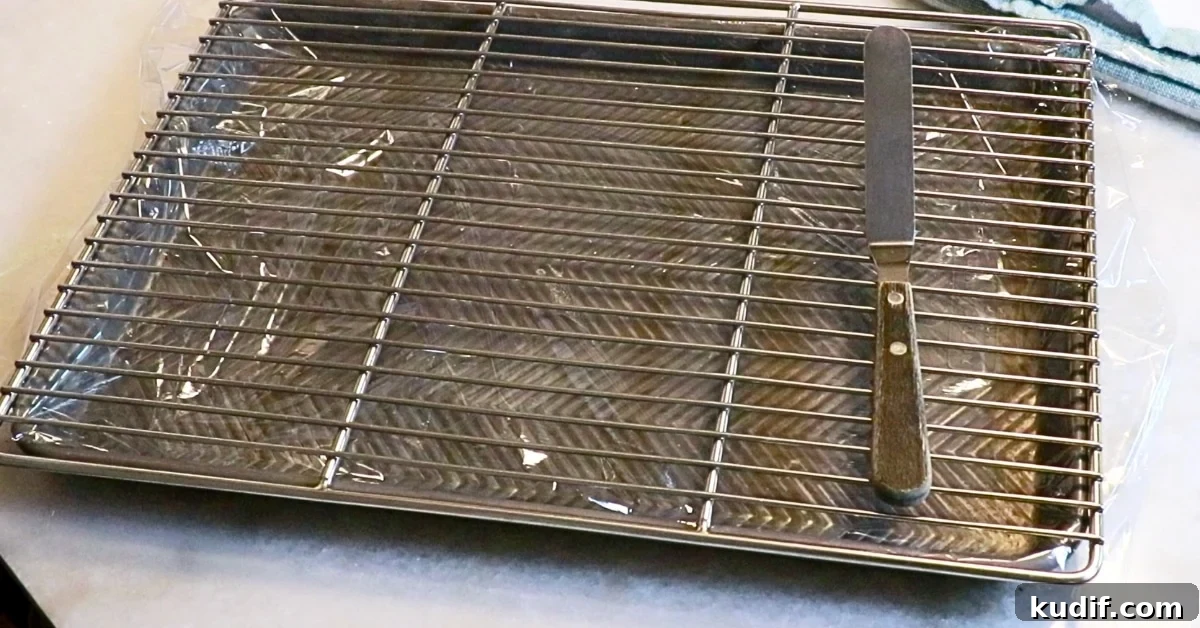
2. Let the glaze cool
Cool the glaze to about 86–95°F (30–35°C). With my setup 91°F (33°C) is ideal. This temperature feels lukewarm to the touch. Use a digital thermometer for accuracy.
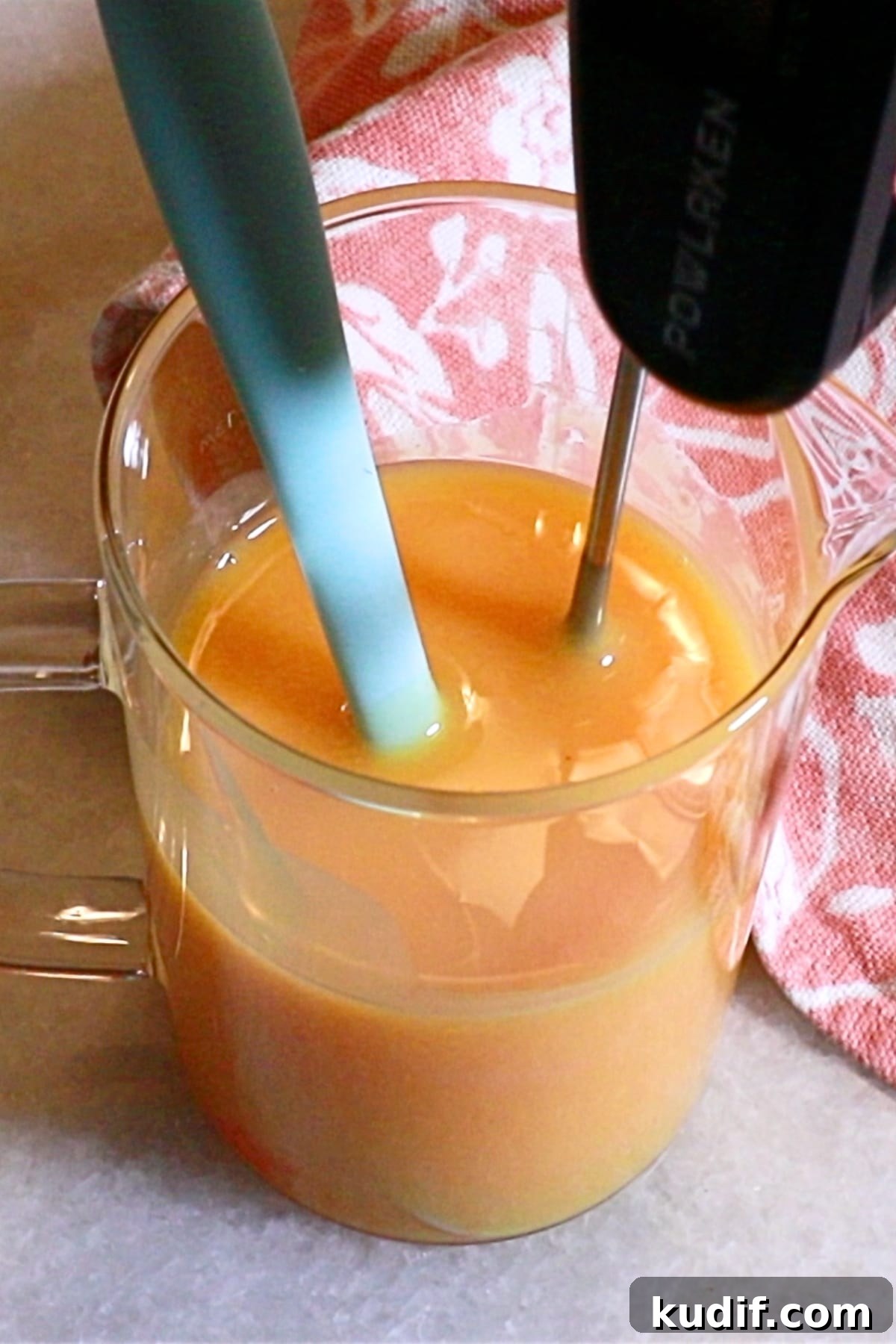
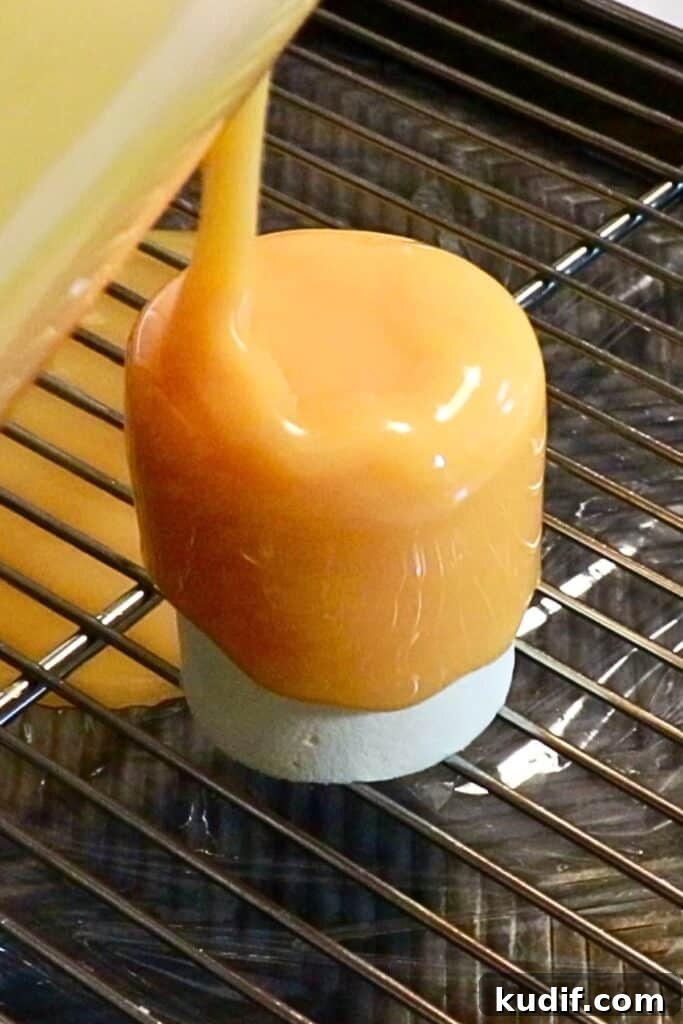
3. Pour the glaze
When the glaze reaches the target temperature, pour a generous amount onto the center of the frozen cake in a circular motion, allowing it to flow down the sides. Immediately smooth the surface gently with an offset spatula held parallel to the cake to remove excess and even the coat. Do not scrape deeply—just light strokes.
4. Transfer the cake
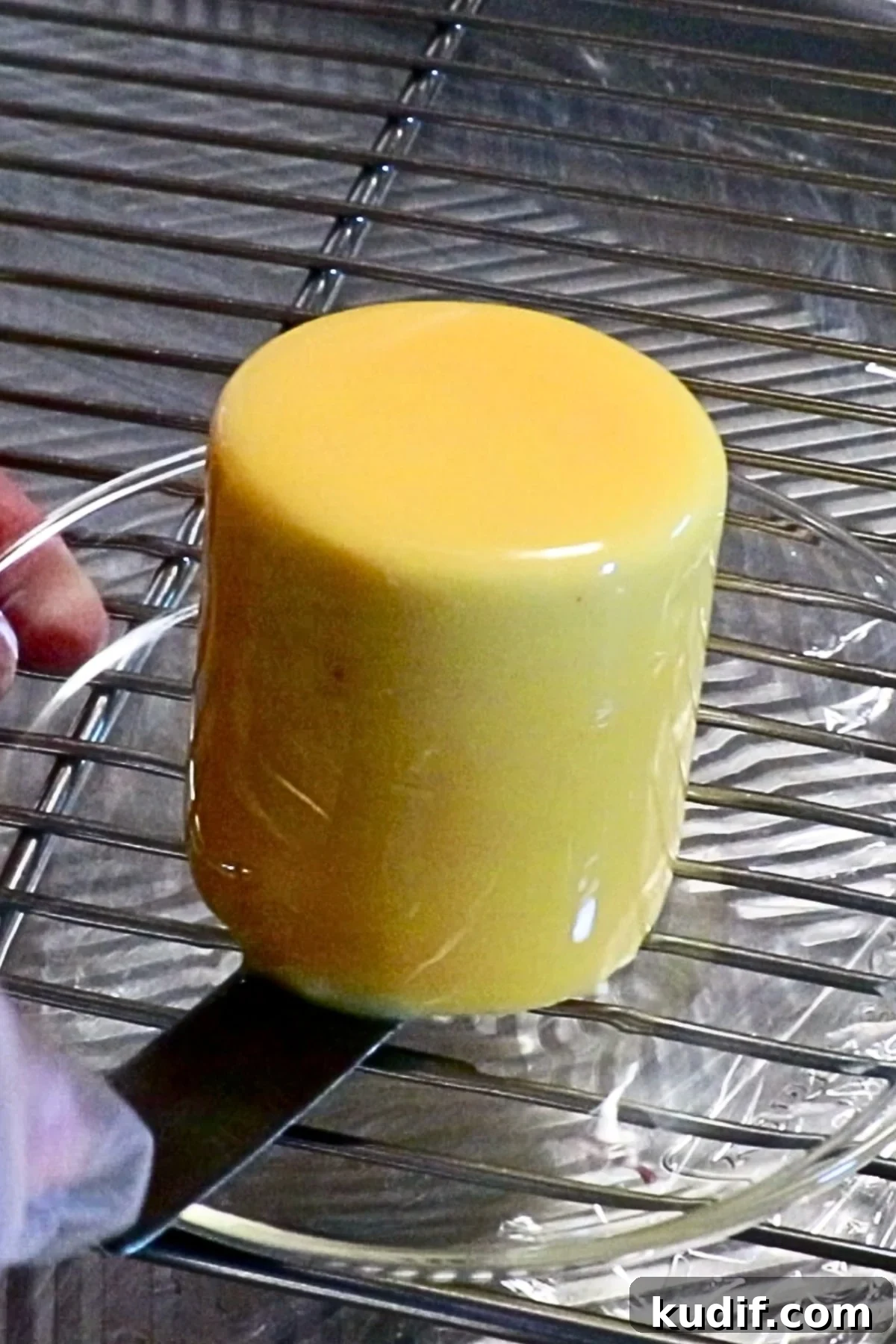
Lift the rack and transfer the cake to the second tray or board. Wait until the glaze stops dripping, then run an offset spatula around the base to trim the excess glaze and create a clean edge. Finally transfer the cake to the serving plate or board.
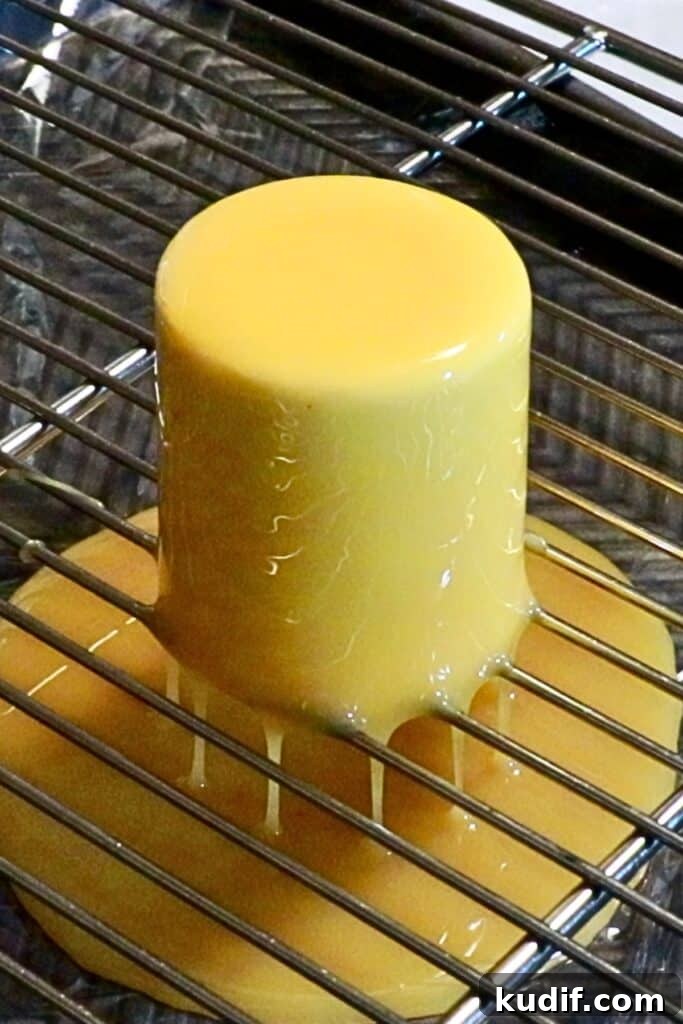
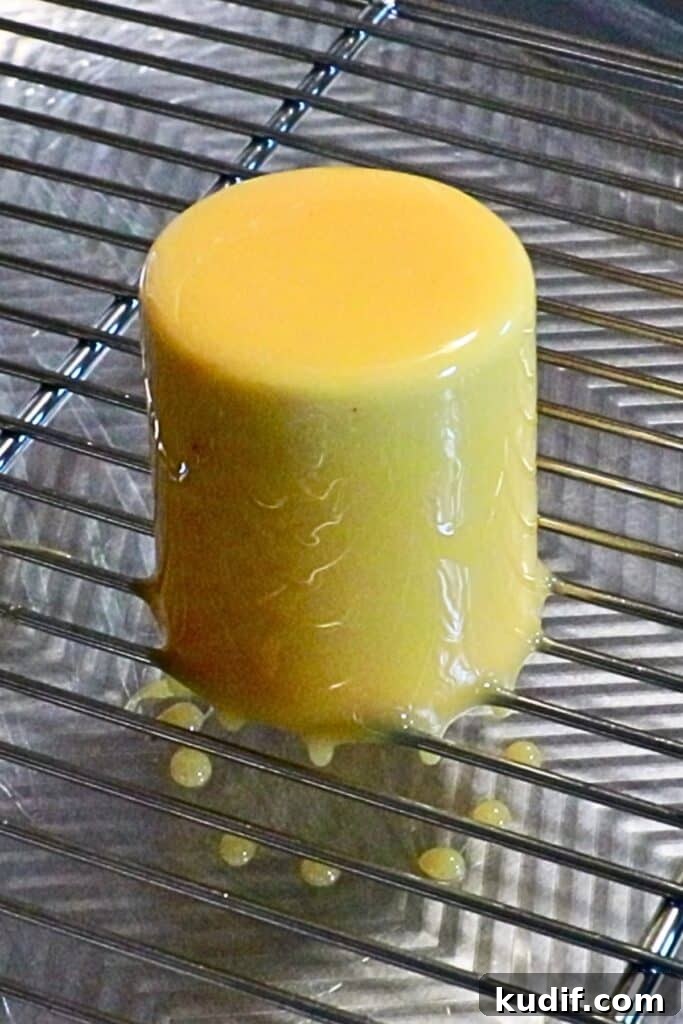
For larger cakes, slide a cake spatula under the base, support the cake with your hand, and carefully move it to the final board. Press the spatula down as you pull it out for a neat finish.
How To Store Mirror Glaze
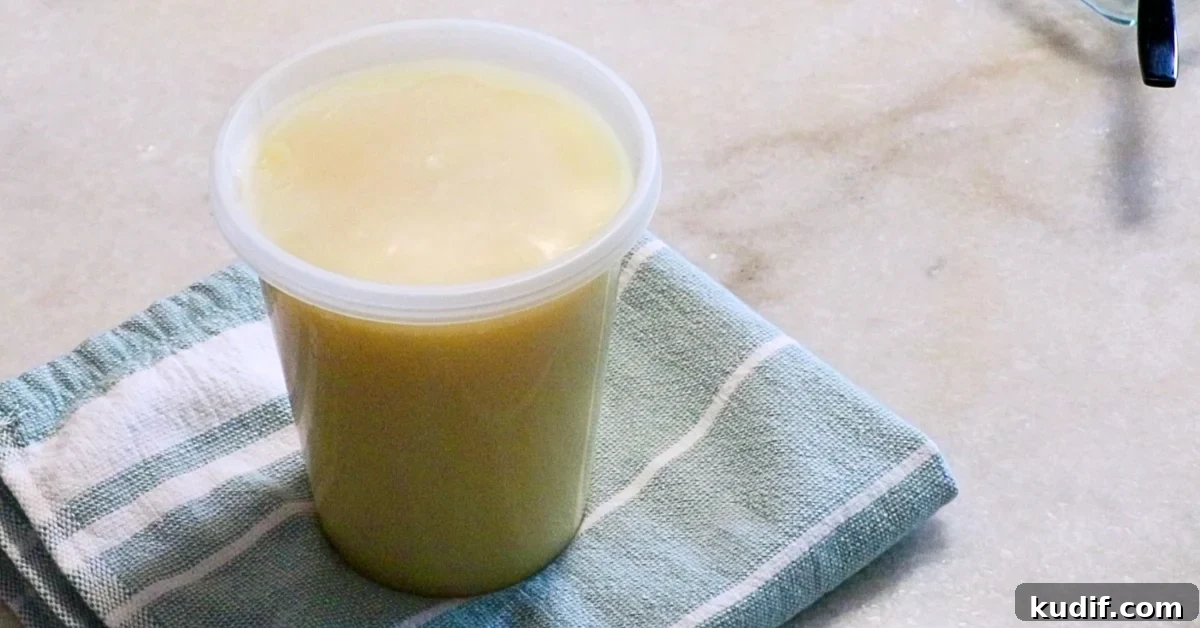
Store leftover glaze in an airtight container in the refrigerator for up to a week, or freeze for several months. Reheat gently in the microwave or a warm water bath in a heat-resistant container before use.
Leftover glaze
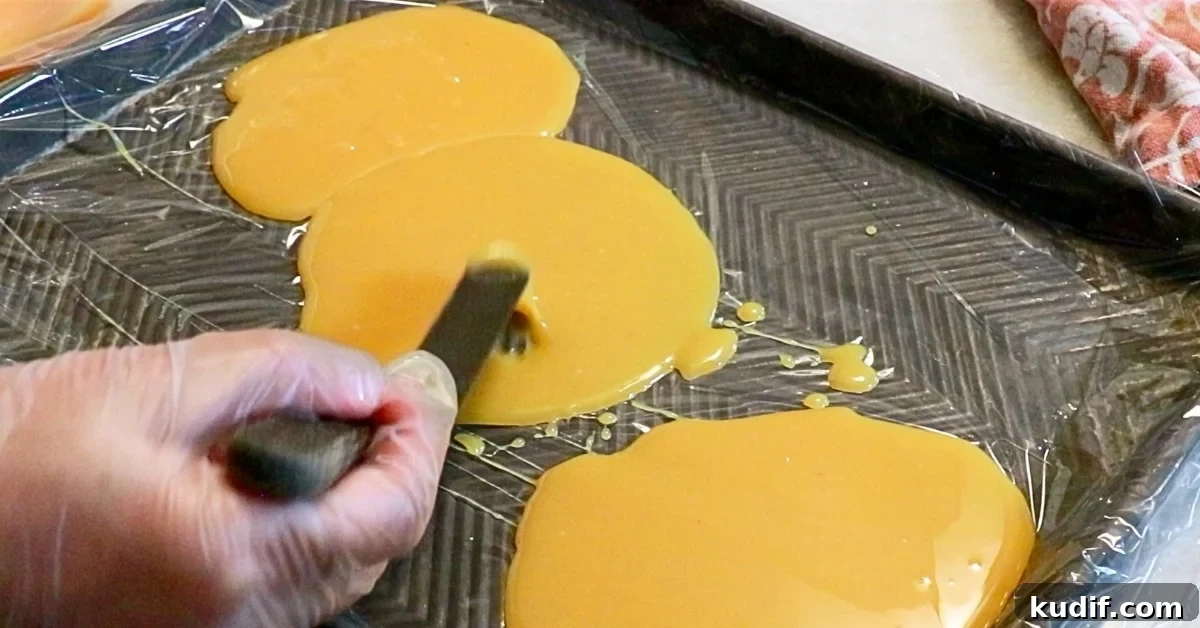
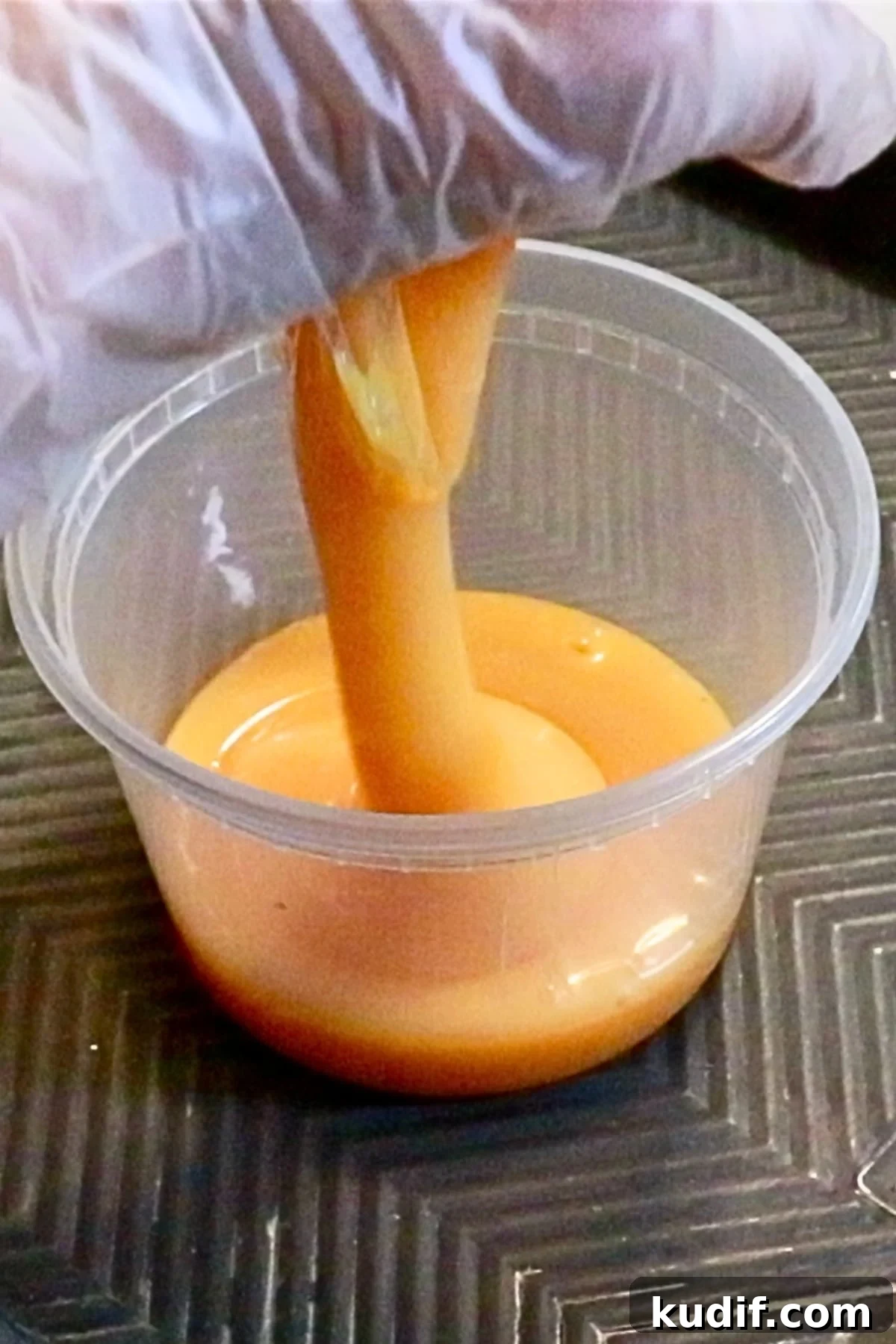
If the excess glaze is free of mousse or sponge bits, you can reuse it. Remove any solids with a spatula, wrap with plastic, press the glaze into a container, and refrigerate or freeze.

How to store the glazed cake
Keep glazed cakes in an airtight container in the refrigerator to prevent the surface from drying. They keep well for a few days when stored this way.
Variations and Uses
Use this glaze to create many looks and applications:
- Marbled mirror cakes: Swirl two or more colors for galaxy, ocean, or pastel effects. Add a touch of metallic dust for extra shine.
- Different shapes: Use silicone molds for hearts, domes, or roll cakes.
- Drip cakes: Apply over buttercream layers for a glossy drip finish that stays soft when chilled.
- Plated desserts: Add a mirror-coated element to plated desserts for a professional presentation.
- Choux pastry: Glaze cream puffs or eclairs for a shiny topping.
FAQ
One batch of this recipe is formulated to cover an 8-inch cake.
A single batch might cover a 10-inch cake but making a little extra is safer—any leftover can be frozen for later.
White chocolate already provides a soft base. To achieve paler pastels, use small amounts of gel food coloring or add a touch of opaque white coloring if needed.
No—room temperature causes the gelatin to relax over time and the glaze to loosen. Store glazed cakes refrigerated until just before serving.
Did you try the recipe?
Share your honest feedback in the comment section. I’d love to hear how your mirror cake turned out and how you served it for special occasions.
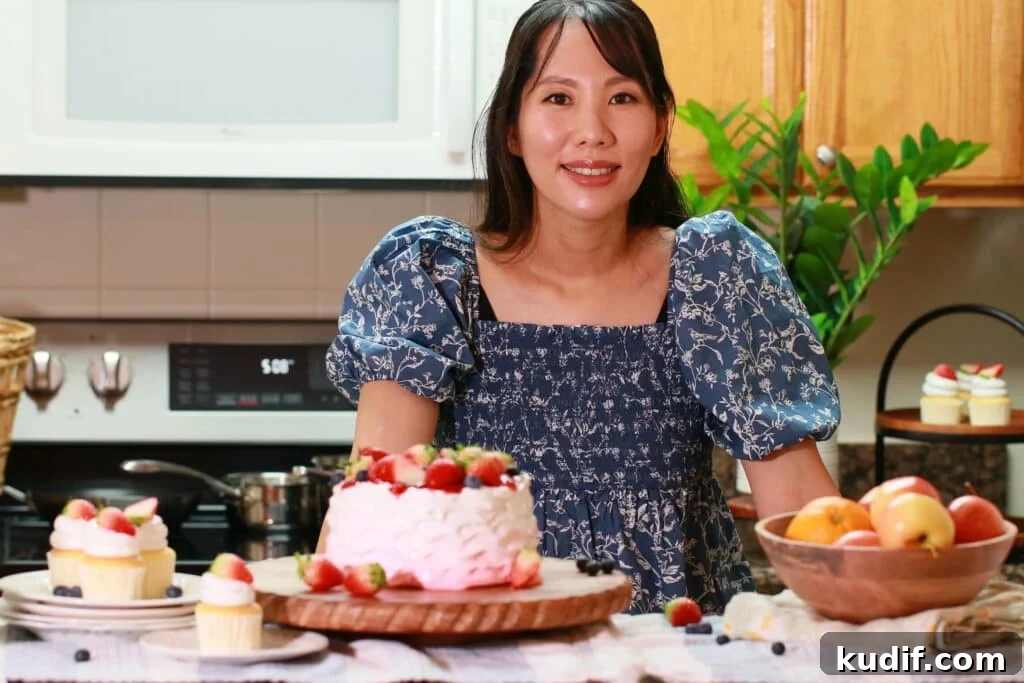
Thank you! – Aya
White Mirror Glaze
Equipment
Method
Nutrition
Notes
Video
Ingredients
- 120 g Water (½ cup)
- 250 g Granulated sugar (1 ¼ cups)
- 240 g Glucose or light corn syrup (¾ cup)
- 150 g Sweetened condensed milk (½ cup)
- 15 g Unflavored gelatin (Bloom 225–230) (about 2 Knox packets)
- 60 g Icy-cold water for blooming gelatin (4 tbsp)
- 275 g White chocolate, diced
- Food coloring (optional)
Note: Weigh ingredients for best accuracy. Cup volumes are provided for convenience.
Equipment
- Saucepan
- Rubber spatula
- Large bowl
- Small bowl (for blooming gelatin)
- Immersion blender
- Baking sheet
- Wire rack
- Plastic wrap
- Tall cup (for glazing)
Method
- Bloom gelatin: For powder, sprinkle over icy water, stir, and rest 10 minutes. For sheets, soak in icy water for 10 minutes.
- Heat water, sugar, and glucose: Combine and heat over medium, stirring to avoid boil-over. Remove from heat when bubbling vigorously or at about 217°F (103°C).
- Add condensed milk: Stir condensed milk into the hot syrup to combine and cool slightly.
- Add bloomed gelatin: Stir the bloomed gelatin into the hot liquid until fully dissolved.
- Combine with white chocolate: Pour hot liquid over diced white chocolate. Let sit briefly, then mix. Finish with an immersion blender to emulsify and remove lumps. Add gel food coloring if desired.
- Prepare tools and the cake: Arrange racks, sheets, spatula, and have the frozen cake ready.
- Let the glaze cool: Cool to 86–95°F (30–35°C), typically around 91°F (33°C).
- Pour the glaze: Pour generously in a circular motion, then lightly smooth with an offset spatula to remove excess and even the surface.
- Transfer the cake: Move the cake once dripping slows, trim the base with an offset spatula, and transfer to the serving board.
Notes
Storage
Store glaze in an airtight container:
- Fridge: Up to one week
- Freezer: Several months
Reheat gently before reuse. If leftover glaze is free from crumbs or mousse, press and transfer it into a container and refrigerate or freeze.
Tips Summary
Key points: use gelatin with bloom 225–230, bloom gelatin fully, add gelatin to hot liquid, use quality white chocolate, emulsify with an immersion blender, glaze frozen cakes, control glaze temperature (86–95°F / 30–35°C), mix gently to avoid bubbles, and pour quickly when ready.
Nutrition
Carbohydrates: 85 g
Protein: 5 g
Fat: 13 g
Sugar: 85 g
Tried this recipe?
Let us know how it went!