How the Label Began: The Story Behind Its Creation
The label came first.
Most companies design a label to match a finished product. They study colors, fonts, and marketing messages to attract buyers. Dr. Bronner’s began differently: the words were written before there was a product to put them on. There was nothing calculated or subtle about it — the label was a direct expression of a life mission.
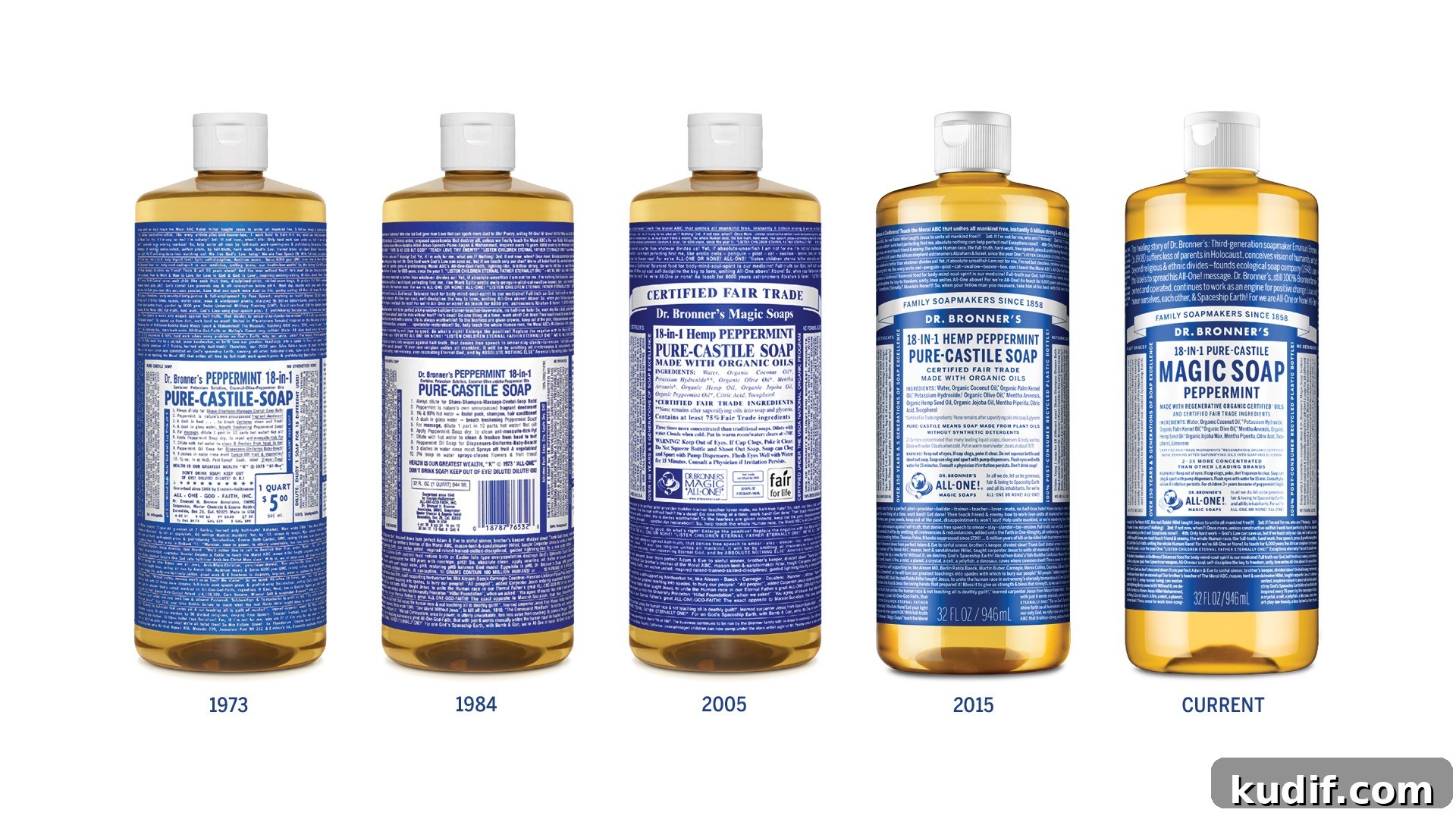
If you haven’t seen one of these labels, here’s a brief description: the Dr. Bronner’s Liquid Castile Magic Soap label is dense with tiny 5.5-point text that almost becomes texture on the bottle. It isn’t a gimmick but a manifesto. The label contains the passionate writings of my grandfather, Dr. E. H. Bronner, who devoted his life to urging unity, compassion, and ethical living. His message is what launched the company now known as Dr. Bronner’s.
Here is an excerpt from his autobiography that has appeared on bottles since 1960:
In ’47, after father-mother-wife murdered, ourself tortured-blinded, we wrote this poem: “To keep my health! To do my work! To love, to live! To see to it I gain & grow & give & give! Never to look behind me for an hour! Never to wait in weakness nor to brag in power! Always working, searching for more truth, more light! Always writing, teaching what I found good & right! Robbed-starved-beaten-blinded, wide astray! Back with the full-truth I’ve gained, back to the way: Smile, help teach the whole Human race, the Moral ABC of All-One-God-Faith, Lightning-like strong & we’re All-One! All-One!”
I can’t tell you the story of the Dr. Bronner’s label without telling you my grandfather’s personal history. They are inextricably intertwined.
My grandfather came from a long line of soapmakers. Trained under Germany’s Master craftsman system, he had years of apprenticeship and rigorous training. Even though his family owned the Madaform soap company in southern Germany, he did not initially plan to fuse his soapmaking with the philosophy that later dominated the label.
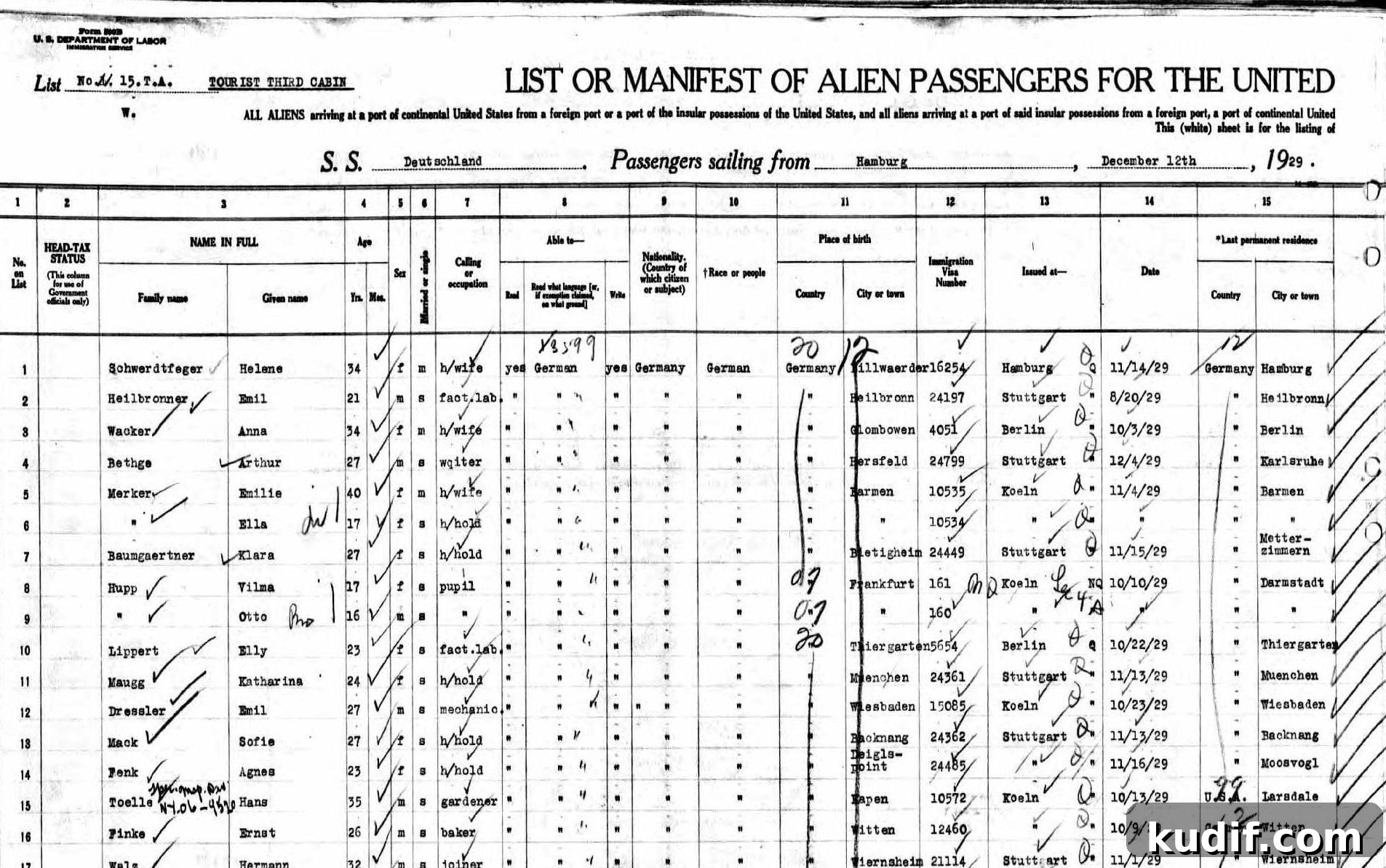
Born in 1908 in Heilbronn, Germany, he was the only surviving son among four children. Though his family was Jewish, he left Germany in part because of personal differences with his father. At 21 he emigrated from Hamburg, arriving in New York on December 22, 1929, with limited funds and a determination to build a new life.
Manifest of the SS Deutschland, arriving in New York December 22, 1929. Emil Heilbronner, listed second, is recorded as a 21 year old single German male trained as a factory lab worker, from Heilbronn.
He spent his first decade in America steadily building a life. Census records place him at the YMCA in Milwaukee in 1930, and later documents show he worked as a soapmaking consultant, married Paula Wohlfart, and raised three children: Ellen, Ralph, and James. He became a U.S. citizen in 1936, adopting the name Emanuel Theodore Bronner and eventually styling himself “Dr.” — a title he treated as the American equivalent of a German “Master.”
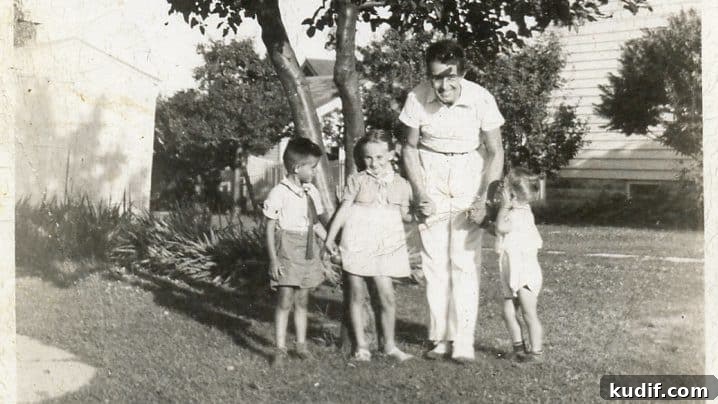
Happy times in 1941: Ralph (5), Ellen (6), Emanuel Bronner, little Jimmy (3).
Tragedy later struck the family in Germany. Some relatives escaped; others remained. The forced Aryanization of Jewish businesses and subsequent wartime restrictions made escape increasingly difficult. In 1942, Emanuel’s parents and sister-in-law were deported to concentration camps; his father and sister-in-law died shortly after arrival, and his mother was killed in Auschwitz in 1944. A censored postcard from his father contained one line: “You were right. Your loving father.”
These losses, combined with global turmoil and the advent of nuclear weapons, led Emanuel to a powerful conviction: humanity needed to change direction. He warned against unrestrained reliance on chemistry and industrial progress that ignored environmental consequences. He wrestled with the sense that human beings were at a crossroads and felt compelled to spread a unifying moral message.
He summarized this vision in what he called the Moral ABC: simple, universal tenets that emphasized mutual responsibility and ethical action. His writing blended direct prose with poetry and repeated the rallying cry “All-One!” He used evocative, hyphenated compound phrases to compress complex ideas into memorable, emphatic expressions.
Despite his sincerity, Emanuel’s style and intensity sometimes alienated audiences. A 1946 speech at the University of Chicago led to his arrest for speaking without a permit and subsequent commitment to a state asylum, where he underwent electroshock therapy and later attributed part of his blindness to the treatment. He escaped and eventually found an audience in Los Angeles, where he spoke in Pershing Square and handed out small bottles of his peppermint-scented liquid Castile soap. He noticed listeners took the soap and left before discussing his ideas, so he put those ideas directly on the bottle.
Thus the Dr. Bronner’s label was born.
A shipment going out from Emanuel Bronner’s L.A. apartment. From left to right: my dad Jim Bronner, a woman I don’t know, my Aunt Gisela, and Emanuel Bronner.
As demand grew, he began selling the soap through small health stores and rented reactor time on Saturdays to produce larger batches. By the 1960s his message found a receptive audience among the counterculture. The soap’s popularity rose in tandem with the label’s visibility.
Emanuel hosted gatherings, moved to Escondido, California, and continued refining the label to reflect his changing thoughts. He edited the copy until his eyesight failed, using a red crayon and later dictation. Family members often assisted by taking notes and reading passages back to him. The label evolved across scents and sizes, and different fragrances carried different selections of his writings.
He insisted the soap could not be separated from the label. Many retailers wanted to repackage the soap without its eccentric text, but Emanuel refused: the label was the point. The soap existed to spread the ideas printed on it, not the other way around.
Emanuel practiced what he called Constructive Capitalism: sharing profits with workers and the earth. He lived modestly, paid workers well, and donated much of the company’s proceeds to causes he believed in. In 1973 the IRS required the company to recognize itself as a taxable business, but Emanuel continued to give generously.
Today the company remains family-run and guided by the label’s principles. Those values are expressed in six core guidelines:
Work hard and grow.
Do right by customers.
Treat employees like family.
Be fair to suppliers.
Treat the earth like home.
Fund and fight for what’s right.
The label continues to spark conversation and engagement. Emanuel didn’t expect everyone to agree with him; he wanted people to think, discuss, and act. His central message endures and sums up the company’s spirit:
In all we do, let us be fair, generous, and loving to Spaceship Earth and all its inhabitants. For we’re All-One or None! All-One!
Further reading
The Five Soapmaking Locations of Bronner Family Soaps