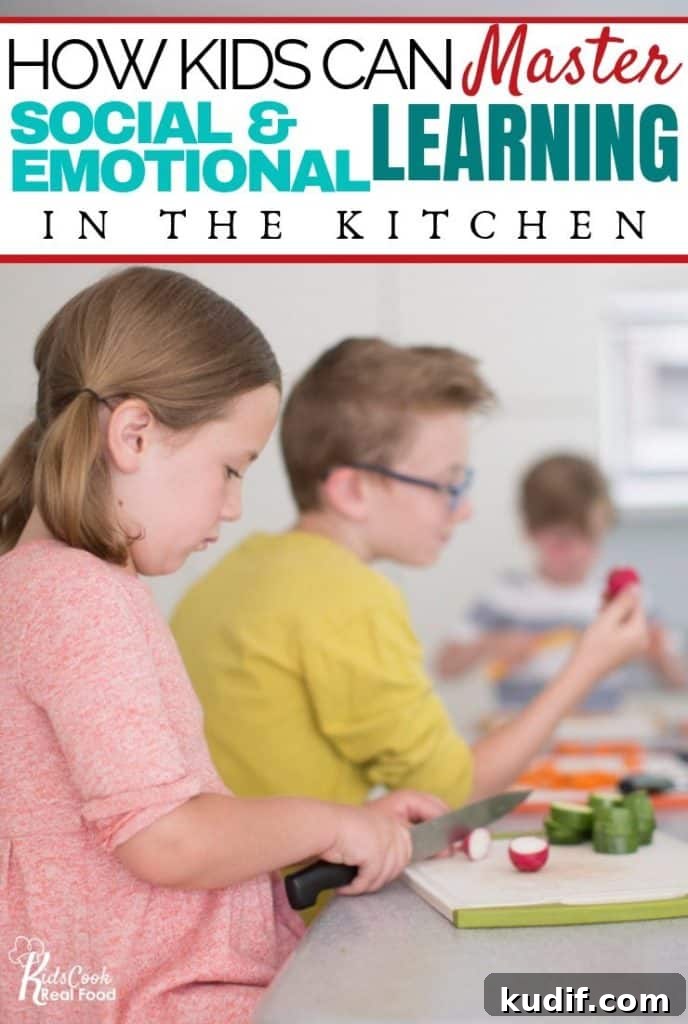
Did you know half of employers report difficulty finding qualified candidates for open positions? The issue is not always education or technical skills; many applicants lack communication, adaptability, decision-making, and problem-solving abilities essential for success.
Discover how cooking with your child can strengthen their brain, foster independence, and develop social and emotional skills. This article walks through the five core competencies from the Collaborative for Academic, Social, and Emotional Learning (CASEL) and shows how each can be practiced in the kitchen.
Fostering social and emotional learning at home can boost your child’s academic performance and confidence. Read on for practical tips and highlights from the Healthy Parenting Connector episode on this topic.
Social Emotional Learning Core Competencies
Social and emotional learning (SEL) focuses on five core competencies:
1. Self-awareness
2. Self-management
3. Social awareness
4. Relationship skills
5. Responsible decision-making
Can’t view the video here? Open it directly on YouTube to watch “Social & Emotional Learning Mastered.”
If you’re short on time, here are concise notes and time-stamped highlights from the video.
Social Emotional Learning Video Time Stamps
- 0:16: An introduction to CASEL, an organization working with schools to intentionally teach social and emotional skills alongside academics.
- 0:38: Employers highlight a gap: many young adults have appropriate technical skills but lack social skills, problem-solving ability, and flexibility.
Lead Magnet: 3 Ways to Build Brain Resilience
No matter what life throws at our kids, we want them to be resilient.
This free download offers practical steps to support brain health and resilience.
If we want our kids to have good jobs, it’s not about how many years of school they have or only academic credentials; it’s about skills that can’t be outsourced to computers or people overseas. -Katie Kimball
Social and Emotional Learning
- 2:10: SEL is a framework parents and teachers use to teach leadership, decision-making, and problem-solving skills. This article explores the five core competencies and how to practice them in the kitchen.
- 2:51: CASEL defines SEL as a set of skills, knowledge, and attitudes that help us manage emotions, set and achieve positive goals, recognize and empathize with others, build positive relationships, and make responsible decisions.
- 3:50: Immediate benefits of SEL include improved attitudes toward self and others, better classroom behavior, and fewer conduct problems.
- 4:20: Humans are inherently social. Mirror neurons mean we subconsciously mirror others’ emotions, and loving bonds amplify that response. Parents’ moods can influence the whole household.
Learning in a social way strengthens our positive skills. -Katie Kimball
- 5:15: More than 80 studies show that students intentionally taught SEL have standardized test scores about 11 percentile points higher, improved classroom behavior, better stress management, and healthier attitudes toward learning.
- 6:20: Long-term studies reveal that even 18 years later, people taught SEL continue to show better social behavior, more empathy, stronger teamwork, higher academic achievement, less emotional distress, and reduced substance use.
Benefits of Social Emotional Learning
- 7:38: Long-term life benefits include better employment prospects and a lower likelihood of legal trouble.
- 7:56: Next, practical ways to apply SEL competencies in the kitchen.
I truly believe the kitchen is one of the best places to show kids they matter and that they can make a difference. -Katie Kimball
5 Core Competencies of Social Emotional Learning
- 8:27: The five competencies fall into three categories: intrapersonal (self), interpersonal (relationships), and cognitive (decision-making).
- 8:50: Intrapersonal skills include self-awareness and self-management. Carol Dweck’s growth mindset concept emphasizes effort and learning over fixed ability. Praise effort—“You worked hard on that”—rather than labeling intelligence.
1. Self-Awareness
- 10:06: Self-awareness involves recognizing emotions and thoughts, understanding how they affect behavior, and identifying strengths and areas for growth. It builds self-confidence and belief in one’s ability to improve.
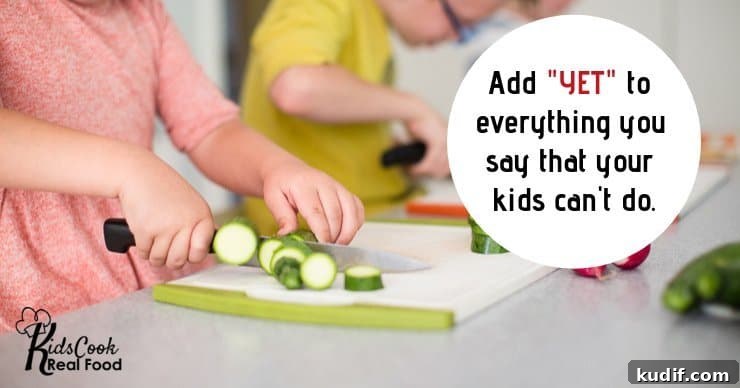
- 11:27: A parent story highlights using Kids Cook Real Food lessons to encourage a growth mindset and boost a child’s confidence through real kitchen tasks.
2. Self-Management
- 13:46: Self-management covers regulating emotions and behavior, managing stress, impulse control, motivation, goal-setting, and organization. Cooking naturally teaches organization, planning, following steps, and finishing tasks.
- 15:00: Parents often worry about children using knives or fire. Experience shows that when kids are given real responsibility, they typically rise to the occasion. The kitchen is an ideal place to practice self-management.
Kids don’t need plastic knives. They need real skills.
Teach safe technique, focus, and confidence in a favorite kids cooking lesson (ages 2–12).
We shouldn’t assume children can’t regulate themselves. Give them opportunities to try. -Katie Kimball
- 15:43: A classroom pancake activity illustrates how hands-on kitchen experiences teach responsibility and focus.
3. Social Awareness
- 18:04: Social awareness is an interpersonal skill that includes empathy and understanding others’ perspectives. When kids learn to cook, they often naturally want to help and serve others, such as cooking for a sick parent or a new baby.
Kids want to feel empathy, but they may not always know how to act. -Katie Kimball
- 18:52: Helping in the kitchen gives children tangible ways to contribute to family well-being, which is motivating and fulfilling.
- 19:35: Cooking also teaches appreciation for cultural diversity through spices and recipes from different regions.
4. Relationship Skills
- 20:29: Building quality relationships requires communication, listening, cooperation, and conflict-resolution skills. Cooking together is a natural way to practice these abilities.
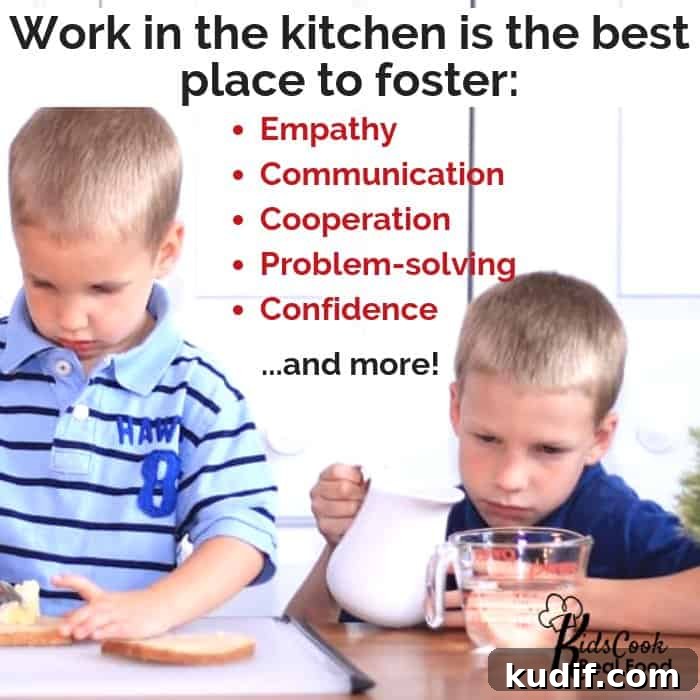
- 21:22: A middle-school home-ec memory about teamwork and chocolate chip cookies demonstrates how group cooking tasks require cooperation.
- 22:13: Another story shows a family brought together by cooking a late dinner and reconnecting around the table.
5. Responsible Decision-Making
- 23:43: Decision-making is a finite mental resource—your brain makes a limited number of high-quality choices daily. Habits and earlier decision-making help preserve willpower later in the day.
- 24:26: Teaching thoughtful, responsible decision-making is crucial, especially in the kitchen where choices about knives, heat, and food safety have real consequences.

- 25:10: Responsible decision-making includes identifying problems, evaluating solutions, anticipating consequences, and considering impacts on self and others.
- 26:23: Kitchen mishaps and dinner challenges create natural opportunities to practice problem-solving—reducing waste, accommodating allergies, and respecting taste preferences all require thoughtful choices.
- 27:15: With intentionality, the kitchen offers simple, frequent chances to teach SEL; a few deliberate cooking experiences can yield big learning gains.
End Picky Eating Power Struggle
Spend just 30 minutes a day learning practical strategies that reduce mealtime battles and build kids’ confidence with food.

Resource on Social Emotional Learning
For more on the five competencies, consult materials from CASEL and other reputable SEL resources.